“I’ll say what I need”

Elon Musk told CNBC’s David Faber on Tuesday that he doesn’t care if his inflammatory tweets scare off potentials Tesla Buyers or Twitter Advertisers.

“I’ll say whatever I want, and if the consequence is losing money, then so be it,” said Musk, who owns Twitter.

Musk has tweeted controversial posts for years, including conspiracy theories and comments that his critics say are largely discriminatory.

His defense comes after Musk drew renewed criticism for a tweet comparing liberal billionaire and Democratic donor George Soros to X-Men villain Magneto, a Jewish Holocaust survivor.

“He wants to destroy the very fabric of civilization. Soros hates humanity,” Musk tweeted Monday.

Musk has previously criticized Soros, whose family office, Soros Fund Management, recently reduced its stake in Tesla. Soros, who is also Jewish, is a popular target for right-wing pundits and politicians and is often the subject of anti-Semitic attacks. Soros and his family fled the Nazis during World War II.

Critics said Musk’s tweets about Soros fit into a larger pattern of attacks on the 92-year-old investor and Democratic financier. “Musk’s comparison of Soros to Magneto is not accidental; it’s a nod to harmful anti-Semitic tropes of Jewish global control,” tweeted Alex Goldenberg, an analyst at the Network Contagion Research Institute. Israel’s Foreign Ministry also said Musk’s tweets had “anti-Semitic overtones.”

Musk denied being an anti-Semite on Tuesday. “I’m more of a Prosemite,” he said when Faber asked him about the criticism. Musk has also previously tweeted and removed memes featuring Hitler.

Faber also asked Musk on Tuesday why he tweeted a link to someone who said a mass shooting at a Texas mall earlier this month could be part of “bad psycho-surgery” or “psychological surgery.”

Investigators have been looking into whether the gunman whom police killed expressed white supremacist views because he was wearing an “RWDS” patch, a nod to the “Right Wing Death Squad” phrase used by extremists. He also had Nazi tattoos, including a swastika.

“I thought it would be silly to attribute it to white supremacy,” Musk said, adding that, in his opinion, there was no evidence that the shooter was white supremacy. “We shouldn’t attribute things to white supremacy if they’re – if they’re wrong.”

Since Musk took over Twitter last fall, the social media network has seen its ad revenue fall sharply as brands and businesses scrutinize changes to the platform, and some bluntly proclaimed the new owner.

Last week, Musk hired former NBCUniversal advertising executive Linda Yaccarino to replace him as Twitter’s CEO, a move widely seen as a way to boost Twitter’s advertising business. She started on Sunday.

Disclosure: NBCUniversal is the parent company of CNBC.

– CNBC’s Lora Kolodny contributed to this report.

Democrats hit election evening and win Jacksonville mayoralty

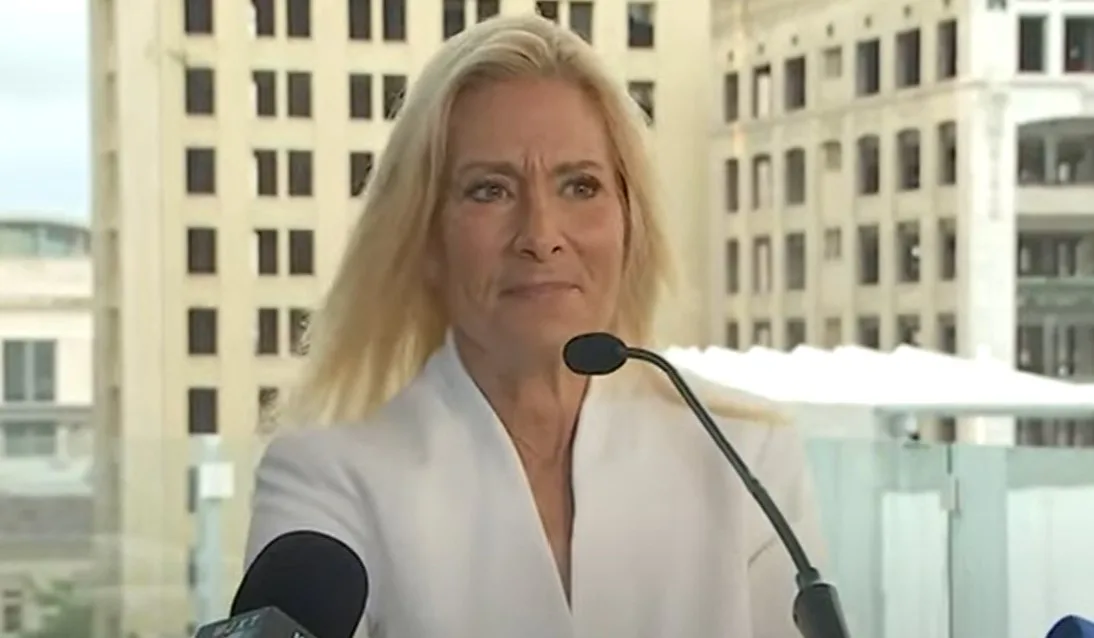
Jacksonville, Florida, was the largest city in the United States with a Republican mayor until Donna Deegan became the second Democrat mayor in thirty years on Tuesday night.

Jacksonville is the 12th largest city in the United States and, as of tonight, has only had one Democratic mayor in the last three decades.

The Tributary reported:

Former TV host Donna Deegan defeated JAX Chamber CEO Daniel Davis in a stunning upset for Jacksonville’s mayor, becoming the first woman and only the second Democrat to win a mayoral race here in three decades , although Davis outplayed them four to one.

….

Davis, a former city councilman and state representative, had been preparing for this mayoral race for the past eight years, when fellow Republican Lenny Curry was elected mayor. He relied heavily on his fundraising skills to reach voters through mailings, text messages, and advertising. He raised a record-breaking $8.4 million by the end of April, compared to $2.1 million for Deegan.

Davis was backed by Gov. Ron DeSantis, but his support didn’t help Republicans avoid a historic defeat.

The election results now available for 2023 seem to show a similar pattern to the last election cycle. The Democrats have the energy and momentum, and the more Donald Trump becomes the face of the Republican Party again, the more races Republicans are losing.

If Republicans had won a mayoral race in Phoenix, New York, Chicago, or Houston, the national media would cover Republican momentum and the troubles facing President Biden in 2024, but Democrats are winning elections across the country , which they haven’t won in decades, and there’s been nothing but silence from the corporate media.

Whether it’s Donald Trump or Ron DeSantis, there’s no sign of a Republican resurgence in the population.

It’s just a one-off election outside of the year, but if anything, the Democrats still appear to be the stronger and better organized party.

Jason is the managing editor. He is also White House press secretary and congressional correspondent for PoliticusUSA. Jason has a bachelor’s degree in political science. The focus of his thesis was on public policy with a focus on social reform movements.

Awards and professional memberships

Member of the Society of Professional Journalists and the American Political Science Association

Google Cloud introduces AI instruments to speed up drug discovery

A person walks next to the Google Cloud logo at the Mobile World Congress (MWC) in Barcelona, ​​Spain, on February 27, 2023.

Sweet Nacho | Reuters

Google Cloud on Tuesday launched two new AI-powered tools designed to help biotech and pharmaceutical companies accelerate drug discovery and advance precision medicine.

A tool called the Target and Lead Identification Suite aims to help companies predict and understand the structure of proteins, a fundamental part of drug development. Another solution, the Multiomics Suite, will help researchers ingest, store, analyze and share large amounts of genomic data.

The new developments mark Google’s latest advance in the red-hot AI arms race, with tech companies competing for dominance in a market that analysts believe could one day be worth trillions. Since the release of OpenAI’s ChatGPT late last year, the company has been under pressure to showcase its generative artificial intelligence technology.

Google announced its generative chatbot Bard in February. Shares of parent company Alphabet rose 4.3% last week after Google unveiled several AI advances at its annual developer conference.

The two new Google Cloud suites help address a long-standing problem in the biopharmaceutical industry: the lengthy and costly process of bringing a new drug to the US market.

Pharmaceutical companies can invest anywhere from a few hundred million to more than two billion US dollars to bring a single drug to market. according to a recent Deloitte report. Their efforts are not always successful. According to another Deloitte report, drugs that go through clinical trials have a 16% chance of being approved in the US.

This high cost and dismal success rate comes with an extensive and lengthy research process, typically lasting around 10 to 15 years.

The new suites will save companies a “statistically significant” amount of time and money throughout the drug development process, said Shweta Maniar, global director of life sciences strategy and solutions at Google Cloud. Google CNBC did not give specific figures.

“We help organizations get medicines to the right people faster,” Maniar said in an interview with CNBC. “I’m personally very excited, it’s something I and the team have been working on for a number of years.”

Both suites will be available to customers across the board from Tuesday. According to Google, costs vary by company. Several companies including Big Pharma Pfizer and biotech companies Cerevel Therapeutics and Colossal Biosciences are already using the products.

Target and lead identification suite

According to Maniar, the Target and Lead Identification Suite aims to streamline the first critical step in drug development, identifying a biological target for researchers to focus on and develop a treatment.

A biological target is most commonly a protein, an essential building block for disease and all other parts of life. Finding this target requires identifying a protein’s structure, which determines its function, or the role it plays in a disease.

“If you can understand the role, the protein structure, the role, you can start developing drugs on it now,” Maniar said.

However, this process is time-consuming and often unsuccessful.

According to a widely used guide for drugmakers published in a database maintained by the Federal National Library of Medicine, it can take scientists about 12 months to identify a biological target. The two techniques that researchers traditionally use to determine protein structures also have a high failure rate, according to Maniar.

She also said that it is difficult for traditional technologies to increase or decrease the amount of work as needed.

Google Cloud’s suite takes a three-pronged approach to make this process more efficient.

The suite enables scientists to ingest, share and manage molecular data on a protein using Google Cloud’s Analytics Hub, a platform that allows users to securely share data between organizations.

Researchers can then use this data to predict a protein’s structure using AlphaFold2, a machine learning model developed by a Google subsidiary.

AlphaFold2 runs on Google’s Vertex AI pipeline, a platform that enables researchers to build and deploy machine learning models faster.

In minutes, AlphaFold2 can predict the 3D structure of a protein, more accurately than traditional technologies and at the scale researchers need. Predicting this structure is crucial because it can help researchers understand a protein’s function in a disease.

The final component of Google Cloud’s suite helps researchers figure out how the protein’s structure interacts with different molecules. A molecule can become the basis for a new drug if it changes the function of that protein and ultimately shows the ability to treat the disease.

Researchers can use Google Cloud’s high-performance computing resources to find “the most promising” molecules that could lead to the development of a new drug, according to a press release accompanying the new tools. These services provide the infrastructure businesses need to accelerate, automate, and scale their work.

According to John Renger, Chief Scientific Officer, Cerevel, which focuses on developing treatments for neuroscientific diseases, typically has to sift through a large library of 3 million different molecules to find one that has a beneficial effect against a disease. He called this process “complicated, time-consuming and expensive”.

But Renger said that with Google Cloud’s suite, the company will be able to sort out molecules faster. Computers will take care of screening molecules and help Cerevel “get an answer really fast,” he said.

Renger estimates that Cerevel will save an average of at least three years by using the suite to discover a new drug. He said it’s difficult to estimate how much money the company will save, but stressed that the suite saves the resources and manual labor typically required to screen molecules.

“That means we can get to where we need to be quicker and cheaper, and we can get the drugs to patients much faster and without as many failures,” he told CNBC.

Cerevel has been working with Google for more than a month to better understand the suite and determine how the company will use it. But Renger hopes Cerevel will be “at a point where we’re getting some results” next month.

Multiomics suite

Google Cloud’s second solution, the Multiomics Suite, aims to help researchers solve another daunting challenge: analyzing genomic data.

Colossal Biosciences, a biotechnology company aiming to use DNA and genetic engineering to reverse extinctions, used the Multiomics Suite in their research.

As a startup, Colossal didn’t have the internal infrastructure needed to organize or decode massive amounts of genomic data. A human genome sequence alone requires more than 200 gigabytes of storage, and researchers predict they will need 40 exabytes by 2025 to store the world’s genome data, according to the National Human Genome Research Institute.

The institute estimates that every word ever spoken by humans could be stored in five exabytes, so building the technology to support genomic data analysis is no easy task.

Therefore, the Multiomics Suite aims to provide companies like Colossal with the infrastructure they need to make sense of big data so they can focus more on new scientific discoveries.

“If we had to do everything from scratch, that’s the power of Google Cloud, right?” Alexander Titus, vice president of strategy and computer science at Colossal, told CNBC in an interview. “We don’t have to build this from scratch, it definitely saves us time and money.”

Researchers’ ability to sequence DNA has historically exceeded their ability to decode and analyze it. However, as technology has improved in recent years, genomic data have provided new insights into areas such as the genetic variations associated with diseases.

Google Cloud’s Maniar said it could ultimately help develop more personalized medicines and treatments. In 2021 alone, two-thirds of the drugs approved by the Food and Drug Administration were supported by human genetics research, according to an article published in the journal Nature.

Maniar believes the Multiomics Suite will help drive further innovation.

Colossal CEO Ben Lamm said the Multiomics Suite is what gives the company the ability to conduct research “in any reasonable timeframe.” Colossal began piloting Google’s technology late last year. As a result, Lamm says the company is on track to produce a woolly mammoth by 2028.

According to Lamm, without the Multiomics Suite the company would have been set back by more than a decade.

“We wouldn’t be anywhere near where we are today,” he said.

Prior to using Google Cloud’s suite, much of Colossal’s data management was done manually using spreadsheets, Lamm said.

He said it would have been a “massive drain” on the company trying to create the more complex tools it needed for research.

“When it comes to biology, we’re not stuck in small amounts of data anymore,” said Titus of Colossal. “We think on the scale: How do we get insights into 10,000, 20,000, 10 million years of evolutionary history? And these questions simply cannot be answered without scalable computing infrastructure and tools like cloud computing and multiomics.”

Correction: It can take scientists about 12 months to identify a biological target, according to a widely used guide for drugmakers published in a database maintained by the Federal National Library of Medicine. In an earlier version, the attribution was incorrect.

Gabrielle Union says Dwyane Wade ‘divided the whole lot in half’

Despite being a well-known superstar with a star-studded family, Gabrielle Union speaks openly about how she’s still working to overcome it.

Despite those fears, however, Gabrielle was sure to point it out — in her and Dwyane Wade‘s household – they split the finances right down the middle.

Gabrielle Union rejects her “scarcity mentality”.

During a recent session on Bloomberg’s Idea Generation, Gabrielle spoke on the subject.

Approximately 18 minutes into the start of the 38 minute interview, moderator Noah Callahan Bever asks Union as she began to feel “the first sense of security” in knowing she’s an established actress who will continue to get work.

The Bring It On actress explained: “I’m struggling with this.”

She went on to explain that she felt she had “more responsibility for”. [her] Money.” As a result, she worries a lot about being able to successfully turn a profit from her projects and stay in the best financial shape, which makes her “nervous.”

She explained the thought process behind these fears by remarking: “Oh, that movie didn’t open. What does that mean? Will I have enough to feed everyone?”

Faced with these feelings, Gabrielle tries to “calm down” and not allow her “scarcity mentality.” [her] Engine.”

“I try to find peace on the journey [of] I don’t use my fear and scarcity mentality as my engine. Which is hard.”

Gabrielle says she and Dwyane Wade “shared everything” in their household.

Shortly after, Gabrielle opened up about the financial dynamics in her household. She revealed that she and Dwyane “split everything in half.”

“It’s weird to say I’m the head of the family because we split everything in half in this household.”

Union went on to talk about the looming pressure of having to work to stay afloat and continue to meet their financial obligations.

“In the other households that each of us has to support, one of these gorillas sits on his back and says, ‘You better be working, bitch! … Want to sleep in?'” Someone might not eat.'”

She ended the thought by adding: “It’s hard to let that go, so I’m working on it.”

Check out the full interview below.

What do you think of Gabrielle’s comment and would you ever split the bills 50/50?

CFPB case at Supreme Courtroom: Democrats file amicus transient

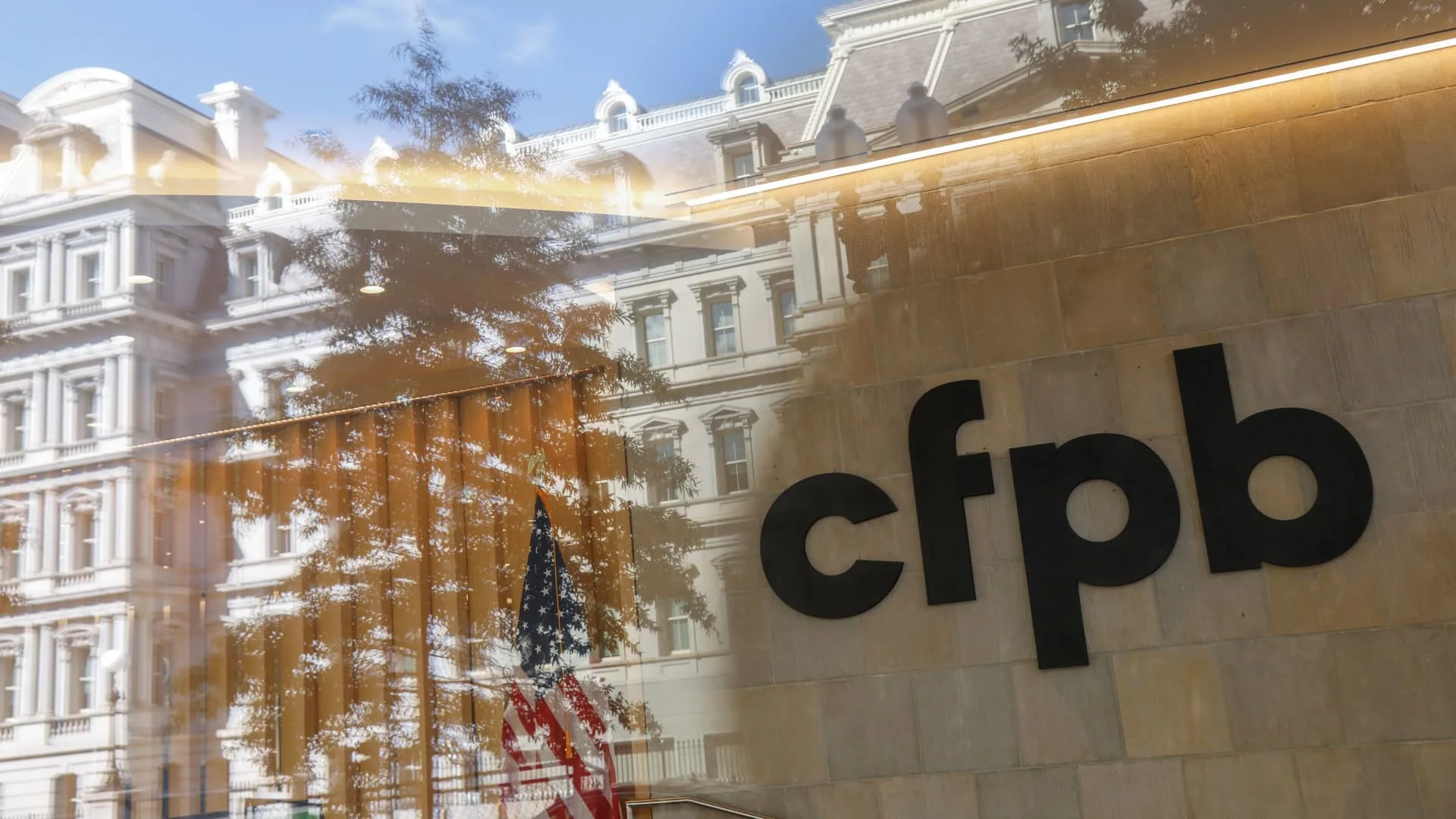
Signage at the Consumer Financial Protection Bureau (CFPB) headquarters in Washington, DC

Andrew Kelly | Reuters

WASHINGTON — More than 140 current and former Democratic lawmakers filed an amicus brief in the Supreme Court on Monday to defend the nation’s top consumer protection agency from challenges by its regulator.

The brief, led by Democrats Sen. Sherrod Brown of Ohio and Rep. Maxine Waters of California, relates to the Consumer Financial Protection Bureau v. Community Financial Services Association of America case, which challenges the agency’s constitutionality and would undermine its funding and the authorized authorities.

Brown chairs the Senate Banking Committee, while Waters is the senior member of the House Financial Services Committee.

Upholding an appeals court decision that undermines the agency’s funding mechanism “would jeopardize a funding model that has been used since the Republic’s early days and now applies to the agency.” [Office of the Comptroller of the Currency] and a host of other important federal programs,” lawmakers wrote.

The 144 include current and former Democratic House Minority Leaders Rep. Hakeem Jeffries and Senate Majority Leader Chuck Schumer, both from New York, along with Senate Majority Leader Dick Durbin, D-Illinois, and Speaker Emeritus Nancy Pelosi, D-California Members of Congress who signed the order.

Ten consumer protection organizations also filed an amicus brief with the Supreme Court this month in support of the CFPB.

The Supreme Court agreed to hear the arguments in the case in February, four months after a federal appeals court unanimously ruled that the CFPB’s funding method was unconstitutional.

Congress decided to fund the CFPB, created by the 2010 Dodd-Frank Act in the wake of the 2008 financial crisis, from the Federal Reserve to “ensure independence from unpredictable annual funding cycles,” the letter said.

Though the CFPB bypasses the annual appropriation process, its director must justify its budget to the House of Representatives every two years, lawmakers wrote, and Congress put an annual cap on the agency’s budget at a “modest” level using a portion of the revenue Federal Reserve firm.

In the October ruling, Justice Cory Wilson, a member of the three-judge panel on the Fifth Circuit Court of Appeals, called the funding mechanism a “system” “unique to the myriad independent executive agencies of the federal government.”

The Biden administration appealed the 5th Circuit’s decision to the Supreme Court, but a final decision could be delayed until June 2024 to hear further arguments in the case. In the brief, lawmakers narrowly concluded that “the judgment should be overturned.”

Fanatics PointsBet and Aristocrat NeoGames offers may very well be an indication of extra progress

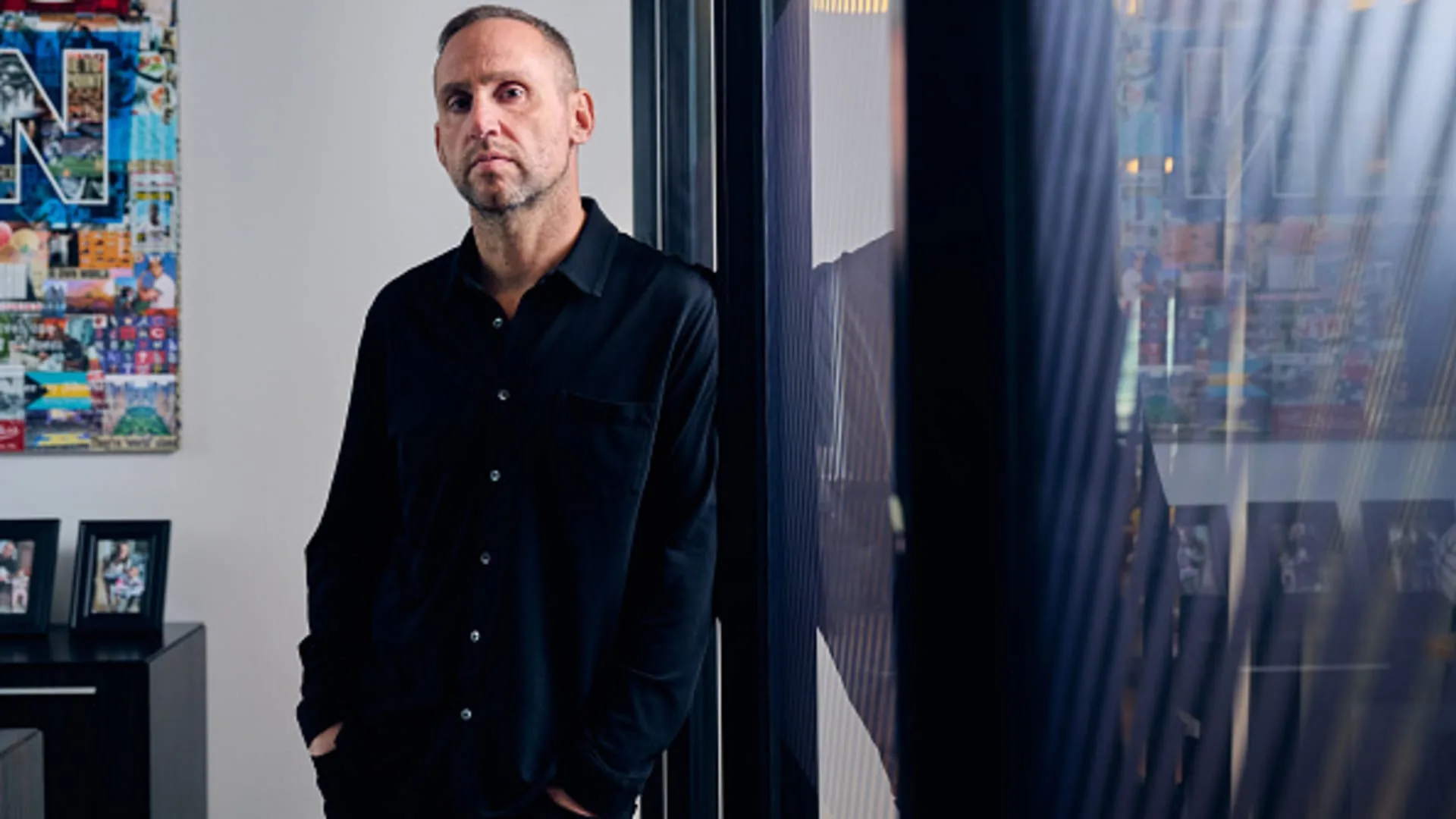
Fanatics Founder and CEO Michael Rubin at his office in downtown NYC, December 7, 2022.

The Washington Post | Getty Images

Fanatics’ spectacular $150 million takeover of PointsBet’s US operations wasn’t the only gambling deal in recent days – and could be a sign of more to come.

Fanatics announced on Sunday that it has agreed to buy PointsBet’s US assets, a long-rumoured connection. Fanatics CEO Michael Rubin previously promised to launch sportsbooks in every state where sports betting is legal, except New York.

The purchase of PointsBet gives Fanatics access to the market in New York and about 14 other states and most importantly to its iGaming or online casino games business in Michigan.

For Fanatics, the deal really pays off when it comes to upfront licensing fees that would have to be paid in new states.

“We are truly able to save tens of millions of dollars in upfront royalties by leveraging PointsBets’ presence rather than starting with a new one,” said Matt King, CEO of Betting and Gaming at Fanatics, on Monday .

King also said the cost of entering new markets is down 40 to 50 percent compared to about three to five years ago.

Now compare that to another blockbuster deal in the industry: the $1.2 billion acquisition of NeoGames from aristocrat. The deal announced on Sunday is for $29.50 per share, a 130% premium to NeoGames’ Friday closing price.

Aristocrat is a global leader in attention-grabbing slots. With the purchase of NeoGames, the company declares its intention to become competitive in the online lottery, casino and sports betting area.

David Katz, gaming analyst at Jeffries, wrote in a note Sunday night: “[NeoGames] and the digital gaming conglomerate in general are currently undervalued in the US market.” Still, he doesn’t expect higher valuations in the near future.

Just as importantly, according to Katz, the recent deals beg the question, “Who’s next?”

As M&A excitement reigns supreme at gaming conferences, there is speculation about SportRadar, a global sports data provider, as a potential takeover target, as well as Gambling.com, an affiliate company that provides media content to attract new depositors to gaming operators.

Rush Street Interactiveanother frequent target of takeover speculation lately, is first working to flex its muscles as an iGaming operator and then as a sportsbook operator.

At the SBC Summit, a top sports gambling conference, last week, CNBC asked RSI CEO Richard Schwartz if he was okay with offers.

“We have an obligation to shareholders and to achieve the best possible return. So we’re always open to exploring opportunities,” he said, before highlighting reasons why RSI would be attractive.

Rush Street Interactive CEO on M&A Opportunities

Fanatics’ King agrees further consolidation is likely.

“There’s really no new capital in this category,” he said. “Anyone who does not have a sustainable business model is ripe for a takeover.”

However, don’t expect inflated prices when it comes to gaming acquisitions, King said.

“I think people’s price expectations have certainly started to reflect reality,” he added.

— CNBC’s Jessica Golden contributed to this report.

Common flu vaccine based mostly on mRNA expertise to be examined by NIH

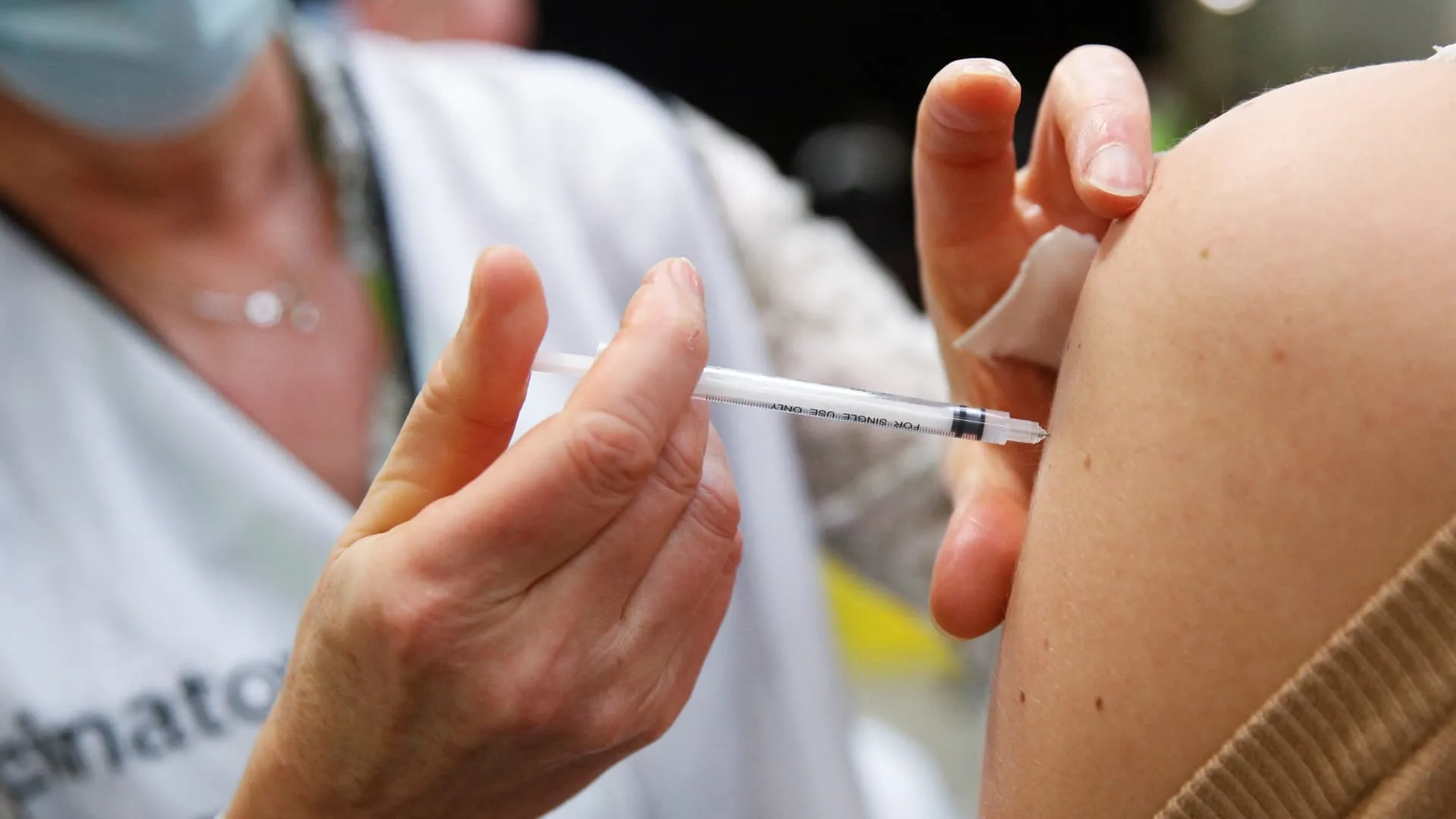
A woman receives a booster dose of Moderna coronavirus vaccine (COVID-19) at a vaccination center in Antwerp, Belgium, February 1, 2022.

Johanna Geron | Reuters

The National Institutes of Health announced Monday that patients are now enrolling in an early clinical trial to test a universal influenza vaccine based on messenger RNA technology.

Scientists hope the vaccine will protect against a wide range of influenza strains and provide long-term immunity so people don’t need to be vaccinated every year.

Messenger RNA or mRNA is the technology behind it Modern‘s and PfizerThe widely used Covid vaccines are widely available. NIH played a critical role in developing the mRNA platform used by Moderna.

“A universal influenza vaccine could serve as an important line of defense against the spread of a future influenza pandemic,” said Dr. Hugh Auchincloss, acting director of the National Institute of Allergy and Infectious Diseases, in a statement Monday.

According to the NIH, the universal flu vaccine trial will enroll up to 50 healthy people, ages 18 to 49, to test whether the experimental vaccine is safe and will elicit an immune response.

The study will also include participants receiving a quadrivalent influenza vaccine that protects against four strains of the virus to compare the experimental universal vaccine with those currently on the market.

The universal syringe was developed by researchers at the National Institute of Allergy and Infectious Diseases. For the clinical study, volunteers will be recruited at Duke University in Durham, North Carolina.

The current generation of influenza vaccines offer important protection against hospitalization, but the effectiveness of vaccinations can vary greatly from year to year.

Scientists currently have to predict months in advance which influenza strains will dominate, to give vaccine makers time to produce the vaccines ahead of the respiratory virus season.

The predominant influenza strains can change between the time experts select strains and the time manufacturers introduce vaccines. In some seasons, vaccinations are not well matched to the circulating loads and are therefore less effective.

According to the Centers for Disease Control and Prevention, flu vaccines reduce disease risk by 40 to 60% when well matched to circulating strains. However, in some years the effectiveness of the vaccines was only 19% because the vaccination was not well coordinated.

According to the CDC, between 2010 and 2020, between 12,000 and 52,000 people died from the flu annually in the United States, depending on the strains circulating and the timing of vaccinations.

Darkish Brandon performs on Mom’s Day

As President Biden finished a bike ride, he answered questions from reporters. When asked how the border is doing, Biden said, “Better than expected,” then laughed.

Video clip of President Biden:

When asked how things were going at the border, Biden told the reporter, “Better than expected,” and then he laughed. pic.twitter.com/CSeYQ2p7sZ

— Sarah Reese Jones (@PoliticusSarah) May 14, 2023

The exchange as provided to PoliticusUSA by the White House pool report:

How Border Is Turning Out: “Much better than you all expected.”

On plans to visit the border: “Not in the near future, no. It would just be disruptive.”

He said the number at the border has gone down, but “we still have work to do. We need more help from Congress.”

Dark Brandon can appear at any time. He’s always there, lurking beneath the surface, unafraid to remind the media and Republicans when they underestimate him. One minute, he’s America’s happy Grandpa Joe, out for a bike ride on a beautiful Mother’s Day, until he’s asked a question and pounces on it.

One of the reasons Biden is underestimated is his image as a nice churchman, but there’s also a part of Biden that’s a political shark and wants to win. That’s where Dark Brandon lives, and that’s why it’s a mistake to ever underestimate Joe Biden.

For more stories like this, subscribe to our newsletter:

Jason is the managing editor. He is also White House press secretary and congressional correspondent for PoliticusUSA. Jason has a bachelor’s degree in political science. The focus of his thesis was on public policy with a focus on social reform movements.

Awards and professional memberships

Member of the Society of Professional Journalists and the American Political Science Association

Insurgent Wilson shares new pictures of her little woman on Mom’s Day

Aca-adorable!

On her first Mother’s Day as a mother Rebel Wilson has shared the most prominent photos yet of her first child, her daughter Royce Lillian Elizabeth Wilson.

In her May 14 Instagram post, the Pitch Perfect actress shared a picture of herself and her fiancée Ramon Agrum– who wears a pink baseball cap that says “Mama” and sits with the 6-month-old baby. Royce wears a cream wool bunny hat, a pastel pink cardigan, gray sweatpants, and white and pink fluffy socks.

Another picture shows Rebel holding up the little girl as she stands with her on the deck of a large boat. Royce wears a pink and white polka dot ruffled dress and is barefoot. A third image shows the baby wearing a blue and white sun hat and lying on a towel with his mother on a desk overlooking the ocean.

In her caption, the Bridesmaids actress shared an anecdote about parenting that was just perfect.

“Happy Mothers’s Day! (I just woke up at 5:30 am and I’ve changed a lot [poo]” she wrote. “How about you?”

Chinatowns confront fast luxurious growth

Just a few hundred people of Chinese heritage still live in Washington, D.C.’s Chinatown. Many have been pushed out to cheaper and safer areas.

Noah Sheidlower | CNBC

Penny and Jack Lee, now married, grew up in the 1960s and 1970s among the thousands of people of Chinese heritage who lived in apartments lining the main stretches of Washington, D.C.’s bustling Chinatown.

“Chinatown was very bright, vibrant,” Jack Lee recalled. “All of our recreations ended up being in the alleys of Chinatown.” They felt it was a safe haven, he said.

related investing news

CNBC Pro

But the neighborhood didn’t stay the same for long. First came a convention center in 1982 that displaced many in the majority Chinese community. Then, in 1997, came the MCI Center, now Capital One Arena, a few blocks from the heart of the neighborhood. These developments, as well as luxury condos, caused rents to rise and forced grocery stores and restaurants to close. They also pushed residents to move to safer and cheaper areas, Penny Lee said.

Just a few hundred people of Chinese heritage still live in the neighborhood, mostly in Section 8 apartments for lower-income residents. There are now fewer than a dozen Chinese restaurants, as well as the long-standing Chinatown gate and non-Chinese businesses with signs bearing Chinese characters. Jokingly called the “Chinatown Block,” reflecting its diminished size, what’s left of the neighborhood is mere blocks from a wealthier area that contains the U.S. Capitol and the National Mall.

Chinatowns across the nation face a similar reckoning. In major Chinatown neighborhoods, luxury development and public-use projects have altered the fabric of these historic communities, according to more than two dozen activists, residents and restaurant owners. While some argue these developments accelerate local economies, many interviewed by CNBC say they destroy the neighborhoods’ character and push out longtime residents.

Some Chinatown residents benefited from the development boom, selling properties to developers or drawing more customers from increased foot traffic. Many others, meanwhile, have been driven out by higher rents, limited parking and increasingly unsafe conditions.

The changes in Chinatowns across the country look similar, though they’re unfolding at different timelines and magnitudes. Chicago’s Chinatown, in comparison with other Chinatowns with shrinking populations, more than doubled its Chinese population between 1990 and 2020.

“Those who are interested in preserving D.C. Chinatown should look toward its intrinsic value to tell the Chinese American story, the American story,” said Evelyn Moy, president of the Moy Family Association, which provides education and assistance to residents in Washington, D.C.

Noah Sheidlower | CNBC

Cities already deeply affected by gentrification and high-end development stand as templates for how the shift may unfold elsewhere. For many, housing is the problem — and the solution.

“We can’t build our way out of the housing crisis, but we can’t get out of the housing crisis without building,” said Ener Chiu, executive vice president of community building at East Bay Asian Local Development Corporation in California, which has built 2,300 permanently affordable homes in Oakland.

A case study in the heart of Manhattan

In Manhattan’s Chinatown, which dates back to the late 1800s, residents and local organizations said there are two interrelated fights: one against luxury development, and another to build more affordable housing and maintain existing apartments. Some have been frustrated that money and government support have gone toward skyscrapers and not the longtime residents who still struggle to secure housing in the neighborhood.

Opponents say tall, modern buildings — such as One Manhattan Square, a 72-story residential skyscraper in nearby Two Bridges developed by Extell Development Group, which features units priced at over $1.2 million — will affect surrounding property values, the structure of neighboring buildings and the percentage of Asian residents in Chinatown.

Opponents say tall, modern buildings such as One Manhattan Square affect surrounding property values, the structure of neighboring buildings and the percentage of Asian residents in Chinatown.

Noah Sheidlower | CNBC

There are also plans to develop four more towers ranging from 62 to 77 stories, each with 25% affordable housing, by Extell, JDS Development Group, and Chetrit Group.

City councilmember Christopher Marte and residents of the Lower East Side and Chinatown filed a lawsuit against the buildings’ developers and the city in October, arguing construction of the towers will create further environmental and health issues. The suit contends the developments violate the Green Amendment granting New York state residents the right to clean air.

Extell and JDS Development Group did not provide comment for this story.

Some residents have shown tentative support for the luxury buildings, saying they might make the neighborhood safer or bring in wealthier Asian residents who could boost Chinatown’s economy. Most who spoke with CNBC, however, expressed frustration over the rapid development of these megaprojects.

The Two Bridges fight is an experiment in looking out for residents’ livelihoods while “fighting against a very anti-humanity way of seeing a city,” said Alina Shen, the lead Chinatown Tenants Union organizer at grassroots community organization CAAAV: Organizing Asian Communities. “It’s a response to the fact that people who remain in Chinatown feel a deep pessimism for what’s happening and from literally being in the shadow of a ledge of a mega tower.”

The struggle with luxury developers has also involved the fight for secure housing.

Manhattan Chinatown’s housing stock is “really aged,” which has led to costly fires, according to Thomas Yu, executive director of Asian Americans for Equality.

Noah Sheidlower | CNBC

Chinatown’s housing stock is “really aged,” but sparse vacant land has made creating affordable housing difficult, said Thomas Yu, executive director of Asian Americans for Equality, which has created more than 800 affordable housing units citywide. The development process for new units can take years, he said, and developers have rapidly sought out Manhattan’s Chinatown as the borough’s “last place with huge potential returns.”

Evictions, buyouts and deregulation of rent-stabilized housing have contributed to Chinatown’s population decline and illegal sublet situations, according to Yu.

Chen Yun, a tenant leader for CAAAV, said she had a landlord who for years refused to repair heating and hot water. She said she and her husband would boil pots of water at work and bring them home to bathe. They also dealt with a collapsed ceiling, she said. Yun spoke in Mandarin, translated by Shen and CAAAV communications manager Irene Hsu.

In 2005, Yun helped grow the Chinatown Tenants Union to help residents fight landlords and report faulty conditions. However, residents continue reporting similar housing issues, which Yun said has pushed some onto the streets, and more residents have mobilized to oppose developments they say could exacerbate these issues.

“No matter how beautiful or well-built these buildings are, [residents] simply can’t afford it, it’s not within their means, and these luxury buildings have nothing to do with us,” said Yun, who lost her job during the pandemic and spends much of her retirement money on rent.

Yu, of Asian Americans for Equality, said his organization is not against development but that more affordable housing should go up instead of solely market-rate buildings. Asian Americans have among the highest citywide poverty levels and have poor odds of finding secure housing, Yu said.

Some argue luxury development is eliminating affordable housing opportunities by sheer proximity, as one of Chinatown’s ZIP codes was excluded from a city loan program for low-income areas since it also included the wealthy Soho and Tribeca neighborhoods.

In Manhattan’s Chinatown, residents and local organizations said there are two interrelated fights: one against luxury development, and another to build more affordable housing and maintain existing apartments.

Noah Sheidlower | CNBC

Some residents expressed feeling an intense divide between their local government and Chinatown — fueled in part by rezoning debates, not to mention a proposed $8.3 billion 40-story jail in the neighborhood.

Zishun Ning of the Chinatown Working Group has led protests against the proposed jail, as well as against the Museum of Chinese in America, which stands to benefit from the jail’s expansion via a $35 million government investment. Ning said the city government’s “big development” agenda has “pitted us against each other.”

The museum’s leaders said they’ve been scapegoated, as they weren’t included in development talks with the city but could not turn down the money.

Moving out

For many Chinatown residents, rising rents and sparse affordable housing have left them with one choice: moving away. But challenges often follow residents, and once they resettle, some face familiar changes.

Maggie Chen, a receptionist in Boston who has lived in an affordable housing development for eight years, said rising rents have made her reconsider whether living in Chinatown is economical.

Noah Sheidlower | CNBC

Many Chinese residents have relocated from Boston’s Chinatown to the nearby suburbs of Malden and Quincy, said Angie Liou, executive director of Boston’s Asian Community Development Corporation. Luxury buildings have opened in these suburban satellite Chinatowns as developers look to capitalize on less developed parts of the city, pushing residents further away.

In Manhattan, a woman with the surname Yang, who requested partial anonymity to preserve her privacy, said she had lived in a $1,100-per-month Chinatown apartment, which her family could no longer afford due to increasing rent. After applying for public housing through the NYC Housing Authority, she moved eight miles away in 2009 into a $400-per-month apartment in East Harlem.

“It was a hard readjustment period just because my life is even to this day still tied to Chinatown, so the train commute is an extra hour,” Yang said. She spoke in Fujianese, with translation by Ling Ren, Asian Americans For Equality’s manager of residential services.

Some Chinatown residents have looked to the suburbs for cheaper rent, lower maintenance costs and better parking, said Patty Moy, manager of China Pearl Restaurant, which has locations in Boston and Quincy, Massachusetts.

Noah Sheidlower | CNBC

Yang said she still goes downtown each week for doctor’s appointments and groceries. She found several other people of Chinese heritage living in her new neighborhood with whom she waits in food pantry lines, some of whom have also relocated from downtown Manhattan, she said.

Other displaced members of New York’s Chinese community have relocated to Flushing, Queens, a hotbed for condominium and affordable housing developments.

Though communities such as Flushing have long appealed to residents across many socioeconomic backgrounds, it’s recently attracted wealthier residents moving into new developments.

“One of the unique aspects of Flushing is what I call the 15-minute neighborhood, the idea that you can live, work, play, go to school, partake in open space, shop, sort of all within 15 minutes,” said Ross Moskowitz, partner at Stroock & Stroock & Lavan, who represents several developers’ projects in the neighborhood.

And as more people move in, rents go up, meaning many residents who relocated to Flushing for cheaper rent have found themselves in the same battles with developers that they fled from, according to Jo-Ann Yoo, executive director of Asian American Federation.

Chinatowns and the pandemic

Many debates surrounding luxury development and affordable housing were accelerated by the pandemic, which shuttered hundreds of businesses across Chinatowns. After experiencing xenophobia and discrimination fueled by anti-Chinese sentiment during the pandemic, many people stopped coming to Chinatowns and frequenting restaurants, clothing stores and art shops. Local families were forced to restrict spending, and some businesses had to cut staff and hours.

Some businesses in Oakland have been unable to build back after looting and anti-Asian attacks on public transit caused many residents to fear going out after dark, said Evelyn Lee, former president of the board of directors at Oakland Asian Cultural Center. This has contributed to reduced pedestrian traffic in Chinatown, she said.

Manhattan Chinatown native David Leung took over Wo Hop Restaurant in 2016. Leung reduced his restaurant’s hours in 2020 during the Covid pandemic and watched as storefronts emptied.

Noah Sheidlower | CNBC

In Manhattan, Chinatown native David Leung, who took over Wo Hop Restaurant in 2016, remembers old-school factories making tofu and small grocery stores that recently closed. Amid rising anti-Asian sentiment and the pandemic’s harsh economic impact, Leung reduced his restaurant’s hours and watched as storefronts emptied.

“There are so many stories about Chinese restaurants around for decades, and now they’ve gotten replaced by modern types like tea shops or pastry shops,” Leung said. “Chinatown is still an Asian community, I guess, but it’s a lot more mixed than it used to be decades ago.”

To assist struggling small businesses, nonprofit organization Welcome to Chinatown distributed over $750,000 in small business grants throughout the community through its Longevity Fund, its co-founder Vic Lee said. Send Chinatown Love, which provides relief and growth efforts, raised over $1.1 million for the neighborhood and directly supported 59 merchants, according to its website.

Mei Lum is the fifth-generation owner of Wing on Wo & Co., the oldest operating store in Manhattan’s Chinatown, as well as the founder of the W.O.W. Project. She said there isn’t a robust next generation to “really problem-solve and think through these circumstantial, political, and contextual issues arising in the neighborhood.”

Noah Sheidlower | CNBC

Still, many small businesses are threatened by the changes. The new generation hasn’t frequented restaurants such as Hop Lee as often as older clientele due to differences in taste, said the restaurant’s owner, Johnny Mui.

“A lot of our businesses now, they’re more for a higher income bracket, and it’s just growing over the years slowly,” said Carry Pak, a Chinatown resident and CAAAV youth leader. “Having spaces where the immigrant community can still feel comfortable with being able to speak the language to street vendors or grocery vendors is particularly key.”

The stadium debate

Another common issue facing Chinatowns: sports arenas and other public-use venues. Some argue stadiums can provide Chinatowns with more foot traffic and opportunities, though others say they have historically destroyed homes and attracted chain businesses that outcompete Chinatown businesses.

Plans for a new Oakland Athletics ballpark a mile from the city’s Chinatown, which prompted concerns from residents, fell through last month after the team purchased land for a new stadium in Las Vegas.

In Philadelphia, plans for a new arena have irked some Chinatown residents and business owners, who say developers and city governments have neglected the community’s needs.

“We as a community need to be opposing it as much as possible in case there’s legs to this idea that the arena is going to be built,” said John Chin, executive director of the Philadelphia Chinatown Development Corporation.

Pia Singh | CNBC

A proposed $1.3 billion Sixers arena would sit blocks from the city’s Chinatown Friendship Gate. The privately funded arena is in the first stages of construction. Developers are working on gaining entitlements and approvals as the project moves toward its scheduled September 2031 opening date.

The development team expects the 18,000-seat arena to be a “major economic driver” for Philadelphians, projecting $400 million of annual economic output and 1,000 jobs.

Since the proposal was made public last summer, several Chinatown community members and residents petitioned the developers and city leaders to shutter the project. Experts previously said professional sports stadiums fail to generate significant local economic growth, and tax revenue is insufficient to make positive financial contributions.

The owner of Little Saigon Cafe in Philly’s Chinatown, a man known as “Uncle Sam,” leads a coalition of more than 40 association leaders against the arena development. Uncle Sam, a Vietnamese refugee, came to the city more than four decades ago.

“If the arena is built, it will destroy a community, destroy our culture,” he said.

“We’ll fight to the end. We’ll do everything we can to defeat this [arena] project,” said “Uncle Sam,” the owner of Little Saigon Cafe in Philadelphia’s Chinatown.

Pia Singh | CNBC

Private and government-led investments in public spaces have pushed out lower-income residents, said John Chin, executive director of the Philadelphia Chinatown Development Corp. His organization empowers native Chinese speakers to voice their opinions to Chinatown’s elected officials, city representatives and Sixers development heads.

The Sixers did not respond to a request for comment on how the development would impact Chinatown.

Last month, Philadelphia Mayor Jim Kenney announced the city would conduct an independent study on the arena’s impact on the community.

Staying alive — and growing

Many Chinatowns have struggled to secure government support while they contend with tough conditions in the economy and the real estate market.

Yet some Chinatown leaders remain optimistic they can work with developers to maintain the neighborhoods’ character. Some leaders doubled down on fighting developers to preserve historic architecture and businesses, while others embraced development to grow opportunities for residents.

Business owners in San Francisco’s Chinatown who spoke with CNBC said the neighborhood’s businesses, though still recovering, are keeping the city’s culture alive.

Rebecca Smith | CNBC

San Francisco Chinatown’s more than 14,000 residents, many of whom are low-income and elderly, have faced housing shortages. Modern businesses are taking over decades-old shops.

However, business owners who spoke with CNBC said Chinatown’s businesses, though still recovering, are keeping the city’s culture alive.

George Chen, who owns the contemporary Chinese restaurant China Live, remains optimistic about getting San Francisco’s Chinatown back to its heyday.

“You can look from my roof and go see pretty much the 22 blocks of Chinatown, and I think there’s a cultural relevance to keeping the immigrant story alive,” Chen said.

At least one U.S. Chinatown has grown while others shrink.

The Asian population of Chicago’s Chinatown has more than doubled in three decades, according to the U.S. Census Bureau. Many new residents are Fujianese from Southeast China and have driven new restaurants, buildings and support services.

Paul Luu, CEO of Chicago’s Chinese American Service League, said families have moved from other Chinatowns to Chicago’s to take advantage of the city’s nonprofits and the growing local job market. He added that its distance from the pricier South Loop makes prices cheaper than in other cities.

The Asian population in Chicago’s Chinatown has more than doubled in three decades, according to the U.S. Census Bureau.

Noah Sheidlower | CNBC

Despite the growth, Chicago’s Chinatown is facing some of the same issues as those in other cities.

Some residents have expressed concerns about a $7 billion development called The 78, which will include high-rises, residential towers, office buildings and a riverwalk to the north of Chinatown. Some fear The 78 would raise rents and property taxes, as well as push out local businesses and residents.

Luu said The 78’s leadership team approached Chinatown leaders early in development to hear concerns and work to establish more affordable and accessible housing and commerce.

As high-end development occurs in the right locations, it can promote the local economy and encourage progress, said Homan Wong, an architect on the board of directors for the Chicago Chinatown Chamber of Commerce. He said issues of parking and safety still hurt Chicago’s Chinatown but that the Chamber remains focused on working with developers to keep the community growing.

“The opposite of development would be decay,” he said. “The reality is that if you don’t move forward, you’re going to fall behind.”

— Noah Sheidlower reported from Boston, Chicago, New York and Washington, D.C. Pia Singh reported from Philadelphia. CNBC’s Rebecca Smith contributed reporting from San Francisco.