Lucid (LCID) earnings Q1 2023

A sign is posted on the exterior of Lucid’s headquarters in an aerial photo on March 29, 2023 in Newark, California. Electric vehicle maker Lucid announced plans to lay off 1,300 employees, 18 percent of its workforce, as part of a restructuring plan.

Justin Sullivan | Getty Images

Manufacturer of luxury electric vehicles Lucid group on Monday reported expanding first-quarter losses but said it still had enough cash to continue operations next year.

Following the news, shares fell over 8% in after-hours trading.

“We are on track to produce over 10,000 vehicles by 2023, and company-wide initiatives are underway that will allow Lucid to move to higher volumes when market conditions allow,” CEO Peter Rawlinson said Monday. Lucid in February forecast production of 10,000 to 14,000 vehicles in 2023.

Here are the key numbers from Lucid’s first-quarter earnings report, along with Wall Street consensus estimates as reported by Refinitiv:

  • Loss per share: 43 cents
  • Revenue: $149.4 million versus expected revenue of $209.9 million.

Analysts polled by Refinitiv were expecting a loss of 41 cents per share, but it wasn’t immediately clear if the reported results were comparable to those estimates.

Lucid’s net loss for the first quarter was $779.5 million, or 43 cents a share, much larger than the net loss of $81.3 million, or 5 cents a share, reported in the first quarter of 2022 when the Production was still ramped up air. However, revenue increased year-over-year to $149.4 million from $57.7 million.

Lucid ended the first quarter with approximately $3.4 billion in cash and approximately $700 million in available credit lines. CFO Sherry House said the cash should be sufficient to fund the company through at least the second quarter of 2024.

The EV maker had about $4.4 billion in cash and another $500 million in loans at the end of 2022.

Lucid recently moved to save cash. It said in March it would cut about 18% of its workforce, some 1,300 workers, to cut spending.

The company is still dampening concerns about demand.

The automaker’s expected 2023 production of “over 10,000” Air sedans is well below the “over 28,000” reservations it recorded in its fourth-quarter earnings report in February. And in April, Lucid said it produced 2,314 Airs in the first quarter while delivering just 1,406 to customers during that period, a gap the company blamed on a “slow January” and changes to the US government’s EV tax credits .

In another sign that demand for Air may be weak, Lucid declined to provide an updated reservation number on Monday.

Lucid said on April 25 that its next model, a large electric SUV called the Gravity, is on track to start production in 2024. It plans to unveil the Gravity later this year.

This story evolves. Please check again for updates.

SEC Inventory Buyback Disclosure Guidelines: What You Ought to Know

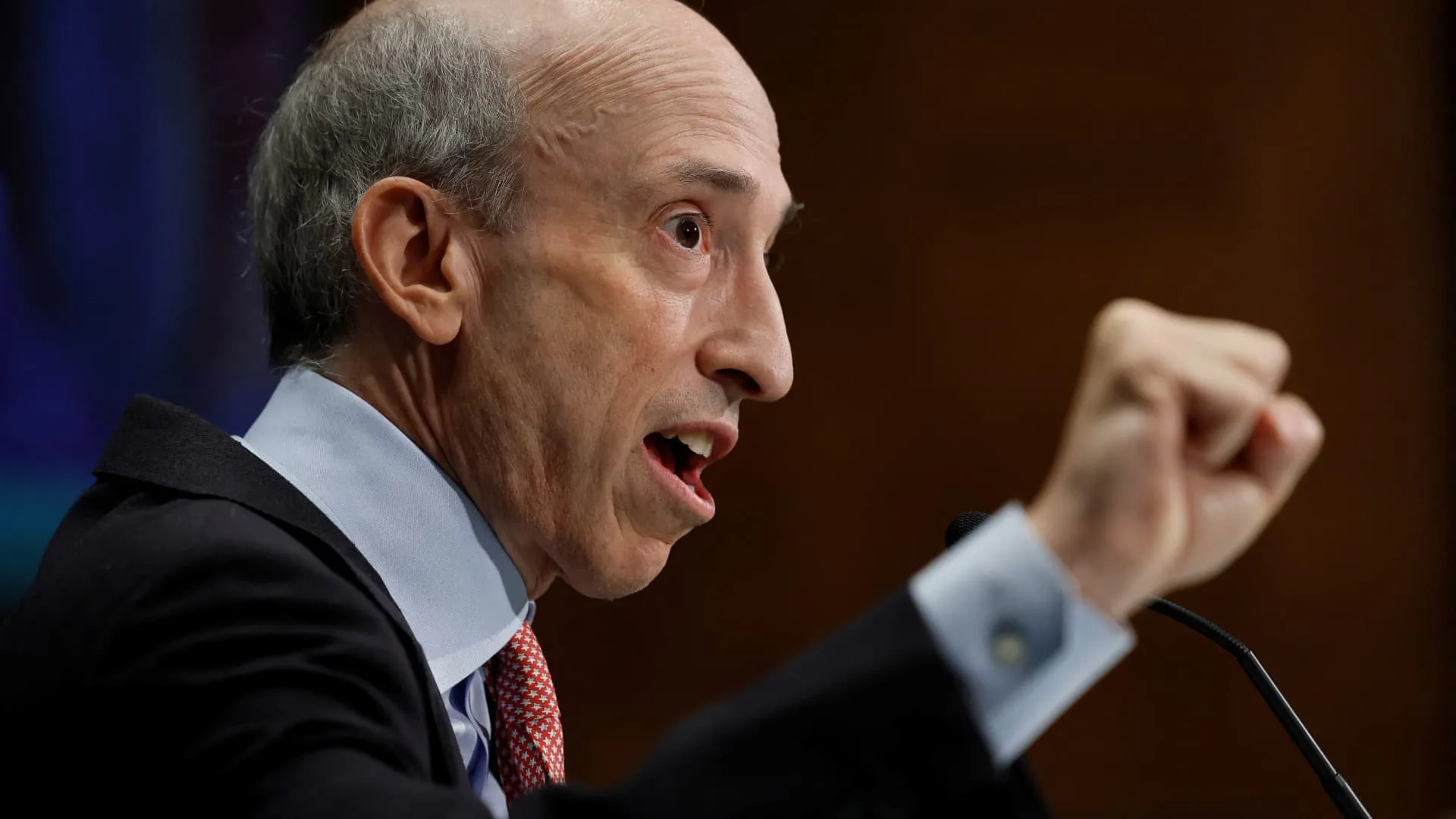
U.S. Securities and Exchange Commission (SEC) Chairman Gary Gensler testifies before the Senate Committee on Banking, Housing and Urban Development during an oversight hearing on Capitol Hill in Washington September 15, 2022.

Evelyn Hockstein Reuters

WASHINGTON — As investors focused on earnings and regional banks this week, the Securities and Exchange Commission quietly passed new rules requiring public companies to disclose far more information about share buybacks than ever before.

The new rules “will increase the transparency and integrity” of company stock buybacks overall and allow investors “to better assess issuer buyback programs,” SEC Chairman Gary Gensler said in a statement accompanying the updated disclosures.

Gensler also noted the rapid pace at which US corporate buybacks have grown in recent years, from a total of $950 billion in 2021 to more than $1.25 trillion last year.

This year could be just as big. Google parent Alphabet announced last month that its board of directors has approved $70 billion in share buybacks this year, which is the amount the company spent buying back its own stock in 2022. This week, Apple announced plans to buy back even more stock than Google: worth $90 billion this year, on the heels of a previous $90 billion in 2022.

The new disclosure rules come into effect when US companies report earnings for the fourth quarter of 2023, and slightly longer for foreign issuers.

What public companies are required to disclose

  • A daily log of share repurchase activity, published as an attachment to the 10-Q reports and the annual 10-K report at the end of each quarter.
  • A description of the reasons behind each buyback and the objectives of that buyback. The issuer must also explain the criteria it used to determine how many shares to repurchase.
  • Whether certain directors or officers of the company bought or sold the shares in question within four days before or after the repurchase.
  • More details on the Company’s stock dealing arrangements with its directors and officers, known as 10b5-1 plans. This includes the start and end dates, the total number of shares and the material terms of these plans.

The new rules, approved 3-2 by a commission vote on Wednesday, mark the end of a years-long battle over how much information the public and shareholders are entitled to know about the increasingly common practice of buying back their own shares become.

They also reflect a larger nationwide debate about stock buybacks, which typically increase the value of a company’s stock by reducing the total number of shares on the market.

Because top executive compensation is often tied to stock price performance metrics, over the past decade buybacks have become a relatively easy and quick means of increasing a company’s stock price, in many cases much easier than it is , increase sales or expand operations , or increase profits.

Markets have also seen an increase in the practice by public companies of issuing debt to buy back their own stock, a practice that some economists believe poses a threat to the long-term health of the US economy.

The changes, approved on Wednesday, weaken the SEC’s originally proposed disclosure rules that would have required publicly traded companies to report company insider trades on a daily basis. The commission said its final decision was influenced by concerns expressed in public comments that daily reporting was too expensive and time-consuming.

Public interest groups, many of whom have become increasingly critical of widespread corporate buybacks, welcomed the new rules.

“Share buybacks have grown significantly in recent years and are increasingly being used to enrich executives rather than reinvest capital to boost a company’s long-term productivity, profitability and employee well-being,” said Stephen Hall, legal director at the nonprofit Organization Better Markets. “This final rule will certainly increase the quantity, quality and timeliness of reporting on these controversial transactions.”

But industry advocates called the new rules onerous and unfair, and accused the SEC of trying to prevent companies from buying back their own stock.

“The Commission’s attempt to prevent these mundane, sane transactions through an overly complicated, expensive and unenforceable disclosure mandate is … a departure from its mission to improve capital formation and protect investors,” said Chris Netram, managing vice president of the National Association of Manufacturers.

There has been bipartisan support on Capitol Hill for tougher disclosure rules on buybacks since the SEC’s rulemaking process began more than a year ago.

Capital markets “provide the means by which companies raise capital and invest it productively for the benefit of their investors, workers, communities and ultimately our country as a whole,” wrote Sens. Tammy Baldwin, D-Wisc., and Marco Rubio, R-Fla. , in a letter to Gensler in 2022.

The explosion in corporate buybacks, they wrote, represents a shift “toward securities transactions for the purpose of financial engineering rather than raising capital for productive investment in commerce and industry.”

The SEC has repeatedly stated that it has no position on whether corporate stock repurchases are good or bad and that the new disclosure rules merely reflect the growing importance of repurchases as a key element of corporate strategy.

CEO of J&J spin-off Kenvue focuses on post-IPO innovation

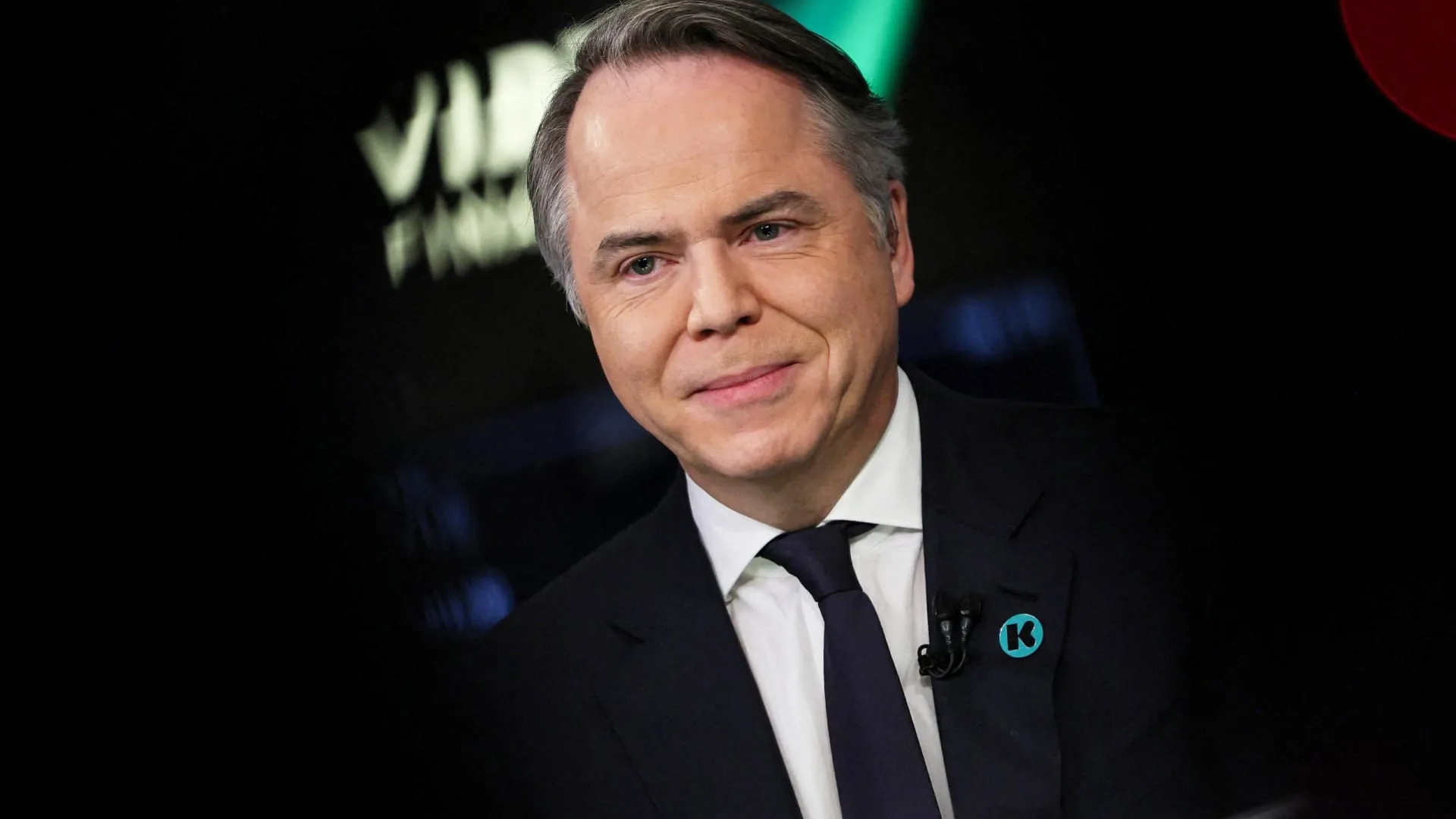
Thibaut Mongon, CEO of Kenvue Inc., a Johnson & Johnson consumer health company, speaks during an interview with CNBC during his company’s initial public offering on the New York Stock Exchange (NYSE), May 4, 2023.

Brendan McDermid | Reuters

Kenvue CEO Thibaut Mongon is banking on brand and product innovation to fuel the growth of the newly spun-off company following its solid public market debut on Thursday.

“Over the next quarter, and quite frankly, years to come, we will continue to do what we do best, which is innovate to find new ways to serve consumers and help them take better care of their health.” ‘ Mongon told CNBC in an interview shortly after Kenvue’s shares went public on the New York Stock Exchange.

Shares of the company gained 22% on Thursday to close at $26.90 a share. The stock hovered around this level in early trading Friday, giving the company a market value of around $50 billion.

Kenvue, spun out Johnson&Johnsoncarries a packed portfolio of well-known brands such as Band-Aid, Tylenol, Listerine, Neutrogena, Aveeno and J&J’s namesake baby powder.

Ten of Kenvue’s brands have generated at least $400 million in sales over the past year, according to a preliminary prospectus the company filed with the Securities and Exchange Commission last week.

But Mongon told CNBC that Kenvue’s portfolio of brands has “ample opportunity” to grow.

According to Mongon, the company’s plans for product innovation include new science and technology to create new products that meet specific consumer needs in ways never seen before.

Kenvue has a team of around 1,500 research and development professionals who find new ways to improve a specific product.

Mongon believes product innovation will ultimately make Kenvue’s brands “more relevant than ever” to consumers as they better serve their needs.

“There’s no limit to you taking better care of your health, and there’s no limit to us inventing products and solutions to help you do that,” Mongon told CNBC.

As an example, Mongon pointed to a sunscreen launched under the Neutrogena brand. The company designed the Neutrogena Invisible product to blend into the skin without leaving the unflattering chalk-white residue that most sunscreens leave behind, eliminating a consumer problem applying the protection.

As a result, Mongon said, this product could reach consumers who may not regularly use traditional sunscreen.

“This is our contribution to the world. Offering a solution to these consumers: strong sun protection but also great aesthetics,” said Mongon. “This should lead to more people regularly using sunscreen, which we know is so important for skin.”

According to the company prospectus, the company has launched more than 100 new product innovations every year since 2020. Product innovations introduced over the past three years accounted for approximately $1.5 billion of Kenvue’s net sales, the company said in its filing.

Mongon said the company will “continue to push the envelope” to bring new products to market in the years to come.

brand innovation

Kenvue will use a “digital-first approach” to provide more personalized experiences across the company’s brands, according to Mongon. This includes new e-commerce and direct-to-consumer services.

The Zyrtec brand, for example, has its own allergy forecasting app called AllergyCast. Zyrtec is a medication used to relieve allergy symptoms such as watery eyes, runny nose, sneezing and itching.

According to Mongon, Kenvue developed the app to help consumers manage their allergies by allowing them to track pollen levels and their allergy symptoms. The app can ultimately predict how severe a given consumer’s allergies will be based on their location, weather conditions, and symptom history.

“You receive messages that allow you to better understand and manage your symptoms,” Mongon told CNBC. “It’s part of the innovation we’re focused on at Kenvue.”

Kenvue also designed the “SmartCheck” digital earscope under the Tylenol brand, a drug that reduces fever and treats minor pain.

SmartCheck is a personal earscope device and app that turns a smartphone into an otoscope to look inside your ears. The app allows users to take a recording of a child’s potentially infected eardrum and send it to a healthcare provider or telemedicine service for diagnosis.

However, Kenvue noted in the preliminary prospectus that further expanding its service and product offerings through “digital initiatives” could expose the company to additional risks, including potential technical failures, cybersecurity incidents, and consumer privacy and data protection concerns.

M&A are not excluded

When asked about the potential for mergers and acquisitions, Mongon said Kenvue is primarily focused on organic growth.

But he said the company isn’t completely ruling out mergers and acquisitions in the future.

He noted that Kenuve has a strong track record of identifying the right brands in the marketplace that could positively complement the company’s portfolio.

“If we see an opportunity that makes strategic and financial sense, we will move thanks to the healthy balance sheets we have,” Mongon said.

As of January 1, Kenvu had total assets of more than $27 billion and total liabilities of approximately $16 billion on a pro forma basis, excluding the impact of costs associated with the public offering.

The company reported total debt of around $9 billion at the start of the year.

According to the preliminary prospectus, Kenvue reported 2022 sales of $14.95 billion and net income of $1.46 billion on a pro forma basis.

Kenvue trades under the stock ticker KVUE.

Loneliness as lethal as smoking 15 cigarettes a day

Surgeon General of the United States DR Vivek Murthy raises the alarm about how social isolation can affect physical health.

RELATED: New study explores how black women experience depression differently

How harmful can loneliness be?

In an 81-page guide entitled Our Epidemic of Loneliness and Isolation, Murthy argues: “The mortality effects of being socially separated are similar to those caused by smoking up to 15 cigarettes a day.”

He also points out that the “mortality effect” of loneliness “is even greater than that associated with obesity and physical inactivity.”

As a result, Murthy says social connections deserve the same priority as other public health crises like addiction.

“Faced with the profound consequences of loneliness and isolation, we have an opportunity and an obligation to make the same investments in managing social relationships that we have made in tackling tobacco use, obesity and the addiction crisis. This guide from the Surgeon General shows us how to build more connected lives and a more connected society.”

This view is supported by the observation that people with healthy social connections generally tend to “live longer”.

“Evidence from across scientific disciplines converges to the conclusion that socially connected people live longer.”

How can those “fighting in the shadows” address the problem?

Murthy spoke further about his advice during a meeting with AP News. He noted that this was done in an effort to help those “fighting in the shadows.”

“We now know that loneliness is a common feeling that many people experience. It’s like hunger or thirst… Millions of people in America are fighting in the shadows, and that’s not right.”

The US Surgeon General added, “That is why I issued this advisory, to pull back the curtain on a struggle that too many people are witnessing.”

Murthy’s Advisory notes this in support of this stance “Americans seem to become less socially connected over time.”

He points out that the number of single-person households has doubled since 1960, contributing to why “a significant portion of Americans lack adequate social connection.”

Of course, the COVID-19 pandemic has only made matters worse. However, factors such as increasing use of social media and declining levels of community engagement are also fueling the problem.

“Some examples of harm are technology that crowds out personal engagement, monopolizes our attention, lowers the quality of our interactions, and even lowers our self-esteem.”

After providing an overview of how loneliness can affect everything from cardiovascular health to cognitive function, Murthy points out that governing bodies need to “establish social connections as a research priority.”

As for individuals, Murthy says they need to “understand” the impact of social connections while also being “actively engaged.”[ing] with people from different backgrounds.”

“All of us as individuals, organizations and communities can play a role in increasing and strengthening connection across the country.”

Murthy also emphasizes the importance of building a “culture of connection” as it is “grounded in core values ​​of kindness, respect, service and commitment to one another.”

NEW: Today I published Advice from a Surgeon General on the epidemic of loneliness and isolation facing our country, the devastating impact it is having on our collective health, and the extraordinary healing power of our relationships. https://t.co/P9RnZkLr6G #Connect2Heal 1/8 pic.twitter.com/ZhaSuXTjoi

– dr Vivek Murthy, US Surgeon General (@Surgeon_General) May 2, 2023

Minnesota, Florida, Pennsylvania, Ohio can legalize marijuana

Cannabis reform protesters gather outside the White House in Washington, DC to call on President Joe Biden to take action against the clemency of cannabis ahead of the November general election on October 24, 2022.

Win Mcnamee | Getty Images

Marijuana is a multibillion-dollar industry, and legal markets are springing up like weeds across the United States as more states seek the tax revenue and jobs that cash crop brings.

According to an MJBiz Factbook analysis, sales of medical and recreational marijuana are expected to reach $33.6 billion by the end of the year, a trend largely driven by the opening of new markets to adult use.

In Michigan alone, sales of medicinal and recreational items combined brought in about $325 million in tax revenue last year, according to the state cannabis regulator.

Legal weed became a reality in Delaware last month when the state passed two bills aimed at allowing ownership by adults 21 and older and creating a regulatory framework for an adult-use market that will begin to take shape in the coming months should. The state became 22nd to legalize recreational marijuana, following Missouri and Maryland, which did so earlier this year.

The win for the industry caps a “multi-year effort” with “many hurdles along the way,” said Olivia Naugle, senior policy analyst at the Marijuana Policy Project.

“From organizing lobby days, rallies and town halls, testifying on key committees, media relations, voter guides and more, years of effective advocacy and teamwork have helped us reach this moment,” Naugle said.

Similar legalization efforts are underway, fueling momentum in a handful of other states as the marijuana industry grows. Some states are even moving forward with proposals or voting measures to legalize cannabis, bringing it within reach of recreational markets.

These are the states that have a chance to legalize adult-use marijuana in the coming years.

Minnesota

Leif Hamre of Minneapolis attends a rally at the State Capitol in St. Paul, Minnesota April 23, 2014, held by members of the Minnesota NORML in support of cannabis legalization.

Jerry Holt | Star Tribune | Getty Images

For the first time in a decade, Minnesota’s Democrats control both houses of the state legislature and the governor’s office, a trifecta that puts the state on the verge of legalizing marijuana.

Minnesota Cannabis Law founder Jason Tarasek said a definitive bill is being sought Ending cannabis prohibition and establishing a regulated market will be on Gov. Tim Walz’s desk and signed into law in the coming weeks. The Minnesota House and Senate have passed separate versions of the legislation, and lawmakers from both parties are now ironing out key elements of a final bill, including tax rates and the deletion of previous criminal charges or convictions related to marijuana.

“Legalization will also create hundreds, if not thousands, of new jobs, eliminate the illicit market, and allow law enforcement to focus on more serious crimes,” Tarasek said.

Medical marijuana is already legal in Minnesota, and a majority of state residents support its recreational use.

Walz has expressed support for the bill, and Tarasek expects him to enact it before the current legislative session adjourns on May 22.

Florida

Jared Sadler harvests marijuana plants at a Cresco Labs grow facility in Indiantown, Florida.

John McCall | Getty Images

Florida is about 50,000 signatures away from putting a proposed constitutional amendment on the 2024 ballot that would allow recreational use of marijuana.

Proponents of legalization in Florida have collected 841,130 valid signatures statewide of the 891,589 needed for the change, according to the Florida Electoral Commission’s website. The state updates the petition count at the end of each month.

Once the measure, which focuses narrowly on allowing recreational use in the state, is put on the ballot, there’s a good chance it will pass. A poll by the University of North Florida’s Public Opinion Research Lab found that 70% of respondents “strongly” or “somewhat” support the change.

The measure does not set a framework for what a legal market would look like.

Florida legalized the sale of medical marijuana in 2016 and it has grown into a billion dollar business. According to data from research firm Headset, legal sales from January 2022 to July 2022 were $1.04 billion.

“Florida currently has one of the strongest medical cannabis programs in America, and as this market expands to include adult use for personal consumption, we believe the market will be even stronger,” said Lauren Niehaus, Executive Director of Government Relations at Trulieve.

The company, which operates more than 180 medical dispensaries in the state, has donated $30 million to Smart & Safe Florida, the committee supporting the change.

“Trulieve envisions that Florida could potentially become a $6 billion cannabis marketplace at maturity,” Niehaus said.

Ohio

Ohio may vote on whether to legalize recreational marijuana in November.

The Coalition to Regulate Marijuana Like Alcohol has a proposal aimed at creating a system in which marijuana would be regulated and taxed in a manner similar to alcohol. After the state legislature decided not to pass the proposal, the group must collect 124,000 signatures from registered voters by July 5 to get the proposal on the ballot.

“We are confident that Ohio will legalize marijuana for all adults by 2023,” said Thomas Haren, a spokesman for the group. “This is an issue that transcends political boundaries. It’s popular with Democrats, independents and Republicans.”

About half of Ohio voters support legalizing adult use, according to a poll conducted by Emerson College. The voters most likely to support legalization are Democrats at 66.2%, followed by Independents at 50% and Republicans at 36.3%, according to the poll.

Haren said the proposal also plans to build on Ohio’s medical marijuana program and grant additional adult-use licenses to new companies.

He estimates that Ohio would generate $350 million to $400 million in new tax revenue under the proposed framework. Researchers at Ohio State University estimate that tax revenues in the fifth year of an operative adult-use marijuana market would range from $276 million to $374 million.

Pennsylvania

Brad Horrigan | Tribune News Service | Getty Images

Pennsylvania is increasingly surrounded by states with established recreational markets, including New York, New Jersey, Maryland and Delaware.

If the state, the fifth most populous in the country, legalizes cannabis, profits can stay within its borders.

There are three separate proposals from lawmakers hoping to regulate but also capitalize on marijuana. The state’s Democrat-held House of Representatives announced proposals in January and February, while the Republican-held Senate announced one in December. They all seek, to varying degrees, to tax crops for the benefit of communities and include initiatives aimed at social justice.

However, marijuana attorney Brian Vicente said that Pennsylvania is lagging behind in trying to legalize marijuana.

“Pennsylvania is just a tough hill to climb,” said Vicente, who keeps an eye on what’s happening in the Commonwealth. “We didn’t have the same dynamic in the legislature there, but the governor supports it, so it’s possible it can get through this year.”

According to a Muhlenberg College poll, just one in four adults in Pennsylvania opposes legalization, with 56% supporting changing the existing law. The state has had medical marijuana since 2018.

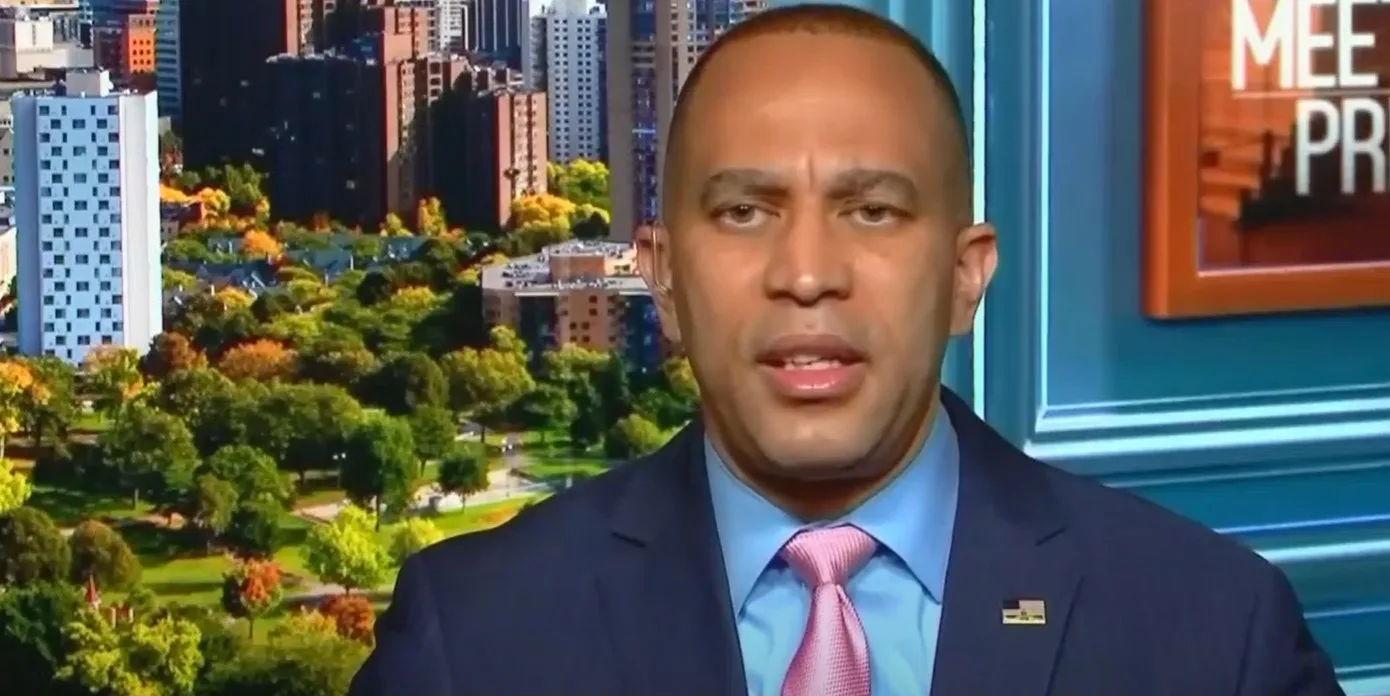
Hakeem Jeffries makes it clear Democrats will not bail out McCarthy over the debt restrict

During an interview with Meet The Press, House Democrat leader Hakeem Jeffries dismissed the idea of ​​giving Kevin McCarthy a stopgap on the debt ceiling.

Video by Jeffries:

Chuck Todd asked Jeffries about the idea of ​​raising the debt limit in the short term to match the budget deadline.

Jeffries replied: “I don’t think it’s responsible to kick the can out when President Biden has been saying for months that Leader Schumer’s position is that House Democrats’ position is to avoid a default. America should pay its bills and protect the full confidence and credit of the United States of America, but of course we’re open to a discussion about what kind of investments, what kind of spending, what kind of income are appropriate to health, safety and to protect the economic well-being of the American people. This is a process that is now available to us. I don’t think we need to delay these discussions for a few months.”

Todd responded by asking if that was the way out.

Leader Jeffries said, “We’ve got to avoid a fallout, period, period. I think what lies ahead now is that President Biden called a very important discussion Tuesday so that we can find a way to do what is necessary to continue to strengthen our economy in a way that benefits Americans every day comes.”

In other words, that would be a big no to the idea of ​​taking the pressure off Speaker McCarthy by giving him a few more months to stand around and do nothing.

The media seems to forget that House Republicans voted for this fight. Speaker McCarthy and the far-right member of his group wanted to push the nation toward default, and McCarthy could have made that a non-issue by passing a clean debt ceiling hike.

He and the MAGAs believe Biden and the Democrats will give them the cuts they want.

Democrats are employing a tactic that has worked in every debt-limit standoff. Democrats remain united and will not give in to the GOP’s fabricated crisis.

If Republicans cause a default, they will be held responsible.

Jason is the managing editor. He is also a White House press pool and congressional correspondent for PoliticusUSA. Jason has a bachelor’s degree in political science. His thesis focused on public policy with a specialization in social reform movements.

Awards and professional memberships

Member of the Society of Professional Journalists and the American Political Science Association

The WHO declares the worldwide well being emergency of Covid-19 over

Tedros Adhanom Ghebreyesus, Director-General of the World Health Organization (WHO), speaks during a news conference December 20, 2021 in Geneva, Switzerland.

Denis Balibouse | Reuters

The spread of Covid-19 is no longer a global public health emergency, the World Health Organization said on Friday.

“For more than a year, the pandemic has been on a downward trend, with population immunity from vaccination and infection increasing, mortality falling and pressure on health systems easing,” WHO Director-General Tedros Adhanom Ghebreyesus said at a news conference in Geneva.

“This trend has allowed most countries to return to life as we knew it before Covid-19,” Tedros said. “It is therefore with great hope that I declare Covid-19 a global public health emergency.”

Almost 7 million people have died from the virus worldwide since the WHO first declared a state of emergency on Jan. 30, 2020, according to official data from the UN agency. Tedros said the true death toll is at least 20 million.

The WHO decision comes as the US is set to end its national health emergency on Thursday.

Tedros said there was still a risk that a new variant could emerge and cause a further spike in cases. He warned national governments not to dismantle the systems they have built to fight the virus.

“This virus is here to stay. It’s still killing and still changing,” he said.

But the WHO chief said it was time countries moved from an emergency measure to treating Covid like other infectious diseases.

Covid was first observed in Wuhan, China in December 2019 when several patients developed pneumonia symptoms of unknown cause.

Covid was moving rapidly across the globe in early 2020, leading to an unprecedented halt to international travel and border closures as countries unsuccessfully tried to prevent the virus from spreading.

Covid devastated the elderly and other vulnerable populations, and devastated hospitals that did not have the bed capacity or supplies to handle the sudden surge in suffering and death.

Many national governments shut down public life in a desperate attempt to halt the deaths, resulting in a severe economic downturn and social disruption whose long-term consequences are unlikely to be fully understood for years to come.

“Covid-19 was so much more than just a health crisis,” Tedros said. “It has caused severe economic upheaval, wiping trillions from GDP, disrupting travel and trade, destroying businesses and plunging millions into poverty,” he said.

“It has caused severe social upheaval with closed borders, restrictions on movement, closed schools and millions of people experiencing loneliness, isolation, anxiety and depression,” Tedros said.

CNBC Health & Science

Read CNBC’s latest global health coverage:

China has been heavily criticized for not alarming the world sooner, a claim Beijing denies. Critics have also accused the WHO of over-reliance on information from Beijing early in the pandemic.

More than three years later, the origins of the virus are still a hotly debated mystery. Scientists, government officials and the general public continue to debate whether Covid spread to humans from an infected animal or leaked from a laboratory in China.

The US intelligence services are divided in their assessment of the origin of Covid.

The US government, allied nations and the WHO have criticized the Chinese government for not providing transparent access to data that could help determine the start of the pandemic.

This is what Prince Harry did after the coronation of King Charles III

He came, he saw, and then… he went.

Shortly after his father King Charles III and stepmother Queen Camilla were crowned in a historic ceremony on May 6th at Westminster Abbey. Prince Harry left the venue, got into a car and drove to Heathrow Airport, BBC News and several other outlets reported.

According to several reports, he had flown to London the day before. His wife Megan Markle and their children Prince Archiecelebrating his fourth birthday on the day of the coronation, and Princess Lilibet, 23 months, stayed in California where they live. The event came amid a rift between the Duke of Sussex and his father, stepmother and brother. Prince Williamall of which he had criticized in his memoir Spare.

Harry, who stepped down from royal duties alongside Meghan in 2020, sat in the third row at the coronation – two rows behind William – and played no official part in it. More than an hour after the ceremony ended and the Duke of Sussex left, several members of the royal family appeared on the balcony of Buckingham Palace with Charles and Camilla, including William and his wife Kate Middleton and their children Prince George9, Princess Charlotte7 and Prince Ludwig5.

WWE followers fearful about UFC merger

WWE SmackDown World Tour

Jörn Pollex | Bongarts | Getty Images

World Wrestling Entertainment and Endeavor-owned UFC will merge this year in a deal that will create a sports-entertainment giant worth more than $21 billion.

After the deal was announced in early April, WWE stock soared to its highest level in almost four years. The stock is up more than 50% so far this year.

For wrestling fans, however, history isn’t about those numbers. Rather, the success of the Fusion depends on what’s actually happening in the ring – and whether it’s worth your time and money.

In a landscape where consumers have broad economic and political clout, the merger will serve as a test of how strong fan collective power can be in the face of corporate giants. And wrestling fans aren’t afraid to share their opinions.

Some are concerned that a return to a pay-per-view model is on the horizon for WWE’s flagship event, WrestleMania. Last month, it streamed exclusively on NBCUniversal’s Peacock, where it generated the streaming service’s highest weekend usage ever. Though NBCU doesn’t release specific streaming numbers for the event, only the Super Bowl overtook WrestleMania for the most watched hours of any live event on Peacock, according to the company.

WWE’s exclusive streaming deal with Peacock, which includes streaming rights to WrestleMania, expires in 2026.

WWE declined to comment on this article. In late March, before the UFC deal was announced, WWE CEO Nick Khan said the company was keeping a close eye on fans’ price sensitivity.

“If NBCU came to us and said, ‘Hey, we’re taking you from where you are now five times for Peacock, but we have to charge extra,’ we would have to take a good look at that,” Khan said on the podcast “The Marchand and Ourand Sports Media”. “Most importantly, we don’t want to price our fans out.”

Jerry D’Erasmo, a longtime fan who hosts a wrestling podcast, said he understands why WWE WrestleMania could eventually go back to pay-per-view. However, he also believes this is one of the few things that might actually turn off large swathes of the fandom. He said many fans told him they would tune in to round up podcasts like his own, rather than pay $60 or $70 to watch a pay-per-view.

How WWE will tell its stories and conduct its games under a new executive regime will also help determine how they spend their money, fans said.

“The biggest concern from a fan perspective — not investors, but fans — is creative control,” said Matt Courcelle, longtime wrestling fan and host of The WWE Podcast.

In this case, there is an elephant in the room, and his name is Vince McMahon. For many WWE fans, whether to pay for new streaming or pay-per-view services depends heavily on whether McMahon, 77, who has controlled WWE since acquiring it from his father in 1982, has a say in creative decisions becomes.

Despite numerous comparisons to women who have alleged sexual misconduct by McMahon, including a rape he denies, he remains at the forefront of WWE.

“This guy has taken control of the biggest wrestling company in the world for better or for worse,” said Jimmy Baxter, a professional wrestling commentator and podcaster in New Jersey. “For that he was a success story, but along the way there is a lot of blood, sweat and tears – and a lot of paid women.”

McMahon isn’t going anywhere, at least not any time soon. He will also serve as executive chairman of the newly combined company, whose name is yet to be announced Make an effort Managing Director Ari Emmanuel. After 40 years, many fans see him as an integral part, even if he is not the CEO.

“When the bombs fall, there are three things left: roaches, Twinkies, and Vince McMahon,” Baxter said.

World Wrestling Entertainment Inc. Chairman Vince McMahon is introduced during the WWE Monday Night Raw show at the Thomas & Mack Center August 24, 2009 in Las Vegas, Nevada.

Ethan Mueller | Getty Images

McMahon told CNBC last month that he won’t be deeply involved in WWE storytelling when WWE and UFC merge – but fans say they need more proof before taking his statements at face value.

“As much as they want to tell us he’s not ‘in the weeds’ creatively, there’s been a lot of evidence lately that Vince is,” Courcelle said, including rumors that he was on the show behind the scenes Raw after WrestleMania.

There are other concerns about the content as well.

In late April, a former WWE writer filed a lawsuit against the company, claiming she was fired in retaliation for cracking down on racist remarks in the writer’s room, according to court documents. The lawsuit lists McMahon and his daughter Stephanie McMahon, herself a former executive, as defendants, as well as WWE itself and other employees of the backstage company.

“We know what Vince McMahon is; we know what he creatively brought to the table,” said Courcelle. “In the last five to ten years, from a fan’s perspective, it wasn’t the best it could be.”

Still, fans keep coming back for more. Anyone who has spent thousands of dollars on wrestling events and merchandise over the years won’t stop watching if they don’t think the new WWE is up to par. Some longtime hardcore fans aren’t sure where they’ll end up just yet, but they’ll likely stay to see how it goes.

“I absolutely love the drama,” Baxter said. “I love watching a crazy old man burn his empire down just because he can.”

Disclosure: Peacock is the streaming service of NBCUniversal, CNBC’s parent company.

CDC could have much less information after the emergency ends

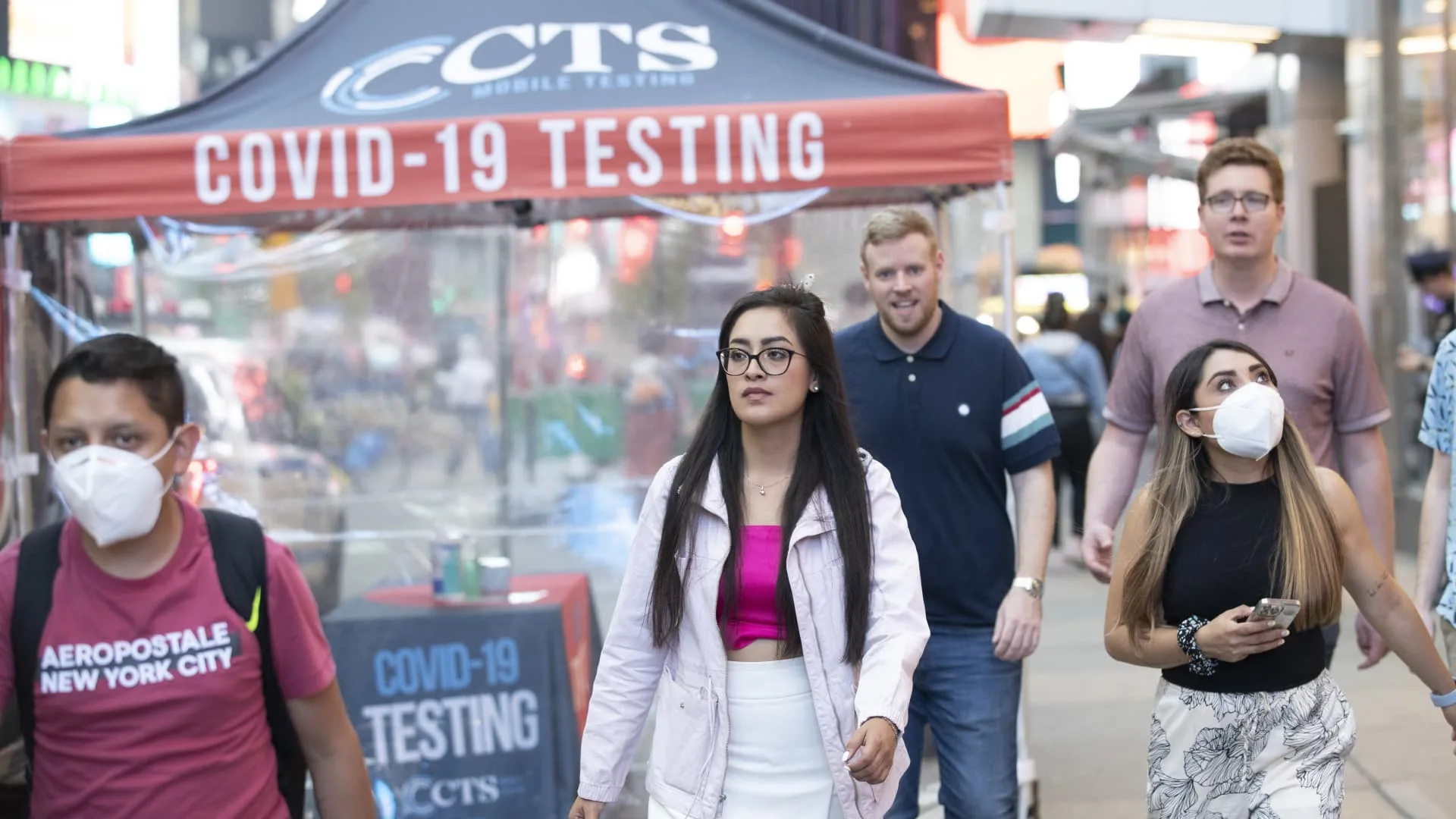
People walk past a Covid-19 testing site in Times Square on May 12, 2022 in New York City.

Liao pan | China news service | Getty Images

The Centers for Disease Control and Prevention will have less data to track the spread of Covid-19 and new variants in the US after the public health emergency ends Thursday.

“The end of the public health emergency means the CDC will have less authority to collect certain types of public health data — meaning less data will be available to us,” said Dr. Nirav Shah, the CDC’s deputy chief executive officer, told reporters during a call Thursday.

Shah acknowledged that disease surveillance in the US has been inadequate during the pandemic and needs improvement.

“Our ability to detect and monitor disease threats should be better in the future than in the past,” he said. “And that ability to detect and monitor should be built into our baseline and not dependent on emergency declarations,” Shah said.

The US, unlike other affluent nations, has a fragmented health care system where decision-making authority over what disease data to report rests largely with corporations, the 50 states, tribes and territories — not the CDC.

dr James Lawler, an infectious disease expert at the University of Nebraska Medical Center, said this fragmented system is a result of a lack of will to reform — not a technical challenge.

“How ridiculous it is that I can tell you where my UPS packages are at any given time in 2023 and I don’t have access to the health records,” said Lawler, who spoke to the Bush and Obama administrations on biodefense advised and pandemic preparedness.

“Healthcare is the third rail in politics and no one wants to touch it,” he said.

A more fragmented system

Laboratories certified by the Centers for Medicare & Medicaid Services are no longer required to report Covid test results to the CDC. Congress required these labs to send results to the federal government in March 2020, but that mandate was tied to the public health emergency.

Some states will also stop reporting cases to the CDC altogether, said Dr. Brendan Jackson, who leads the agency’s Covid response team.

Covid has been classified as a national reportable disease since April 2020. That means new cases should be reported to the CDC, but states’ reporting to the federal government is a recommendation — not a mandate.

“Each individual state or other jurisdiction has its own set of rules or regulations that determine what is reportable,” Jackson said. “In some jurisdictions or some states, when the public health emergency ends, those agencies will go away,” he said.

The CDC will shift its collection of positive Covid tests to a voluntary network of more than 450 labs, Jackson said.

Covid case data in the US became unreliable many months ago because of so many people testing at home – if at all. These test results are not included in the CDC data because they are not required to be reported.

The World Health Organization has repeatedly warned that the dramatic drop in testing around the world is making tracking new Covid variants more difficult.

Although the CDC will continue to track Covid variants domestically and among international travelers entering the United States, the agency needs to reduce the frequency with which it reports this data.

“There’s certainly been a decrease in the tests being performed and the samples that can be submitted for genome sequencing, so we may need to reduce the frequency with which we report that,” Jackson said.

Variant data is reported twice a month, instead of weekly, according to the CDC.

The patchy reporting of case data also means the CDC will no longer report virus transmission at the county level after the public health emergency ends. Healthcare facilities used this data to know when to mask, and nursing homes relied on it to test uptake.

Jackson said the CDC will update its recommendations for those facilities so they know how to prevent infection.

The agency will also be phasing out its Covid community layers, which provide local recommendations to the public on when to mask and take other precautions, based on how many cases and hospitalizations the virus is causing in individual counties.

The community levels will be replaced with a new system based solely on hospitalization, Jackson said.

Other ways to monitor

Health officials are focused on tracking serious illnesses through hospitalizations and deaths rather than cases as infections have become a lesser threat due to the availability of vaccines and so many people have some level of immunity to Covid.

Shah said the CDC will still have ways to monitor Covid after the public health emergency ends. Hospitals are required to report Covid admissions by 2024. The CDC will primarily rely on this information, as well as sewage monitoring, which covers nearly 140 million Americans, Jackson said. In the future, hospital data will be reported weekly and no longer daily.

The CDC will continue to report deaths from Covid even as the system transitions to the National Vital Statistics System. Jackson said this should improve reporting of death dates.

“We’ll still be able to tell that it’s snowing even if we don’t count every snowflake,” Shah said.

CNBC Health & Science

Read CNBC’s latest global health coverage:

However, Lawrence Gostin, a health law expert, said that after the public health emergency passes, the CDC will lose its ability to easily collect data. Gostin said the problem is that unlike most other wealthy nations in the world, the US does not have a national health care system.

The CDC is currently negotiating data sharing agreements with states, tribes and territories to maintain access to Covid vaccine administration data. Those negotiations can take weeks to months, Jackson said.

“That’s just not a way to run a top-notch surveillance system. It’s porous, it’s unreliable, it’s just inadequate for the job,” Gostin said.

This information is critical to successful immunization campaigns as it can reveal disparities in vaccine administration based on race, age and geography. This allows health authorities to focus on making sure the unvaccinated vulnerable populations get their vaccinations.

Jackson said most of the 64 jurisdictions, including the 50 states and other local authorities, have signed data-sharing agreements for vaccine delivery. The CDC will continue to conduct its separate national immunization surveys, which provide information about race and ethnicity, he said.

Gostin said Congress is reluctant to authorize the CDC to order reporting amid suspicions about what the federal government will do with the data.

“This is public health information,” Gostin said. “The CDC is bound by confidential laws, and the public health agencies in all the peer countries have these agencies, and nothing goes wrong — the government doesn’t use them for bad things,” he said.