Harry and Meghan caught up in near-catastrophic paparazzi chase

The Duke and Duchess of Sussex were allegedly involved in an hour-long “near-disastrous car chase” with paparazzi. The event is an eerie reminder of the tragic death of Prince Harry’s mother in 1997.

Harry and Meghan feared for their lives in “hour-long car chases” with paparazzi, says a spokesman

Prince Harry And Megan Markle, and Markle’s mother, Dorian Ragland, were reportedly followed by paparazzi on Tuesday night, according to the Independent. The trio had just attended a charity awards ceremony hosted by the Ms. Foundation for Women in New York City, where Meghan was honored.

The event marked the couple’s first public sighting since the coronation of King Charles III.

According to the couple’s spokesman, the Duke and Duchess feared for their lives when six cars chased them and their vehicle “for over two hours”.

“Last night the Duke and Duchess of Sussex and Mrs Ragland were involved in a near catastrophic chase by a group of extremely aggressive paparazzi,” the statement confirmed.

The pursuit reportedly involved several near misses involving other drivers, pedestrians and two NYPD (New York Police Department) officers.

Video taken prior to the alleged chase shows the couple entering and exiting the venue, surrounded by a crowd of photographers.

Meanwhile, images have surfaced on social media of Harry, Meghan and their mother sitting in the back of a cab.

“(This is just) a little insight into the defenses and decoys needed to end the harassment,” the couple’s rep said. “While serving as a public figure involves some interest from the public, it should never come at the expense of anyone’s safety.”

The couple’s rep added that posting these images “encourages an extremely intrusive practice that is dangerous for everyone involved.”

NYPD, Mayor, Photo Agency: The couple’s alleged cab driver downplays the incident

However, the NYPD, which provided a security guard, did not seem to see the situation that way. The department described the incident involving the evening paparazzi incident as “challenging.”

However, the Independent reported that there had been “no reported clashes, summonses, injuries or arrests”.

Meanwhile, New York Mayor Eric Adams called the photographers’ behavior “reckless.” However, it was “hard to believe” that a two-hour high-speed car chase ensued in the city’s notorious traffic jams, he added.

Adams admitted that even “if it’s 10 minutes, a 10-minute chase in New York City is extremely dangerous.”

A man who claimed to be her cab driver told the Washington Post, “It wasn’t like a car chase in a movie.”

Additionally, Backgrid USA, the photo agency accused of stalking the former royal couple, tweeted a lengthy statement refuting their allegations.

News reports from NYC Paparazzi Chase recall the tragic death of Harry’s mother, Princess Diana

Harry’s sensitive reaction to the situation is likely due to the death of his mother, Princess Diana. She was killed in a high-speed chase in Paris in 1997, reports the Independent.

According to the Independent, the vehicle crashed after its driver tried to flee the paparazzi.

In fact, Harry and Meghan both relocated to the United States after stepping down from their royal roles in 2020.

The couple said they left the UK mainly because of the intense media and tabloid harassment.

Goal revenue (TGT) Q1 2023

Shopping carts in front of a Target store in the borough of Queens in New York, the United States, on Saturday, May 13, 2023. Target Corp. is expected to release earnings numbers on May 17th.

Bing Guan | Bloomberg | Getty Images

Goal on Wednesday beat Wall Street’s earnings expectations even as the discount store’s sales barely grew year over year and its buyers bought more necessities.

Shares of the company closed the day at $160.96, up nearly 3%, though Target said its sales remain sluggish in the current quarter. Comparable sales are expected to decline in the low single digits.

related investment news

CNBC Pro

The major retailer maintained its full-year outlook. Comparable revenue for the fiscal year is expected to range between a low single digit decrease and a low single digit increase. Target said full-year earnings per share will be between $7.75 and $8.75.

Even as customers buy fewer essential items, Target lures them into stores with groceries, essentials and trend items, CEO Brian Cornell said in a call with reporters.

Here’s what Target reported for the three-month period ended April 29, compared to Refinitiv’s consensus estimates:

  • Earnings per share: $2.05 versus $1.76 expected
  • Revenue: $25.32 billion versus $25.29 billion

Target’s net income fell in the fiscal first quarter $950 million, or $2.05 per share, versus $1.01 billion, or $2.16 per share, last year.

Total revenue rose nearly 1% from $25.17 billion a year earlier, just ahead of analysts’ expectations.

Comparable sales, a key retail metric that tracks sales in stores open 13 months or more and online, were roughly flat in the first quarter compared to the year-ago period. That was roughly in line with Wall Street’s expectations of 0.2% growth, Street Account estimates.

Buyers spent less during the quarter, Chief Growth Officer Christina Hennington said in a conversation with investors. Sales were strongest in February, weakened in March and continued to decline towards the end of April, she said.

Beauty was the strongest category, with mid-teens sales growth year-over-year. Food and Beverage grew in the high single digits. And sales of household items rose in the low-single digits as customers bought health and pet supplies.

Other categories that include more discretionary items, including apparel and home furnishings, saw sales decline in the mid-single-digit to low double-digit range, Hennington said. She added that when customers actually buy these items, they usually only buy them at the last minute, like just before a vacation.

Because customers bought different items, they shopped differently. Comparable store sales increased 0.7%, but comparable digital sales declined 3.4% compared to the same period last year.

Cornell said a drop in packages being shipped to homes is partly the reason for weaker digital sales. These deliveries have a focus on necessities, compared to Target’s same-day curbside pickups, which tend to include more mundane items like groceries or diapers. he said.

In Target stores and online, shopper traffic grew about 1%, on top of a 3.9% growth in the year-ago period.

Target has had a challenging year of falling profits and slowing demand after a growth spurt during the Covid pandemic. Annual sales increased about $31 billion — or nearly 40% — from the fiscal year ended January 2020 to the fiscal year ended January of this year.

The discounter’s problems intensified in the year-ago quarter as it faced higher freight costs and popular pandemic purchases like bikes and kitchen items were left on the shelves. The retailer’s stock fell as it missed Wall Street’s earnings expectations for three straight quarters.

After Target canceled orders and reduced the warehouse flooding, another storm cloud appeared: buyers had become more economical.

Target showed signs on Wednesday that its inventories and earnings are getting back on track. Fiscal first quarter earnings beat expectations and gross margin of 26.3% increased year over year as freight costs fell and the retailer received fewer discounts.

Still, operating margin still hasn’t returned to pre-pandemic levels. However, this will only happen in the next fiscal year or later, the company announced in February.

Inventory at the end of the quarter was down 16% year over year, driven by a 25% decline in discretionary merchandise categories. The company ordered more groceries and high-traffic items to better reflect customers’ shift in spending.

Other retailers have also noticed a change in shoppers’ purchases. On Tuesday, home depot missed sales expectations and lowered guidance. The company’s CFO, Richard McPhail, said customers are buying less expensive items and instead dedicating themselves to smaller projects. Also, he added, they are again spending money on services and have already bought many things they needed while stuck at home due to Covid concerns.

Target’s Cornell identified another challenge facing retailers: organized retail theft. He said Target expects attrition from these crimes to increase by $500 million compared to last year. Shrinkage also includes other types of inventory loss, including employee theft and damaged goods.

“The unfortunate fact is that violent incidents are increasing in our stores and across retail,” he said on the phone call to reporters.

He added the trend Detracts from the shopping experience as the shelves are half full for customers and staff are anxious.

While Target reported a better-than-expected quarter on Wednesday, executives stressed that the strain on U.S. budgets will pose challenges for the company in the near term.

“The consumer is under pressure,” Hennington said on the call to reporters. “Persistent inflation, lack of savings, and economic uncertainty in general are affecting their decisions and making trade-offs.”

However, she said Target gets them to open their wallets by offering holiday-themed items, new products and lower prices. Sales of groceries, decorations and gifts for Valentine’s Day and Easter, movie-themed toys and fresh collections of women’s clothing saw an upswing.

Deutsche Financial institution pays the victims $75 million

Jonathan Raa | Nurphoto | Getty Images

Deutsche Bank has agreed to pay $75 million to victims of sex offender Jeffrey Epstein to settle a federal lawsuit alleging the bank facilitated and profited from the sex trafficking of young women by its customers. sources told CNBC on Wednesday night.

The bomb deal remains JPMorgan Chase to defend his own class action lawsuit filed by the Epstein accusers in US District Court in Manhattan over similar allegations.

JPMorgan CEO Jamie Dimon, who has said the bank is not responsible for the sex trafficking of its former longtime client Epstein, is scheduled to be removed in that lawsuit and a related May 26 lawsuit brought by the US Virgin Islands government.

The Wall Street Journal reported for the first time on Deutsche Bank’s settlement agreement, which provides $75 million for the Epstein accusers.

Under the agreement, victims of Epstein affected by his sex trafficking during the time he was a Deutsche Bank client, from 2013 to 2018, would receive a minimum of $75,000 and up to $5 million, contingent the assessment of their claims.

Deutsche Bank spokesman Dylan Riddle did not comment on the deal, but pointed out that his bank spent more than 4 billion euros [$4.34 billion] to strengthen internal financial controls.

“Over the past several years, Deutsche Bank has made significant progress in addressing a number of previous issues,” Riddle said.

He pointed out that in 2020, when Deutsche Bank agreed to pay a $150 million fine to the New York Financial Supervisory Authority for its dealings with Epstein and other issues, it said, “We recognize ours Failed to incorporate Epstein in 2013 and the weaknesses in our processes and have learned from our mistakes and shortcomings.”

CNBC Policy

Read more about CNBC’s political coverage:

The two law firms representing the accusers, Edwards Pottinger and Boies Schiller Flexner, said in a joint statement obtained by CNBC: “This landmark settlement is the culmination of a more than decade-long investigation by two law firms to hold one of Epstein’s financial banks. Partners responsible for the role it has played in promoting its human trafficking organization.

The lawsuit, which was seeking class-action status, was filed in November by a woman using the alias Jane Doe. She claimed that Deutsche Bank knowingly engaged in Epstein’s sex trafficking and benefited financially from it “by providing the necessary financial support for the continued operation” of that scheme.

“Deutsche Bank also knew that Epstein would use violent means, threats of violence, fraud, abuse of legal process, exploitation of power differences, and a variety of other forms of coercion to entice young women and girls into engaging in commercial sexual activity. ” is in a suit.

“Knowing that it would make millions of dollars by supporting Epstein’s sex trade and her relationship with Epstein, Deutsche Bank chose to make profit over compliance,” the lawsuit reads. “Specifically, Deutsche Bank decided to enable sex trafficking in order to generate profits.”

A video still from the NBC archives of Donald Trump speaking to Jeffrey Epstein at a party in Mar-A-Lago in 1992.

NBC

Epstein, who was a client of JPMorgan from 1998 to 2013, became a client of Deutsche Bank after JPMorgan ended its banking relationship with him.

“Deutsche Bank picked up right where JPMorgan left off and became the bank that Epstein needed to fund his sexual abuse and sex trafficking operations,” the lawsuit states.

Epstein took his own life in a federal prison in Manhattan in August 2019, a month after he was arrested on child trafficking charges.

His arrest in that case came ten years after he had served a jail sentence or more than a year for pleading guilty in a Florida state court to soliciting sex from an underage girl for money. This 2008 admission of guilt was widely publicized.

Mifepristone abortion capsule case earlier than Courtroom of Enchantment

Mifepristone, the first drug in a medical abortion, is prepared for a patient April 20, 2023 at the Alamo Women’s Clinic in Carbondale, Illinois.

Evelyn Hockstein Reuters

A federal appeals court Wednesday afternoon will hear arguments in a closely watched lawsuit aimed at removing the abortion pill mifepristone from the US market.

The hearing in the US 5th Circuit Court of Appeals in New Orleans comes 11 months after the Supreme Court ruled that abortion was no longer constitutional.

Justice Department attorneys representing the Food and Drug Administration and attorneys from an anti-abortion group called the Alliance for Hippocratic Medicine each have 40 minutes to present their case before the three-judge panel.

The outcome of the hearing, scheduled to begin at 2 p.m. ET, could determine whether women continue to have access to the now-standard method of abortion in the United States. The arguments will be broadcast live.

Mifepristone, used in combination with another drug, misoprostol, is responsible for about half of all abortions domestically.

The judges who will hear the arguments were all nominated by Republican presidents.

Justices James Ho and Cory Wilson were appointed by Donald Trump. Judge Jennifer Elrod was appointed by George W. Bush.

The panel’s decision could be made at any time after the arguments. But regardless of what the verdict says, the losing side is sure to petition the Supreme Court to appeal the decision.

If the Supreme Court accepts the case for appeal, mifepristone will remain widely available until the Supreme Court makes a final decision on the case.

However, if it refuses to listen to an appeal, the 5th Circuit’s decision will be the final say on the fate of the drug.

challenge for mifepristone

The Alliance for Hippocratic Medicine sued the FDA in November in the US District Court for the Northern District of Texas, challenging the agency’s 2000 approval of mifepristone.

The group argued the agency failed to follow the correct process in approving mifepristone, claimed the drug was unsafe and asked a judge to order the drug’s withdrawal from the market.

These claims have been fiercely disputed by the FDA, leading medical associations, nearly half of US states and more than 200 members of Congress.

These companies argued in court filings that the FDA duly approved mifepristone and that the approval was based on extensive data demonstrating the drug’s safety and efficacy.

CNBC Health and Science

Read CNBC’s latest global health coverage:

But US Judge Matthew Kacsmaryk ruled in favor of the anti-abortion group’s claims and suspended FDA approval of mifepristone. His order would have halted sales of the drug nationwide pending the appeals process.

Days later, the DOJ appealed Kacsmaryk’s decision to the 5th District, which handles cases from the Northern District of Texas.

In April, a three-district judge panel ruled that the FDA’s approval of mifepristone stands pending the outcome of the DOJ’s appeal.

That panel said challenging the permit was likely precluded by the federal statute of limitations, though the judges made it clear their decision was based on “abridged scrutiny.”

But this body also blocked the mail delivery of the drug and imposed strict restrictions on the use of the drug.

Shortly thereafter, at the request of the Biden administration, the Supreme Court ordered that mifepristone be allowed to remain on the market without restrictions while the lawsuit was being fought in the 5th Circuit.

When the anti-abortion group wins

The Alliance Defending Freedom, an anti-abortion rights organization that represents the doctors group, is asking the three judges who will hear arguments on Wednesday to uphold in full Kacsmaryk’s order and halt sales of mifepristone nationwide.

The trio of judges differs from the 5th Circuit panel that issued the order last month that put some restrictions on the availability of mifepristone but kept the drug on the market.

Glenn Cohen, a former DOJ attorney, said the current three-judge panel is not bound by the April panel’s decision.

The new panel could issue an order that goes further or less far than the restrictions imposed in April, said Cohen, who is now a professor at Harvard Law School. Or the panel could take an entirely different direction, he said.

Cohen, along with other drug law experts, filed a brief with the 5th Circuit in support of the FDA’s position.

He said the Supreme Court will likely agree to take the case if the 5th Circuit panel votes to remove mifepristone from the US market.

Cohen argued that Supreme Court justices would take this position because a majority of them approved the DOJ’s request to keep mifepristone available without restrictions while litigation played out in the lower courts.

If the FDA wins

The DOJ is asking the 5th Circuit to reverse Kacsmaryk’s sweeping order and keep mifepristone available under current FDA regulations. The FDA now allows women to receive mifepristone without having to see a doctor in person and can receive the prescription drug in the mail.

The previous 5th Circuit panel blocked mail delivery of mifepristone in April, reinstated the requirement that women see a doctor to get a prescription for the pill, and shortened the length of time women can take the drug from the 10th week. up to the seventh week of pregnancy.

The panel said in its ruling last month that the FDA’s earlier decision to relax its regulations on mifepristone would result in more women seeking emergency care due to serious complications from the drug.

The Justice Department said in its appeal that the panel misunderstood data showing the drug was safe.

DOJ attorneys noted in a court filing that sepsis and bleeding occur in only 0.2% of patients taking the drug, and the rate of blood transfusions or hospitalizations is 0.7% or less.

“And study after study has shown that when mifepristone is taken in accordance with approved conditions of use, serious adverse events are ‘exceedingly rare,'” the DOJ said in its letter to the panel that will hear the arguments Wednesday.

“Furthermore, pregnancy itself carries a significantly higher risk of serious adverse events, including a 14 times higher mortality rate than legal abortion,” the DOJ said.

Cohen believes the Supreme Court is less likely to accept the case if the 5th Circuit government wins and the anti-abortion group appeals the verdict.

He said the fact that the majority of judges have opted to keep mifepristone available while a lawsuit is pending in a lower court suggests they are not particularly sympathetic to the anti-abortion case.

And while the lawsuit raises questions the Supreme Court may eventually be interested in, he said the case against the FDA is a technical case that judges might prefer not to consider.

Zendaya, Anne Hathaway and Priyanka Chopra are the final word style trio

If one fashion icon isn’t enough, how about three?

zendaya, Anne Hathaway And Priyanka Chopra stunned at the Bulgari Mediterranea High Jewelry event on May 16, where they posed for photos together at the Palazzo Ducale in Venice, Italy.

For the occasion, celebrating Bulgari’s new jewelry collection, Anne wore an Atelier Versace dress that featured a gold hue at the top that faded into silver glitter at the bottom. The dress also featured a jeweled hood, which the Devil Wears Prada star donned after the red carpet.

As for Zendaya, the Euphoria actress wore a black Richard Quinn dress with off-the-shoulder sleeves and a plunging neckline. Meanwhile, Priyanka traded in a dress for a high-fashion Miss Sohee two-piece set, which consists of a burgundy bodice and skirt embellished with a white beaded flower.

And in keeping with the theme of the event, the actresses completed their look with eye-catching diamond jewelry around their necks. Anne’s necklace was set with ruby-colored gemstones, while Zendaya’s accessory was designed in the shape of a snake. Priyanka opted for a choker with multicolored gemstones embedded between silver stones.

“I’ll say what I need”

Elon Musk told CNBC’s David Faber on Tuesday that he doesn’t care if his inflammatory tweets scare off potentials Tesla Buyers or Twitter Advertisers.

“I’ll say whatever I want, and if the consequence is losing money, then so be it,” said Musk, who owns Twitter.

Musk has tweeted controversial posts for years, including conspiracy theories and comments that his critics say are largely discriminatory.

His defense comes after Musk drew renewed criticism for a tweet comparing liberal billionaire and Democratic donor George Soros to X-Men villain Magneto, a Jewish Holocaust survivor.

“He wants to destroy the very fabric of civilization. Soros hates humanity,” Musk tweeted Monday.

Musk has previously criticized Soros, whose family office, Soros Fund Management, recently reduced its stake in Tesla. Soros, who is also Jewish, is a popular target for right-wing pundits and politicians and is often the subject of anti-Semitic attacks. Soros and his family fled the Nazis during World War II.

Critics said Musk’s tweets about Soros fit into a larger pattern of attacks on the 92-year-old investor and Democratic financier. “Musk’s comparison of Soros to Magneto is not accidental; it’s a nod to harmful anti-Semitic tropes of Jewish global control,” tweeted Alex Goldenberg, an analyst at the Network Contagion Research Institute. Israel’s Foreign Ministry also said Musk’s tweets had “anti-Semitic overtones.”

Musk denied being an anti-Semite on Tuesday. “I’m more of a Prosemite,” he said when Faber asked him about the criticism. Musk has also previously tweeted and removed memes featuring Hitler.

Faber also asked Musk on Tuesday why he tweeted a link to someone who said a mass shooting at a Texas mall earlier this month could be part of “bad psycho-surgery” or “psychological surgery.”

Investigators have been looking into whether the gunman whom police killed expressed white supremacist views because he was wearing an “RWDS” patch, a nod to the “Right Wing Death Squad” phrase used by extremists. He also had Nazi tattoos, including a swastika.

“I thought it would be silly to attribute it to white supremacy,” Musk said, adding that, in his opinion, there was no evidence that the shooter was white supremacy. “We shouldn’t attribute things to white supremacy if they’re – if they’re wrong.”

Since Musk took over Twitter last fall, the social media network has seen its ad revenue fall sharply as brands and businesses scrutinize changes to the platform, and some bluntly proclaimed the new owner.

Last week, Musk hired former NBCUniversal advertising executive Linda Yaccarino to replace him as Twitter’s CEO, a move widely seen as a way to boost Twitter’s advertising business. She started on Sunday.

Disclosure: NBCUniversal is the parent company of CNBC.

– CNBC’s Lora Kolodny contributed to this report.

Democrats hit election evening and win Jacksonville mayoralty

Jacksonville, Florida, was the largest city in the United States with a Republican mayor until Donna Deegan became the second Democrat mayor in thirty years on Tuesday night.

Jacksonville is the 12th largest city in the United States and, as of tonight, has only had one Democratic mayor in the last three decades.

The Tributary reported:

Former TV host Donna Deegan defeated JAX Chamber CEO Daniel Davis in a stunning upset for Jacksonville’s mayor, becoming the first woman and only the second Democrat to win a mayoral race here in three decades , although Davis outplayed them four to one.

….

Davis, a former city councilman and state representative, had been preparing for this mayoral race for the past eight years, when fellow Republican Lenny Curry was elected mayor. He relied heavily on his fundraising skills to reach voters through mailings, text messages, and advertising. He raised a record-breaking $8.4 million by the end of April, compared to $2.1 million for Deegan.

Davis was backed by Gov. Ron DeSantis, but his support didn’t help Republicans avoid a historic defeat.

The election results now available for 2023 seem to show a similar pattern to the last election cycle. The Democrats have the energy and momentum, and the more Donald Trump becomes the face of the Republican Party again, the more races Republicans are losing.

If Republicans had won a mayoral race in Phoenix, New York, Chicago, or Houston, the national media would cover Republican momentum and the troubles facing President Biden in 2024, but Democrats are winning elections across the country , which they haven’t won in decades, and there’s been nothing but silence from the corporate media.

Whether it’s Donald Trump or Ron DeSantis, there’s no sign of a Republican resurgence in the population.

It’s just a one-off election outside of the year, but if anything, the Democrats still appear to be the stronger and better organized party.

Jason is the managing editor. He is also White House press secretary and congressional correspondent for PoliticusUSA. Jason has a bachelor’s degree in political science. The focus of his thesis was on public policy with a focus on social reform movements.

Awards and professional memberships

Member of the Society of Professional Journalists and the American Political Science Association

Google Cloud introduces AI instruments to speed up drug discovery

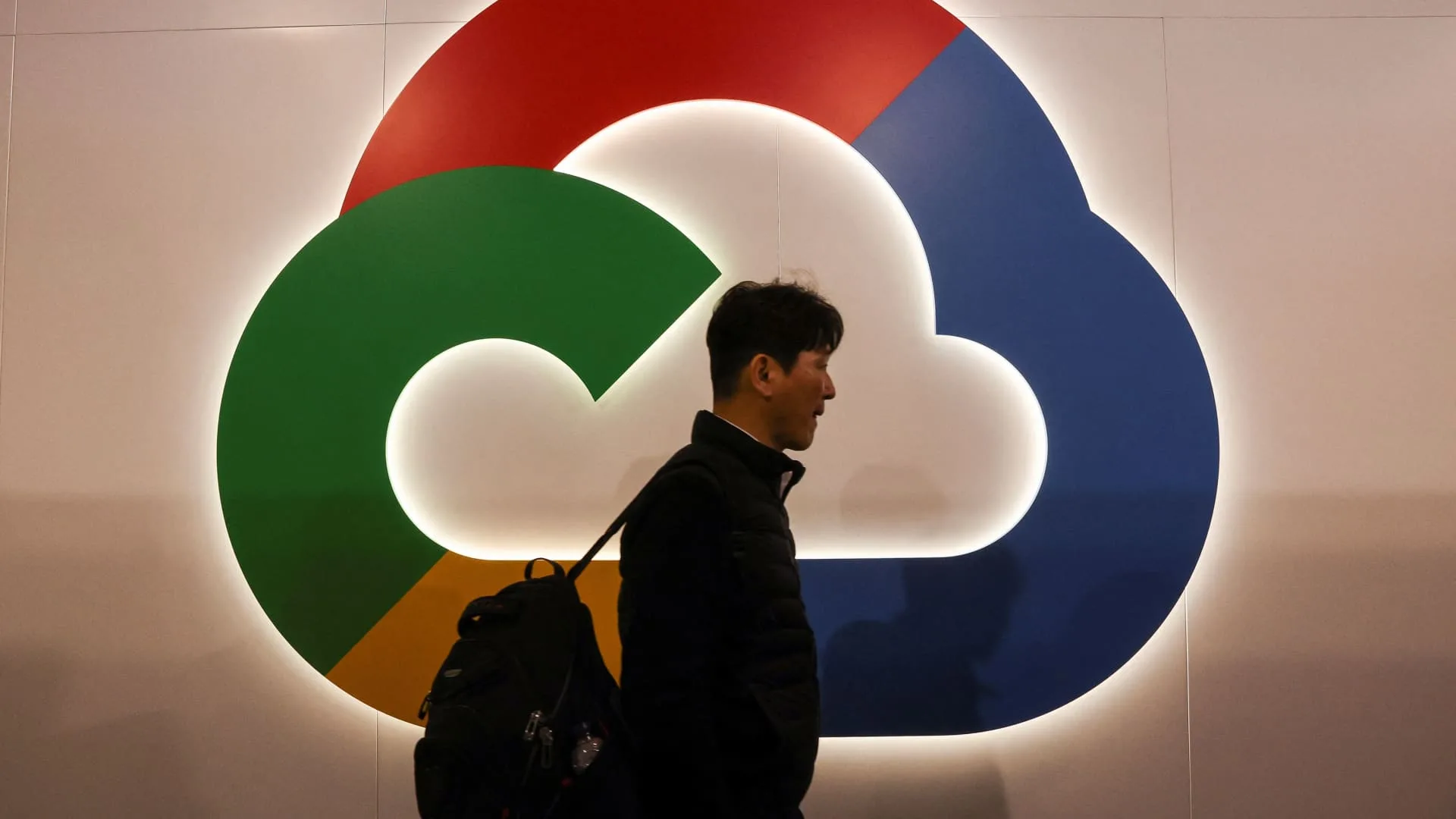
A person walks next to the Google Cloud logo at the Mobile World Congress (MWC) in Barcelona, ​​Spain, on February 27, 2023.

Sweet Nacho | Reuters

Google Cloud on Tuesday launched two new AI-powered tools designed to help biotech and pharmaceutical companies accelerate drug discovery and advance precision medicine.

A tool called the Target and Lead Identification Suite aims to help companies predict and understand the structure of proteins, a fundamental part of drug development. Another solution, the Multiomics Suite, will help researchers ingest, store, analyze and share large amounts of genomic data.

The new developments mark Google’s latest advance in the red-hot AI arms race, with tech companies competing for dominance in a market that analysts believe could one day be worth trillions. Since the release of OpenAI’s ChatGPT late last year, the company has been under pressure to showcase its generative artificial intelligence technology.

Google announced its generative chatbot Bard in February. Shares of parent company Alphabet rose 4.3% last week after Google unveiled several AI advances at its annual developer conference.

The two new Google Cloud suites help address a long-standing problem in the biopharmaceutical industry: the lengthy and costly process of bringing a new drug to the US market.

Pharmaceutical companies can invest anywhere from a few hundred million to more than two billion US dollars to bring a single drug to market. according to a recent Deloitte report. Their efforts are not always successful. According to another Deloitte report, drugs that go through clinical trials have a 16% chance of being approved in the US.

This high cost and dismal success rate comes with an extensive and lengthy research process, typically lasting around 10 to 15 years.

The new suites will save companies a “statistically significant” amount of time and money throughout the drug development process, said Shweta Maniar, global director of life sciences strategy and solutions at Google Cloud. Google CNBC did not give specific figures.

“We help organizations get medicines to the right people faster,” Maniar said in an interview with CNBC. “I’m personally very excited, it’s something I and the team have been working on for a number of years.”

Both suites will be available to customers across the board from Tuesday. According to Google, costs vary by company. Several companies including Big Pharma Pfizer and biotech companies Cerevel Therapeutics and Colossal Biosciences are already using the products.

Target and lead identification suite

According to Maniar, the Target and Lead Identification Suite aims to streamline the first critical step in drug development, identifying a biological target for researchers to focus on and develop a treatment.

A biological target is most commonly a protein, an essential building block for disease and all other parts of life. Finding this target requires identifying a protein’s structure, which determines its function, or the role it plays in a disease.

“If you can understand the role, the protein structure, the role, you can start developing drugs on it now,” Maniar said.

However, this process is time-consuming and often unsuccessful.

According to a widely used guide for drugmakers published in a database maintained by the Federal National Library of Medicine, it can take scientists about 12 months to identify a biological target. The two techniques that researchers traditionally use to determine protein structures also have a high failure rate, according to Maniar.

She also said that it is difficult for traditional technologies to increase or decrease the amount of work as needed.

Google Cloud’s suite takes a three-pronged approach to make this process more efficient.

The suite enables scientists to ingest, share and manage molecular data on a protein using Google Cloud’s Analytics Hub, a platform that allows users to securely share data between organizations.

Researchers can then use this data to predict a protein’s structure using AlphaFold2, a machine learning model developed by a Google subsidiary.

AlphaFold2 runs on Google’s Vertex AI pipeline, a platform that enables researchers to build and deploy machine learning models faster.

In minutes, AlphaFold2 can predict the 3D structure of a protein, more accurately than traditional technologies and at the scale researchers need. Predicting this structure is crucial because it can help researchers understand a protein’s function in a disease.

The final component of Google Cloud’s suite helps researchers figure out how the protein’s structure interacts with different molecules. A molecule can become the basis for a new drug if it changes the function of that protein and ultimately shows the ability to treat the disease.

Researchers can use Google Cloud’s high-performance computing resources to find “the most promising” molecules that could lead to the development of a new drug, according to a press release accompanying the new tools. These services provide the infrastructure businesses need to accelerate, automate, and scale their work.

According to John Renger, Chief Scientific Officer, Cerevel, which focuses on developing treatments for neuroscientific diseases, typically has to sift through a large library of 3 million different molecules to find one that has a beneficial effect against a disease. He called this process “complicated, time-consuming and expensive”.

But Renger said that with Google Cloud’s suite, the company will be able to sort out molecules faster. Computers will take care of screening molecules and help Cerevel “get an answer really fast,” he said.

Renger estimates that Cerevel will save an average of at least three years by using the suite to discover a new drug. He said it’s difficult to estimate how much money the company will save, but stressed that the suite saves the resources and manual labor typically required to screen molecules.

“That means we can get to where we need to be quicker and cheaper, and we can get the drugs to patients much faster and without as many failures,” he told CNBC.

Cerevel has been working with Google for more than a month to better understand the suite and determine how the company will use it. But Renger hopes Cerevel will be “at a point where we’re getting some results” next month.

Multiomics suite

Google Cloud’s second solution, the Multiomics Suite, aims to help researchers solve another daunting challenge: analyzing genomic data.

Colossal Biosciences, a biotechnology company aiming to use DNA and genetic engineering to reverse extinctions, used the Multiomics Suite in their research.

As a startup, Colossal didn’t have the internal infrastructure needed to organize or decode massive amounts of genomic data. A human genome sequence alone requires more than 200 gigabytes of storage, and researchers predict they will need 40 exabytes by 2025 to store the world’s genome data, according to the National Human Genome Research Institute.

The institute estimates that every word ever spoken by humans could be stored in five exabytes, so building the technology to support genomic data analysis is no easy task.

Therefore, the Multiomics Suite aims to provide companies like Colossal with the infrastructure they need to make sense of big data so they can focus more on new scientific discoveries.

“If we had to do everything from scratch, that’s the power of Google Cloud, right?” Alexander Titus, vice president of strategy and computer science at Colossal, told CNBC in an interview. “We don’t have to build this from scratch, it definitely saves us time and money.”

Researchers’ ability to sequence DNA has historically exceeded their ability to decode and analyze it. However, as technology has improved in recent years, genomic data have provided new insights into areas such as the genetic variations associated with diseases.

Google Cloud’s Maniar said it could ultimately help develop more personalized medicines and treatments. In 2021 alone, two-thirds of the drugs approved by the Food and Drug Administration were supported by human genetics research, according to an article published in the journal Nature.

Maniar believes the Multiomics Suite will help drive further innovation.

Colossal CEO Ben Lamm said the Multiomics Suite is what gives the company the ability to conduct research “in any reasonable timeframe.” Colossal began piloting Google’s technology late last year. As a result, Lamm says the company is on track to produce a woolly mammoth by 2028.

According to Lamm, without the Multiomics Suite the company would have been set back by more than a decade.

“We wouldn’t be anywhere near where we are today,” he said.

Prior to using Google Cloud’s suite, much of Colossal’s data management was done manually using spreadsheets, Lamm said.

He said it would have been a “massive drain” on the company trying to create the more complex tools it needed for research.

“When it comes to biology, we’re not stuck in small amounts of data anymore,” said Titus of Colossal. “We think on the scale: How do we get insights into 10,000, 20,000, 10 million years of evolutionary history? And these questions simply cannot be answered without scalable computing infrastructure and tools like cloud computing and multiomics.”

Correction: It can take scientists about 12 months to identify a biological target, according to a widely used guide for drugmakers published in a database maintained by the Federal National Library of Medicine. In an earlier version, the attribution was incorrect.


Gabrielle Union says Dwyane Wade ‘divided the whole lot in half’

Despite being a well-known superstar with a star-studded family, Gabrielle Union speaks openly about how she’s still working to overcome it.

Despite those fears, however, Gabrielle was sure to point it out — in her and Dwyane Wade‘s household – they split the finances right down the middle.

Gabrielle Union rejects her “scarcity mentality”.

During a recent session on Bloomberg’s Idea Generation, Gabrielle spoke on the subject.

Approximately 18 minutes into the start of the 38 minute interview, moderator Noah Callahan Bever asks Union as she began to feel “the first sense of security” in knowing she’s an established actress who will continue to get work.

The Bring It On actress explained: “I’m struggling with this.”

She went on to explain that she felt she had “more responsibility for”. [her] Money.” As a result, she worries a lot about being able to successfully turn a profit from her projects and stay in the best financial shape, which makes her “nervous.”

She explained the thought process behind these fears by remarking: “Oh, that movie didn’t open. What does that mean? Will I have enough to feed everyone?”

Faced with these feelings, Gabrielle tries to “calm down” and not allow her “scarcity mentality.” [her] Engine.”

“I try to find peace on the journey [of] I don’t use my fear and scarcity mentality as my engine. Which is hard.”

Gabrielle says she and Dwyane Wade “shared everything” in their household.

Shortly after, Gabrielle opened up about the financial dynamics in her household. She revealed that she and Dwyane “split everything in half.”

“It’s weird to say I’m the head of the family because we split everything in half in this household.”

Union went on to talk about the looming pressure of having to work to stay afloat and continue to meet their financial obligations.

“In the other households that each of us has to support, one of these gorillas sits on his back and says, ‘You better be working, bitch! … Want to sleep in?'” Someone might not eat.'”

She ended the thought by adding: “It’s hard to let that go, so I’m working on it.”

Check out the full interview below.

What do you think of Gabrielle’s comment and would you ever split the bills 50/50?

CFPB case at Supreme Courtroom: Democrats file amicus transient

Signage at the Consumer Financial Protection Bureau (CFPB) headquarters in Washington, DC

Andrew Kelly | Reuters

WASHINGTON — More than 140 current and former Democratic lawmakers filed an amicus brief in the Supreme Court on Monday to defend the nation’s top consumer protection agency from challenges by its regulator.

The brief, led by Democrats Sen. Sherrod Brown of Ohio and Rep. Maxine Waters of California, relates to the Consumer Financial Protection Bureau v. Community Financial Services Association of America case, which challenges the agency’s constitutionality and would undermine its funding and the authorized authorities.

Brown chairs the Senate Banking Committee, while Waters is the senior member of the House Financial Services Committee.

Upholding an appeals court decision that undermines the agency’s funding mechanism “would jeopardize a funding model that has been used since the Republic’s early days and now applies to the agency.” [Office of the Comptroller of the Currency] and a host of other important federal programs,” lawmakers wrote.

The 144 include current and former Democratic House Minority Leaders Rep. Hakeem Jeffries and Senate Majority Leader Chuck Schumer, both from New York, along with Senate Majority Leader Dick Durbin, D-Illinois, and Speaker Emeritus Nancy Pelosi, D-California Members of Congress who signed the order.

Ten consumer protection organizations also filed an amicus brief with the Supreme Court this month in support of the CFPB.

The Supreme Court agreed to hear the arguments in the case in February, four months after a federal appeals court unanimously ruled that the CFPB’s funding method was unconstitutional.

Congress decided to fund the CFPB, created by the 2010 Dodd-Frank Act in the wake of the 2008 financial crisis, from the Federal Reserve to “ensure independence from unpredictable annual funding cycles,” the letter said.

Though the CFPB bypasses the annual appropriation process, its director must justify its budget to the House of Representatives every two years, lawmakers wrote, and Congress put an annual cap on the agency’s budget at a “modest” level using a portion of the revenue Federal Reserve firm.

In the October ruling, Justice Cory Wilson, a member of the three-judge panel on the Fifth Circuit Court of Appeals, called the funding mechanism a “system” “unique to the myriad independent executive agencies of the federal government.”

The Biden administration appealed the 5th Circuit’s decision to the Supreme Court, but a final decision could be delayed until June 2024 to hear further arguments in the case. In the brief, lawmakers narrowly concluded that “the judgment should be overturned.”