Treasury delays deadline for small companies to file new BOI kind

Janet Yellen, U.S. Treasury secretary, on a tour of the Financial Crimes Enforcement Network (FinCEN) in Vienna, Virginia, on Jan. 8, 2024.

Valerie Plesch/Bloomberg via Getty Images

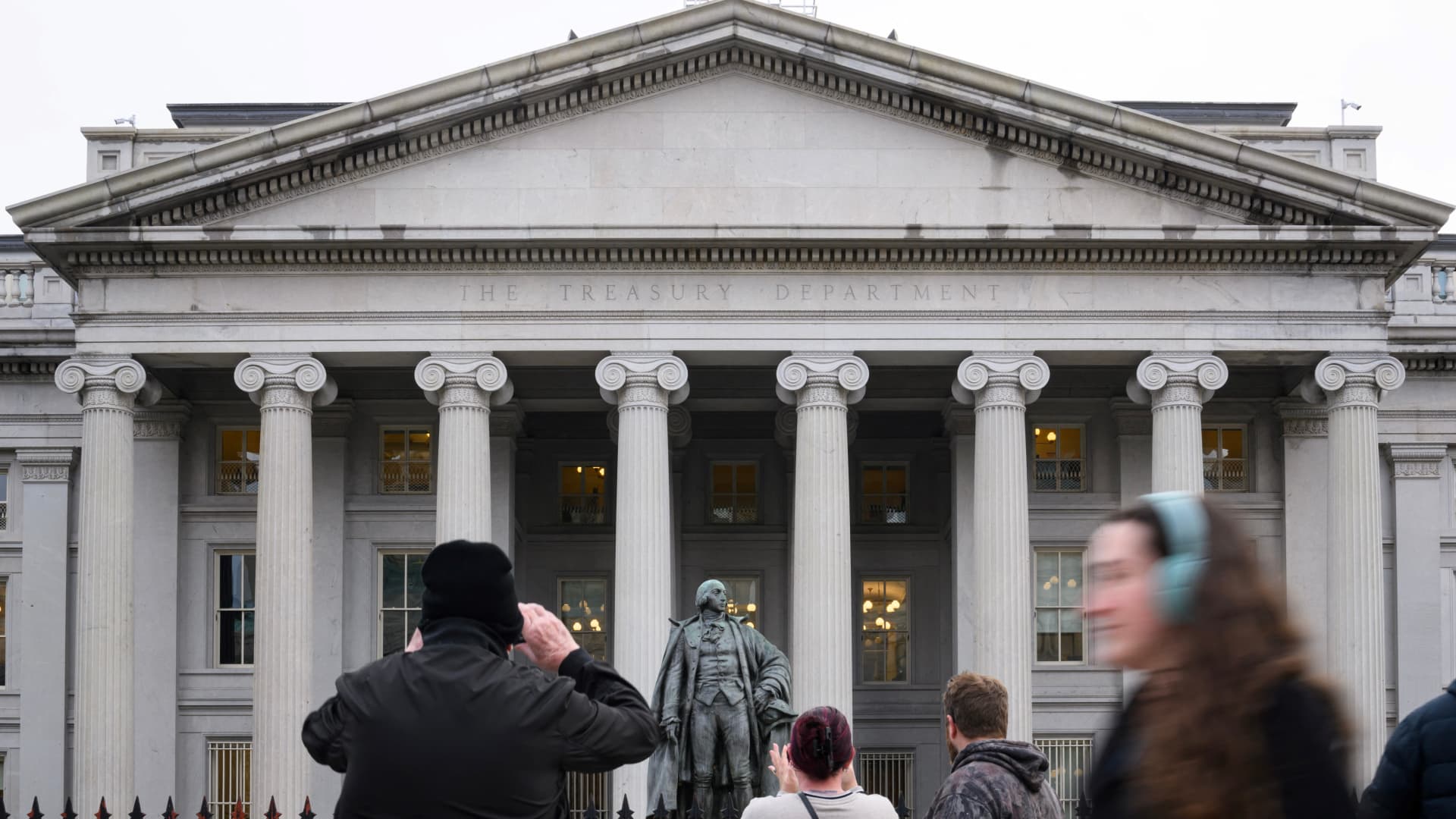
The U.S. Treasury Department has delayed the deadline for millions of small businesses to Jan. 13, 2025, to file a new form, known as a Beneficial Ownership Information report.

The Treasury had initially required many businesses to file the report to the agency’s Financial Crimes Enforcement Network, known as FinCEN, by Jan. 1. Noncompliance carries potential fines that could exceed $10,000.

This delay comes as a result of legal challenges to the new reporting requirement under the Corporate Transparency Act.

The rule applies to about 32.6 million businesses, including certain corporations, limited liability companies and others, according to federal estimates.

Businesses and owners that didn’t comply would potentially face civil penalties of up to $591 a day, adjusted for inflation, according to FinCEN. They could also face up to $10,000 in criminal fines and up to two years in prison.

However, many small businesses are exempt. For example, those with over $5 million in gross sales and more than 20 full-time employees may not need to file a report.

Why Treasury delayed the BOI reporting requirement

The Treasury delayed the compliance deadline following a recent court ruling.

A federal court in Texas on Dec. 3 had issued a nationwide preliminary injunction that temporarily blocked FinCEN from enforcing the rule. However, the 5th U.S. Circuit Court of Appeals reversed that injunction on Monday.

“Because the Department of the Treasury recognizes that reporting companies may need additional time to comply given the period when the preliminary injunction had been in effect, we have extended the reporting deadline,” according to the FinCEN website.

FinCEN didn’t return a request from CNBC for comment about the number of businesses that have filed a BOI report to date.

Some data, however, suggests few have done so.

The federal government had received about 9.5 million filings as of Dec. 1, according to statistics that FinCEN provided to the office of Rep. French Hill, R-Ark. That figure is about 30% of the estimated total.

Hill has called for the repeal of the Corporate Transparency Act, passed in 2021, which created the BOI requirement. Hill’s office provided the data to CNBC.

More from Personal Finance:
‘Returnuary’ — the year’s busiest return season is about to start
Why the ‘great resignation’ became the ‘great stay’
What tariffs mean for car prices

“Most non-exempt reporting companies have not filed their initial reports, presumably because they are unaware of the requirement,” Daniel Stipano, a partner at law firm Davis Polk & Wardwell, wrote in an e-mail.

There’s a potential silver lining for businesses: It’s “unlikely” FinCEN would impose financial penalties “except in cases of bad faith or intentional violations,” Stipano said.

“In its public statements, FinCEN has made clear that its primary goal at this point is to educate the public about the requirement, as opposed to taking enforcement actions against noncompliant companies,” he said.

Certain businesses are exempt from BOI filing

The BOI filing isn’t an annual requirement. Businesses only need to resubmit the form to update or correct information.

Many exempt businesses — such as large companies, banks, credit unions, tax-exempt entities and public utilities — already furnish similar data.

Businesses have different compliance deadlines depending on when they were formed.

For example, those created or registered before 2024 have until Jan. 13, 2025, to file their initial BOI reports, according to FinCEN. Those that do so on or after Jan. 1, 2025, have 30 days to file a report.

There will likely be additional court rulings that could impact reporting, Stipano said.

For one, litigation is ongoing in the 5th Circuit, which hasn’t formally ruled on the constitutionality of the Corporate Transparency Act.

“Judicial actions challenging the law have been brought in multiple jurisdictions, and these actions may eventually reach the Supreme Court,” he wrote. “As of now, it is unclear whether the incoming Trump administration will continue to support the Government’s position in these cases.”

Don’t miss these insights from CNBC PRO

Surgeon basic points new advisory

A customer drinks a glass of beer at the Saxton Pub in Austin, Texas, April 5, 2023.

Brandon Bell | Getty Images

The U.S. surgeon general issued a new advisory warning Friday about the link between alcohol consumption and increased cancer risk, and pushed for policy changes to help reduce the number of alcohol-related cancers.

U.S. Surgeon General Dr. Vivek Murthy said there is a “well-established” link between drinking alcohol and at least seven types of cancer, including breast, colorectum, esophagus and liver. For cancers including breast, mouth and throat cancers, increased risk may start around one or fewer drinks per day, according to his office.

As part of the advisory, the surgeon general called for policy changes that could help reduce alcohol-related cancer. He pushed for alcohol labels to be more visible and include a warning about the increased risk of cancer, to reassess recommended limits for alcohol consumption based on the latest research and expand education to increase general awareness that alcohol consumption increases cancer risk.

The efforts outlined in the advisory are similar to those already implemented to lessen tobacco use, including a slew of mandated warnings on packaging and in stores.

The surgeon general advised people to consider the link between alcohol consumption and greater cancer risk when deciding whether to drink or how much to have.

Alcohol consumption is the third leading preventable cause of cancer in the U.S., behind only tobacco and obesity, according to the advisory.

“Alcohol is a well-established, preventable cause of cancer responsible for about 100,000 cases of cancer and 20,000 cancer deaths annually in the United States — greater than the 13,500 alcohol-associated traffic crash fatalities per year in the U.S. — yet the majority of Americans are unaware of this risk,” Murthy said in a press release.

Shares of alcohol manufacturers including Molson-Coors and Anheuser-Busch initially dipped more than 1% following the advisory.

According to the advisory, 72% of U.S. adults said they had one or more drinks per week between 2019 and 2020, but less than half of all adults are aware of the link between drinking and cancer risk.

Worldwide, 741,300 cases of cancer were attributed to alcohol consumption in 2020, according to the surgeon general.

On average, alcohol-related cancer deaths shorten the lives of those who die by 15 years.

Younger Americans are already increasingly stepping away from alcohol, and many are leaning into nonalcoholic alternatives. About two-thirds of adults ages 18 to 34 say alcohol consumption negatively affects health, versus less than 40% of people ages 35 to 54, and 55 and over, according to a Gallup survey released in August.

Chuck Schumer Shuts Kristen Welker Down After She Infers Democrats Lied About Biden’s Psychological Sharpness

PoliticusUSA is corporate and ad-free, which is why we need your support to be an alternative to access journalists who cater to Republicans and billionaires, so please consider becoming a subscriber.

With all of the things that are happening in our country or about to happen, NBC’s Kristen Welker wasn’t interested in the Republican refusal to do anything to lower prices, or their plan to cut taxes for the wealthy and corporations, or how Republicans are eying up paying for those tax cuts by taking healthcare away from millions of Americans.

Nope.

Kristen Welker decided she needed to ask Senate Minority Leader Sen. Chuck Schumer about Democrats and Joe Biden’s mental sharpness.

Transcript from NBC News:

KRISTEN WELKER:

Obviously, there has been a lot of focus on President Biden’s role in this. You were obviously in close contact with President Biden well before the public tuned into that debate that ultimately led to him stepping down. I want to play you a little bit of something you said last year. Take a look.

[START TAPE]

SEN. CHUCK SCHUMER:

I talk to President Biden, you know, regularly, sometimes several times in a week, or usually several times in a week. His mental acuity is great. It’s fine. It’s as good as it’s been over the years. All this right-wing propaganda that his mental acuity has declined is wrong.

[END TAPE]

KRISTEN WELKER:

Leader Schumer, what do you say to Americans who feel as though you and other top Democrats misled them about President Biden’s mental acuity?

SEN. CHUCK SCHUMER:

No. Look, we didn’t. And let’s – let’s look – let’s look at President Biden. He’s had an amazing record. The legislation we passed, one of the most significant groups of legislation since the New Deal – since Lyndon Johnson’s Great Society, putting in 235 judges, a record. And he’s a patriot. He’s a great guy. And when he stepped down, he did it on his own because he thought it was better not only for the Democratic Party, for America. We should all salute him. We should all salute him.

KRISTEN WELKER:

Do you feel, as we have this conversation today, that President Biden could serve another four years, had he stayed in the race and potentially won?

SEN. CHUCK SCHUMER:

Well, I’m not going to speculate. As I said, I think his record is a stellar one. And he’ll go down in history as a really outstanding president.

Video:

Months after pushing Joe Biden out of his own reelection campaign, the mainstream media won’t let it go. Now, they are attacking the Democratic Party and suggesting that there was some sort of cover-up.

Washington Submit cartoonist quits after drawing of Bezos, different billionaires with Trump rejected

Editorial cartoonist Ann Telnaes

Courtesy of Ann Telnaes

A Washington Post cartoonist has quit her role at the paper, saying that her bosses blocked publication of a satirical cartoon that depicted billionaires, including one resembling Post owner Jeff Bezos, kneeling before President-elect Donald Trump.

Ann Telnaes, a Pulitzer Prize-winning cartoonist, said in a blog post Friday that she quit the paper after a drawing was rejected. This was the first time at the Post that a cartoon was “killed because of who or what I chose to aim my pen at,” Telnaes wrote.

A rough sketch of the cartoon, published on Telnaes’ Substack blog, shows several men kneeling before a larger man wearing a suit and a long tie, representing Trump. Telnaes wrote that the likenesses are of Meta Platforms CEO Mark Zuckerberg, OpenAI CEO Sam Altman, Los Angeles Times Publisher Patrick Soon-Shiong, and Bezos. Three of the men are holding bags of money. Also included is a drawing of cartoon character Mickey Mouse, representing Walt Disney‘s ABC News.

Satirical drawing by Washington Post cartoonist Ann Telnaes, who resigned after it was rejected.

Courtesy of Ann Telnaes

The drawing was rejected by the paper outright, with no suggestions for potential changes, Telnaes told CNBC in an email.

David Shipley, Washington Post editorial page editor, said in a statement that the cartoon was rejected because of its similarity to columns at the paper, not because of who it targeted.

“I respect Ann Telnaes and all she has given to The Post. But I must disagree with her interpretation of events. Not every editorial judgment is a reflection of a malign force. My decision was guided by the fact that we had just published a column on the same topic as the cartoon and had already scheduled another column – this one a satire – for publication. The only bias was against repetition,” Shipley’s statement said.

The cartoonist’s departure comes amid controversy about how media and corporate executives have been treating Trump, both before and after the November election.

The Washington Post reported that Bezos spiked a planned endorsement of Trump opponent Kamala Harris by the paper ahead of the presidential election. At the Los Angeles Times, Soon-Shiong also decided that the paper should withhold any endorsement in the presidential race, spurring the resignation of several editorial board members.

ABC News, meanwhile, settled a defamation lawsuit with Trump for $15 million, which drew criticism from some media law experts who thought the news organization had a strong case.

Bezos and Zuckerberg, through Meta, planned to donate $1 million to Trump’s inaugural fund, the Wall Street Journal reported last month, and have been among several billionaires to meet with Trump at his home in Mar-a-Lago since his election win. Multiple outlets have reported that OpenAI’s Altman is also donating $1 million to the inauguration fund.

Sen. Elizabeth Warren, D-Mass., weighed in on Telnaes’ resignation on X, saying the cartoon was “worth a share”: “Big Tech executives are bending the knee to Donald Trump and it’s no surprise why: Billionaires like Jeff Bezos like paying a lower tax rate than a public school teacher.”

Telnaes’ departure is the latest of several internal shakeups at the Post. Publisher and CEO Will Lewis took over the paper last year and has clashed with the newsroom, as reported by NPR. Several top editors at the paper have left since Lewis took over.

Telnaes won the Pulitzer Prize for editorial cartooning in 2001. She wrote in her blog that she had worked for the Post since 2008.

Inside Pamela Anderson’s Jaw-Dropping Transformation By way of the Years

Pamela Anderson continues to reinvent herself.

The Last Showgirl star—who is nominated at the 2025 Golden Globes for her leading role as a seasoned Las Vegas showgirl forced to face retirement—is entering awards season with a fresh face, going makeup free since 2023.

“I’ve been playing characters my whole life,” Pamela told Entertainment Tonight last month. “I want to play characters in movies, not in my personal life. I just want to be me, so this is an experiment. It’s just something I feel drawn to do.”

And while she said she “didn’t even think anyone would notice,” the Baywatch alum—who is mom to sons Brandon Thomas, 28, and Dylan Jagger, 27, with ex Tommy Lee—has shared the positive impact her decision has made on others.

“I didn’t realize that it was going to resonate with so many people,” she said during an October episode of Today With Hoda and Jenna. “I had people coming up to me and thanking me. It’s just really interesting to see the ripple effect it’s had. But I did it for myself. I did it for myself just to say I’m good enough as I am, and I don’t need to chase this impossible dream.”

FDA Zepbound scarcity ends, impacts sufferers, compounding pharmacies

An injection pen of Zepbound, Eli Lilly’s weight loss drug, is displayed in New York City on Dec. 11, 2023.

Brendan McDermid | Reuters

The roughly $1,000 monthly price tag of Eli Lilly‘s weight loss drug Zepbound put the blockbuster treatment out of reach for Willow Baillies, 29, whose insurance does not cover it.

Baillies, a human resources specialist based in Milwaukee, Wisconsin, has been attempting to lose weight and dealing with chronic autoimmune issues for years, so she turned to a cheaper alternative: a compounded, off-brand version of tirzepatide.

Tirzepatide is the active ingredient in Zepbound and in Eli Lilly’s diabetes counterpart Mounjaro, which are part of a class of highly popular medications called GLP-1s. 

She said compounded tirzepatide has helped change her life dramatically since she began taking it in June, alleviating pain from her autoimmune issues and helping her lose about 52 pounds. She said it costs her around $350 per month.

But soon, compounded versions of tirzepatide could become inaccessible to Baillies and other patients who rely on them. Patients and health-care experts said that could force some consumers to stockpile doses, switch to other treatments, or stop receiving care altogether due to financial constraints. Others could turn to a potentially unsafe method of mixing vials themselves. 

That’s because the Food and Drug Administration on Thursday announced that branded tirzepatide is no longer in short supply — a decision that will largely prevent compounding pharmacies from making and selling cheaper versions of the drug in the next two to three months. 

During FDA-declared shortages, pharmacists can legally make compounded versions of brand-name medications. But drugmakers and some health experts have pushed back against the practice because the FDA does not approve compounded drugs, which are essentially custom-made copies prescribed by a doctor to meet a specific patient’s needs. 

The FDA’s decision, based on the agency’s comprehensive analysis of data, could mean that more patients with insurance coverage will be able to access Zepbound after months of limited supply. It also suggests that Eli Lilly’s multibillion-dollar effort to ramp up manufacturing for tirzepatide is starting to pay off. 

But it will also leave other patients in limbo, closing a niche, lucrative market for compounded tirzepatide that patients say helped fill a gap in care for those who can’t afford to pay out of pocket for Zepbound.

Many insurance plans still don’t cover drugs for weight loss, and some patients said prices under Eli Lilly’s savings program and for its half-priced vial versions are still too high.

“I’ve stockpiled 10 compounded vials at home, so I have at least a year’s worth,” said Baillies, one of six patients CNBC spoke with about compounded tirzepatide. “We’re willing to kind of do anything to have this. It’s not just about looks; it’s about the opportunity it gives us to live our lives to the fullest.” 

Many patients and major trade groups question whether the shortage is truly resolved amid reports of people still struggling to find Eli Lilly’s drugs. 

Some medical professionals raised concerns about whether Eli Lilly can meet demand once more patients come off compounded tirzepatide and others start Zepbound for its newly approved use: obstructive sleep apnea. 

It’s unclear how many people are on compounded tirzepatide, but one trade group estimated in November that there are more than 200,000 prescriptions for compounded versions of its main rival — Novo Nordisk‘s weight-loss drug Wegovy — being filled each month. 

“In this current moment, I have confidence that the shortage is over,” said Dr. Shauna Levy, an obesity medicine specialist and medical director of the Tulane Bariatric Center in New Orleans. “Do I think the shortage is over forever? Probably not.” 

In a statement on Friday, Eli Lilly said the FDA’s decision “reflects the tireless work of our manufacturing and quality colleagues to safely expand our manufacturing capacity to bring these medicines to people who need them.” The company added that anyone marketing or selling “unapproved tirzepatide knockoffs must stop.”

Compounders face deadlines, with some exceptions

The FDA initially declared the tirzepatide shortage over in October. 

But a trade group called the Outsourcing Facilities Association sued days later, claiming the agency made its determination without proper notice and failed to account for continued supply disruptions. That lawsuit pushed the FDA to reconsider and allowed pharmacists to make compounded versions in the meantime. 

In its decision announced Thursday, the FDA concluded based on data from Eli Lilly, patients, providers, compounders, and other sources that “Lilly’s supply is currently meeting or exceeding demand and that, based on our best judgment, it will meet or exceed projected demand.”

The FDA is giving so-called 503A compounding pharmacies until Feb. 18 before it takes enforcement action that would put a halt to their work. The 503A pharmacies make compounded drugs according to individual prescriptions for a specific patient and are largely regulated by states rather than the FDA. 

Meanwhile, pharmacies manufacturing compounded drugs in bulk with or without prescriptions — known as 503B outsourcing facilities — get an additional month, with a deadline of March 19. They are regulated by FDA guidelines. 

An Eli Lilly & Co. Zepbound injection pen arranged in the Brooklyn borough of New York on March 28, 2024.

Shelby Knowles | Bloomberg | Getty Images

Those “off-ramp periods are appreciated” because it gives patients time to switch to brand-name tirzepatide, said Tenille Davis, chief advocacy officer for trade group Alliance for Pharmacy Compounding.

But the group’s members are still reporting that “there’s a real lack of availability” of tirzepatide, she said. That trade group represents compounding pharmacies and hybrid pharmacies that also dispense regular drug prescriptions.

Still, 503A pharmacies may be allowed to continue making compounded tirzepatide in certain situations under the law, Davis said. 

That includes when a prescriber determines that a compounded version with certain changes will produce a “significant difference” for a patient. For example, a patient may need a specialized dose or be allergic to the dye in a branded product. 

Davis said that means compounded tirzepatide won’t be completely eliminated in the U.S., but the scale of it will “certainly decrease.”

The legal battle between the FDA and the Outsourcing Facilities Association isn’t over yet, however. On Thursday, the FDA and OFA jointly said they will provide an update in court by Jan. 2 to address the “next steps in this litigation.” They also said if the trade group files a preliminary injunction over the next two weeks, the FDA will not take action against its members for continuing to make compounded tirzepatide until the court resolves the case.

That pending litigation further “adds to the confusion of the status of compounded tirzepatide after February and March,” said Dae Lee, a partner at law firm Frier Levitt who represents pharmacies, none of which were involved in the dispute with the FDA.

Patients look to alternatives

Amanda Bonello has been taking compounded tirzepatide and has launched a petition demanding the FDA support access to compounded GLP-1s.

Courtesy: Amanda Bonello

Many patients who rely on compounded tirzepatide are scrambling to ensure they can continue care. 

That includes Amanda Bonello, 36, an Iowa-based account manager who said she is prediabetic. Bonello said taking compounded tirzepatide over the last two months has helped her lose 26 pounds and normalized her blood sugar levels, allowing her to avoid a diabetes diagnosis. 

She said she “absolutely cannot” afford branded tirzepatide since her insurance does not cover it, so she will consider switching to compounded semaglutide. That is the active ingredient in Wegovy and its diabetes counterpart Ozempic, Novo Nordisk’s two GLP-1s that are still on the FDA’s drug shortage list. 

Many compounding pharmacies make unbranded versions of semaglutide, which has been on the U.S. market — and in short supply — for much longer than tirzepatide. But an end to the shortage may be imminent, with the FDA announcing in late October that all doses of semaglutide are available. 

“If compounded semaglutide goes away as well, then I will be screwed,” Bonello said. She has launched an online petition demanding that the FDA support access to compounded GLP-1s. The petition has gained more than 15,000 signatures in the past month.

Erin Hunt (right,) a patient who has been taking compounded tirzepatide, and her husband Brice.

Courtesy: Erin Hunt

Another patient, Erin Hunt, 31, a communications analyst based in Maryland, said she may eventually switch to the branded version of tirzepatide. 

Hunt started taking compounded tirzepatide in April after struggling to find supply of Zepbound, which she took for one month. It has helped her lose around 55 pounds, experience fewer symptoms from her chronic inflammatory conditions and pursue a healthier diet and exercise. She said she initially paid $300 per month for the compound drug and now pays $350 for a higher dose.

Hunt’s insurance does not cover Zepbound. But she qualifies for Eli Lilly’s savings card program, which allows commercially insured patients without coverage for Zepbound to buy a month’s supply for around $650. Under that program, patients whose commercial insurance plan covers Zepbound can pay as low as $25. 

“I am extremely concerned for what it’s going to cost,” Hunt said. “This medication has literally changed my life, and it’s probably going to benefit me to be on a maintenance dose for life.”

For Jill Skala, 49, a teacher in western Pennsylvania, the FDA’s decision means that she will lose a more affordable option after her insurance drops Zepbound coverage on Jan. 1. 

Her copay for Zepbound has been around $10 per month since she started the drug in March. Skala said she has lost 52 pounds and noticed “profound improvements” in her mental health, sleep and energy levels. She has stockpiled a three-month supply of Zepbound, she said, and will “do the best I can to maintain my weight loss” once that runs out.

“I don’t see myself continuing to get the branded version at this point unless there’s a pathway back through insurance or Eli Lilly drops the price,” Skala said. “I just paid off my student loans. I don’t want to start my medical debt problem here.”

Jill Skala has been taking branded Zepbound since March, but will soon lose insurance coverage for it.

Courtesy: Jill Skala

Other patients may turn to an underground community Reddit users call “the gray market”: People directly purchase powdered tirzepatide or semaglutide peptides for as little as $50 per month from certain vendors, including Chinese manufacturers, and mix that with sterile water at home, creating a solution they can inject under their skin. 

Reddit users say the community establishes protocols for third-party lab testing of peptides to verify their purity and promotes safe mixing and dosing practices. 

But Tulane’s Levy said the method “seems very dangerous,” noting that mixing homemade medications without proper training “could potentially have real consequences.” 

She said it “highlights people’s desperation to treat the disease of obesity, which is being inadequately met by our current insurance status” for drugs such as Zepbound. 

Continuing care

Some compounding pharmacies such as Strive Pharmacy are operating as usual pending more updates to the legal fight. Strive operates nine 503A pharmacies across the U.S., which offer compounded GLP-1s and other services. 

But Strive will largely stop making compounded tirzepatide by the February deadline if nothing further happens, according to Matthew Montes de Oca, the company’s chief clinical officer. He acknowledged that Strive could create compounded versions of the drug for specific prescriptions, such as adding glycine to help prevent muscle deterioration in a patient. 

Compounded tirzepatide with glycine is what Gina Wright’s doctor will prescribe for her so she can continue taking the unbranded version, which she gets from a different pharmacy. Wright, 58, a self-employed business consultant in Colorado who is prediabetic, said she is paying $225 for a five-milligram dose, which she began taking earlier this month. 

She is on her state Medicaid plan, which does not cover Zepbound, so she does not qualify for Eli Lilly’s savings card program. But Wright said she also has sleep apnea, so she is trying to get insurance to cover Zepbound for that purpose.

Gina Wright began taking compounded tirzepatide earlier this month.

Courtesy: Gina Wright

De Oca said compounding individual injectable GLP-1 prescriptions for specific patients will make it harder for Strive to ensure that all of its safety procedures such as stability studies are still in place. Strive typically tests its tirzepatide and semaglutide with a third-party analytical company and conducts a months-long “stability study” to guarantee the quality and safety of the product before creating batches of up to 250 vials, he noted. 

Dr. Mace Scott, the owner and medical director of Chronos Body Health Wellness, said the fate of compounded tirzepatide at his Louisiana-based medical spa will depend on the pharmacies he sources it from and “how they decide to move forward.” His spa relies on both 503A and 503B pharmacies, he said, so some patients may be able to continue compounded tirzepatide with a specialized prescription. 

Scott said he is trying to help some patients get insurance approval for branded tirzepatide. He is recommending that others switch to compounded semaglutide, which is what roughly 75% of Chronos patients are taking, he said. The spa has treated more than 10,000 patients with branded or compounded GLP-1 medications, according to its website.

“It’s kind of a tough road to traverse right now, so we’re trying to figure out what’s best on a patient-by-patient basis,” Scott told CNBC. 

The American Diabetes Association, a nonprofit organization that promotes diabetes research and advocacy, told CNBC it recommends against the use of compounded GLP-1s due to “ongoing concerns” about their safety, quality and efficacy.

It is difficult to discern the quality of the product and its distributor, which poses a potential risk to patients, Joshua Neumiller, the association’s president-elect for health care and education, said in a statement.

Neumiller also pointed to an FDA alert in July about cases of patients measuring and administering incorrect doses of compounded GLP-1s, some of which resulted in adverse events that required hospitalization. 

But Molly B., an interior designer based in New York who asked CNBC to omit her full last name, said compounded GLP-1s are her only option.

She said her insurance denied coverage for brand-name semaglutide twice before she started taking compounded tirzepatide in September. It has helped her lose 23 pounds, she said, and eliminated constant thoughts about food — a game changer for a patient suffering from polycystic ovary syndrome, a hormonal disorder that makes it difficult to lose weight. 

“I have never been able to lose this much weight on my own, and I’ve tried 100 times,” she said. “This has really changed my life, so I would hope that I can continue to get it the way I am now.”

Horse racing set for a resurgence within the U.S.

Horse race At the harness racing week on the Freehold Raceway in New Jersey: a reverse race with the sulky fixed in front of the horse – 1930.

Robert Sennecke | Ullstein Bild | Getty Images

America’s oldest horse racetrack is closing after running its last race on the final weekend of 2024. 

Freehold Raceway in New Jersey, co-owned by Penn Entertainment, tried for decades to land a casino but failed. Like many tracks around the nation, it grappled with declining attendance and revenue. It had been operating for more than 170 years.

“Unfortunately, the operations of the racetrack cannot continue under existing conditions, and we do not see a plausible way forward,” said Howard Bruno, the racetrack’s general manager, in a news release announcing the closure.

But industry insiders, investors and other enthusiasts believe horse racing in the United States could be poised for a resurgence — fueled by new investor interest, innovations in the sport and a boom in legalized online sports gambling. 

In 2023, the sport added more than $36 billion to the U.S. economy, supporting nearly half a million jobs, according to the American Horse Council. 

Horse-racing revenue comes from a variety of sources: tickets, hospitality, merchandise purchases at the track, licensing for TV or simulcast, sponsorships and gambling.  

Reliable estimates of global horse-racing revenues are hard to come by, experts say, in part because of the private nature of ownership and in part because of the wide variety of metrics used. Revenue estimates range from $44 billion to nearly 10 times that.

Multiple sources agree the sport could see compound annual growth of roughly 9% in the years ahead.

Growth in gambling

No catalyst for the sport’s growth is more crucial at the moment than the revenue that comes from gambling. 

The handle, or the amount of money wagered on horse races, funds the purses, or the prize money, awarded to winning horses. So does the casino-style gambling at facilities associated with race tracks.

For example, Resorts World New York City, which operates video lottery terminals, is contractually obligated to turn over 12% of its net win to the New York Racing Authority, or NYRA. Patrick McKenna, NYRA’s vice president for communications, said that currently amounts to about $120 million annually. Of that total, $60 million goes toward purses, $40 million goes to capital improvements, and $20 million funds operations.

When the size of the purse grows it attracts higher quality horses, and higher quality horses attract more interest in the sport.   

In 2022, $12 billion was wagered on horse races, marking a new record, according to an analysis by the New York Thoroughbred Horsemen’s Association, or NYTHA. The total purse money awarded that year also set a new record, at $1.25 billion.  

Fans place bets prior to the Belmont Stakes at Belmont Park in Elmont, New York, June 7, 2014.

Streeter Lecka | Getty Images

Growth in sportsbooks as well as the increased access Americans now have to legalized, online sports wagering is fueling optimism for horse racing’s resurgence. New ways to bet on horse racing means a new generation of sports enthusiasts is getting exposure to the sport. 

FanDuel, the nation’s leading sportsbook by market share, partnered with the Kentucky Derby for a second year in 2024. The company told CNBC that the volume of bets on Derby day hit the same level as Super Bowl gambling in the same year.

Crown jewel

The Kentucky Derby is the crown jewel of Churchill Downs — the most significant pure-play, publicly traded company focused on horse racing. 

The company announced a significant increase in adjusted EBITDA — earnings before interest, taxes, depreciation and amortization — during Derby Week in 2024, with critical sponsorships from companies that wanted to align themselves with the prestige event.

The company says record wagering numbers suggest the betting audience is not only growing but becoming increasingly engaged as they learn the sport, especially on the mobile platforms favored by a younger demographic.

“Our operational strategies present a model for other racing events to follow. Overall, the Kentucky Derby is not just a standalone event but a blueprint for the future of horse racing,” said CEO Bill Carstanjen.

Hall of Fame horse trainer Bob Baffert said the Kentucky Derby is special because it’s a bucket-list race: “It’s an Instagram moment for everybody. Everybody goes. They’re taking their selfies: ‘I’m here. I’m here at the biggest party.'”

But the high-profile Triple Crown races and the Breeders Cup may be outliers — a kind of World Series in the horse-racing schedule that otherwise is filled with everyday competitions that draw only a smattering of fans. 

Interest in more ordinary races has been waning for decades.

The amount of money wagered on pari-mutuel racing — where bettors gamble against other bettors and the odds constantly change ahead of the race — has declined by about 55% since 2000, when adjusted for inflation, according to the Paulick Report, a website about the horse-racing industry. 

Also, over the past two decades the number of owners, horses and trainers in the U.S. has plummeted, according to the NYTHA researchers. They concluded that in 2022 horse racing had “on most days been reduced to a niche market, albeit with a highly interested core audience.” 

Baffert told CNBC he believes horse racing needs more high-profile events with big purses to drum up buzz. And, like baseball, it needs superstars to draw in weekday audiences. 

Baffert, who is only the second trainer ever to have two Triple Crown winners, may be horse racing’s best-known character. But controversy in recent years has overshadowed his success.

Baffert was suspended for three years from competing at Churchill Downs after a horse he’d trained, Medina Spirit, won the Kentucky Derby in 2021 but tested positive for an illegal anti-inflammatory drug and was disqualified.

This summer, Churchill Downs lifted its suspension of Baffert after he publicly took responsibility for the failed drug test.  

Baffert returned to the storied racetrack the day before Thanksgiving, with a 2-year-old horse named Barnes that had never raced before but had fetched an impressive $3.2 million at an auction in Saratoga, New York, from now-owner Zedan Racing Stables.

The median price to purchase a race horse is about $30,000, according to BloodHorse, a publication for owners and breeders that tracks sales and the state of the market.

Barnes won by a nose in his debut.  

Wall Street funds

Some well-known Wall Street names have earned a reputation for spotting — or creating — opportunities in horse racing.

Danny Moses, a trader made famous in “The Big Short,” is a sport enthusiast, avid gambler and investor in race horses. And though he’s known for his short calls, he said he’s long on horses.

“I think the value of horses are going to go up,” Moses said, pointing to the bigger payouts and purses brought in by the boom in legalized online sports gambling.

Mystik Dan #3, ridden by jockey Brian J. Hernandez Jr. (R), crosses the finish line ahead of Sierra Leone #2, ridden by jockey Tyler Gaffalione and Forever Young, ridden by jockey Ryusei Sakai to win the 150th running of the Kentucky Derby at Churchill Downs on May 04, 2024 in Louisville, Kentucky. 

Michael Reaves | Getty Images

Moses is one of 14 in an elite group of investors in Starlight Racing, which currently owns 26 race horses. It’s headed by former hedge funder Jack Wolf, and it produced 2018 Triple Crown winner Justify and 2020 Derby and Breeders Cup winner Authentic, both trained by Baffert.

Over a little more than two decades, Starlight-owned horses have finished in the money more than 50% of the time, raking in more than $64 million in total purse money. 

Wolf said his experience in hedge funds helped him to establish an innovative model to invest in horses, where all partners share in the potential upside for a group of horses. He said investors need to factor in the experience and the enjoyment of the sport into their expectations for return on investment.

“We’ve been around the world with our partnership. That’s what they’re investing in,” Wolf said. As far as concrete financial returns go, he said, “We’ve been successful some years, and some years we haven’t been. It’s a very tough business, a very tough way to make a return on your money, but it can be done.”

Wolf is now looking at the races themselves. In 2017 he was CEO of the Pegasus World Cup at Gulfstream Park in Florida. The race set a new model: Owners paid $1 million each for a spot in the race, which they could use, sell or lease.

The race’s $12 million purse was the richest in the world. 

Though the Pegasus has reverted to a traditional race model since then, Australia has embraced the “gate race” or “slot race” structure, with some of the highest purses globally.   

And Moses is lobbying for more U.S. races to follow the unusual model, pitching racetracks such as Monmouth, Santa Anita and others.

Ramping up regulation

There remains a thorny problem for the U.S. horse-racing industry: It’s long been seen as the Wild West as far as regulations and oversight of horse welfare are concerned, according to Lisa Lazarus, CEO of the Horseracing Integrity and Safety Authority, or HISA. The organization was established by the Federal Trade Commission to oversee the integrity of horse racing across state lines and in different racing facilities. 

Investors don’t want their money attached to potential rules or ethics issues, Lazarus told CNBC.  

“By prioritizing consistent and transparent practices, HISA aims to reassure fans and the public that horse racing operates with integrity and safety at its core,” Lazarus told CNBC. “This commitment not only fosters trust but also creates an environment where innovation can thrive, attracting new owners, participants, and fans.”

But powerhouse operators Churchill Downs and the New York Racing Association, or NYRA, are suing HISA over fees.  

In a statement to CNBC, NYRA insisted it’s broadly supportive of HISA’s mission but is protesting “unlawful, excessive and disproportionate financial assessments.”

Lazarus said that in the end, HISA’s oversight and regulation will fuel more investment — similar to that of sports gambling or cryptocurrency — because the rules and legality are clearer. 

In 2020, racing horse deaths in the U.S. amounted to 1.41 per 1,000 race starts, according to HISA, which launched a track safety program in July 2022. After the agency standardized doping regulations and enforcement, horse deaths fell to an estimated 0.9 per 1,000 race starts in 2024.

It was the first time the U.S. has achieved anything below 1 in the metric and puts it on par with death rates in the United Kingdom, Japan and Australia, according to Lazarus.

Owners and trainers hope that will assuage concerns by lawmakers and regulators and discourage the kind of backlash that would hinder growth of the sport. 

New age of racing

Even if the sport can overcome the widespread perception of its treatment of horses, racetrack facilities are in desperate need of an overhaul. Outdated facilities discourage fans from attending. 

“They don’t want to go to a racing facility that’s been there since the 1960s with old infrastructure, with old bathrooms,” said Donna Brothers, NBC Sports racing analyst and commentator.

Churchill Downs is spending $300 million on improvements to its paddock and grandstand. Belmont Park is undergoing a $500 million renovation, funded by a loan from New York state. And Maryland’s legislature in April approved $400 million to overhaul Pimlico, home of the Preakness Stakes.  

The field of jockeys and horses start the 155th running of the Belmont Stakes at Saratoga Race Course on June 08, 2024 in Saratoga Springs, New York. 

Al Bello | Getty Images

Brothers said the industry is going to have to embrace new technology, such as mobile apps, to go along with the physical improvements. 

Dennis Drazin, CEO and chairman of Monmouth Park Racetrack and Sports Book, said the sport’s true potential can only be realized through multiple revenue streams. 

“Racetracks will have to include gaming, entertainment, fan experience and innovation in their formula for success,” Drazin said.

NYRA, for one, is seeing a major boost from expanded national television coverage of its races. Fox Sports, a minority equity owner in NYRA Bets, airs 1,000 hours of horse racing throughout the year. NYRA said that boosted total wagers on its online platform 127%, from $306 million in 2016 to $696 million in 2023.

FanDuel bought racing broadcaster TVG and has become a leading operator in horse racing alongside NYRA and Churchill Downs’ TwinSpires, which licenses its gambling operations to other sportsbooks including FanDuel and DraftKings. 

DraftKings became a naming sponsor for the 2024 Travers Stakes in Saratoga. 

Despite the Freehold Raceway closure, Penn Entertainment said in a statement it’s looking to expand gaming tied to horse racing.

“In those states where commercial gaming is not yet approved at the racetracks, such as Texas, we continue to educate lawmakers on the success we’ve seen,” said Eric Schippers, senior vice president of public affairs for Penn. “Gaming has helped to revitalize racing, driving higher purses, enhanced breeding programs and the preservation of family farms and open space.”

Jimmy Carter Outlived One Of His Obituary Writers

Jimmy Carter was not only the longest living ex-president in history, but he lived so long that he outlived one of his New York Times obituary writers.

This was the NYT byline on Carter’s obituary, “By Peter Baker and Roy Reed
Peter Baker is the chief White House correspondent for The Times; Roy Reed, who died in 2017, was a Times national correspondent who for many years covered the South.”

Jimmy Carter outlived one of his obituary writers by seven years. Of all the amazing facts about Carter’s longevity, that might be one of the most amazing.

Carter is being widely and warmly remembered in death in a way that he was not for much of his post-presidential life. The fact that Carter’s name had become shorthand for failed one-term president in many circles was never fair or deserved.

There are plenty of presidents who were elected to two terms that history regards as failures. George W. Bush is a name that springs to mind right away, and it would not be surprising if Donald Trump

someday joined that list well.

Jimmy Carter lived an amazing life that was dedicated to decency and service to others. As America is about to face the reality of a government run by billionaires for billionaires, the legacy of Jimmy Carter may only grow and be more fondly reemembered.

Jason is the managing editor. He is also a White House Press Pool and a Congressional correspondent for PoliticusUSA. Jason has a Bachelor’s Degree in Political Science. His graduate work focused on public policy, with a specialization in social reform movements.

Awards and  Professional Memberships

Member of the Society of Professional Journalists and The American Political Science Association

Jason EasleyLatest posts by Jason Easley (see all)

Jimmy Carter dies at age 100

Former U.S. President Jimmy Carter holds up his Nobel Peace Prize Dec. 10, 2002, in Oslo, Norway. During his acceptance speech, Carter urged others to work for peace.

Arne Knudsen | Getty Images News | Getty Images

Jimmy Carter, the Georgia peanut farmer who became a U.S. president and a Nobel Prize-winning activist for peace and human rights, has died. He was 100.

Carter’s post-presidency had been widely seen as more successful than his time in the White House, and he called it “more gratifying.” even into his 90s, crusading for human rights, writing books, building homes for the needy with his own hands, teaching Sunday school, and traveling the world in the pursuit of peace.

Carter graduated from the United States Naval Academy, participated in the Navy’s fledgling nuclear-powered submarine program, and served two terms as a Georgia state senator and one as governor before he was elected to the White House.

He became the nation’s 39th president in 1977, defeating President Gerald Ford in the election more than two years after the Watergate scandal drove Richard Nixon from the Oval Office.

Carter had been on hospice care for more than a year.

His family announced in February 2023 that he had entered end-of-life care in his home after a series of hospital visits. His wife, Rosalynn, who had been diagnosed with dementia in early 2023, briefly entered hospice herself at age 96 before dying on Nov. 19, 2023.

Carter turned 100 in October, bringing a new flood of tributes and accolades. His grandson Jason Carter said it was gratifying for Jimmy Carter to see a reassessment of his presidency and legacy.

After losing his reelection bid in 1980, he remained active in public issues, including speaking at age 95 in support of Joe Biden at the virtual Democratic National Convention in August 2020. Some commentators viewed him as the nation’s “most successful ex-president.”

Former President Jimmy Carter and his wife Rosalynn celebrate their 75th wedding anniversary with friends at Plains High School, within the Jimmy Carter National Historical Park in Plains, Georgia, U.S. July 10, 2021.

Michael A. Schwarz | The Carter Ce | Reuters

He wrote more than 40 books, including “Faith,” which he released when he was in his mid-90s. Days after his 93rd birthday, he offered to go to North Korea amid a nuclear crisis in an attempt to establish a permanent peace between Pyongyang and Washington. And at age 96, he denounced Republican efforts to restrict voter access in his home state.

Carter lived longer than any other U.S. president, surpassing the late George H.W. Bush, who died in November 2018 at age 94. When Carter reached that milestone in March 2019, Carter Center spokeswoman Deanna Congileo said he was still active.

“Both President and Mrs. Carter are determined to use their influence for as long as they can to make the world a better place,” Congileo said at the time. “Their tireless resolve and heart have helped to improve life for millions of the world’s poorest people.”

U.S. stock markets have historically closed for a day of mourning to honor the death of a president.

Early life

James Earl Carter Jr. was born Oct. 1, 1924, in Plains, Georgia — the first U.S. president born in a hospital. His father ran a general store and invested in farmland. His mother, known as “Miss Lillian,” was a nurse.

Carter attended the U.S. Naval Academy. During one of his visits home from Annapolis, his younger sister Ruth set up a date with their neighbor and lifelong friend. Upon graduation in 1946 from the academy, he married that young woman, Eleanor Rosalynn Smith, when she was 18. (On July 7, 2023, the Carters celebrated their 77th wedding anniversary, marking a record-long marriage for a first couple.)

Jimmy Carter on his peanut farm, Plains, Georgia, 1976.

PhotoQuest | Getty Images

In the Navy, he served on submarines in the Atlantic and Pacific fleets and attained the rank of lieutenant. He joined then-Capt. Hyman Rickover’s nuclear submarine development program. He did graduate work at Union College in reactor technology and nuclear physics and became senior officer of the pre-commissioning crew of the second nuclear submarine, the Seawolf.

After his father died in 1953, Carter resigned from the Navy and returned to Georgia, taking over the family farms and becoming active in local politics. He served in the Navy Reserve until 1961.

A leader of the ‘New South’

Elected governor in 1971, he was considered one of the leaders of the “New South” — a progressive who condemned racial segregation and inequality.

During his presidential campaign, he ran as an outsider, hoping to capitalize on the anti-Washington sentiment in the post-Vietnam/Watergate era.

“My name is Jimmy Carter, and I’m running for president,” a beaming Carter said in the opening of his acceptance speech at the Democratic National Convention in July 1976.

Jimmy Carter in 1976.

Hulton Archive | Getty Images

He offered to create jobs in a nasty economy with a 7.9% unemployment rate, and to set a squeaky-clean example as a born-again Christian from outside the Beltway, unblemished by Washington’s scandals.

On the eve of the election, however, he gave an interview to Playboy magazine in which he made this shocking confession: “I’ve looked on a lot of women with lust. I’ve committed adultery in my heart many times.” Still, the man with the huge smile and genteel Georgia drawl handily won the Electoral College by 297-240 but received only 50.1% of the popular vote to Ford’s 48%.

Once in office, Carter empowered his running mate, Walter Mondale, to transform the vice presidency into a policy-driving office.

On the domestic front, in addition to stagflation and recession, Carter had to deal with the Love Canal ecological disaster in Niagara Falls, New York, which led to the creation of the environmental Superfund. He also ended federal price regulations for airlines, trucking and railroads; signed the bailout of Chrysler in 1979; and elevated the Department of Education into a separate Cabinet-level agency.

Foreign policy successes

One of his biggest domestic problems was the festering energy crisis, which stemmed from the Arab oil embargo that began during the 1973 Middle East war. He termed the crisis “the moral equivalent of war.” In symbolic gestures, he wore a Mister Rogers-styled cardigan, turned down the White House heat, installed solar heating panels in the executive mansion, created the Department of Energy and pressed for tax incentives for installation of home insulation.

In international affairs, he campaigned for human rights, successfully concluded the Camp David peace accords between Egyptian President Anwar Sadat and Israeli Prime Minister Menachem Begin, negotiated the return to Panama of the Canal Zone, established full diplomatic relations with communist China and reached an agreement on the SALT II nuclear arms limitation treaty with Moscow.

Israeli Prime Minister Menachem Begin, right, addresses a gathering for the signing of a peace treaty between Egypt and Israel, as Egyptian President Anwar Sadat, left, and U.S. President Jimmy Carter watch, on the White House lawn, March 26, 1979.

Ya’akov Sa’ar | GPO | Getty Images

Then came the fateful end of the year 1979: The disastrous 444-day Iranian hostage standoff began in November, and the Soviets invaded Afghanistan in December, resulting in Carter’s call for a U.S. boycott of the 1980 Moscow Olympics.

Iran Hostage Crisis

The seizure of the U.S. Embassy in Tehran by radical student followers of Ayatollah Ruhollah Khomeini on Nov. 4, 1979, and the subsequent siege made the Carter administration seem impotent. Even the first lady recalled during a CNBC interview in 2014 that she urged her husband to “do something, anything!”

Five months into the crisis, Carter ordered a military mission, Operation Eagle Claw, to rescue the American hostages. The mission ended in humiliation: In the process of aborting the plan because of operational difficulties, a U.S. helicopter crashed into a transport plane at the desert staging area, killing eight servicemen.

Secretary of State Cyrus Vance, who advocated diplomacy over force to resolve the hostage crisis, resigned. “I know this is a matter of principle with you, and I respect the reasons you have expressed to me,” Carter said in a handwritten note to Vance.

The crisis finally ended with the release of 52 Americans on Jan. 20, 1981, the day the man who ended Carter’s single-term presidency took the oath of office — Ronald Reagan. Before the 1980 election between Carter, Reagan and independent John Anderson, Sen. Ted Kennedy waged an unsuccessful challenge to the president for the Democratic nomination.

I could have wiped Iran off the map.

In a 2014 interview with CNBC, Carter said he probably would have been easily reelected had he rescued the hostages.

“It would have shown that I was strong and resolute and manly,” he said. “I could have wiped Iran off the map with the weapons that we had. But in the process a lot of innocent people would have been killed, probably including the hostages. And so I stood up against all that advice, and then eventually all my prayers were answered and all the hostages came home safe and free.”

In this 1979 photo, from right, President Jimmy Carter, Vice President Walter Mondale, Secretary of State Cyrus Vance and Secretary of Defense Harold Brown, on their way to meet about the Iran Hostage Crisis.

Universal Images Group | Getty Images

Summing up the Carter presidency, former aide Stuart Eizenstat wrote in a 2015 op-ed in The New York Times that the nation’s 39th president had numerous accomplishments.

“It is enormously frustrating for those of us who worked closely with him in the White House to witness his presidency caricatured as a failure, and to see how he has been marginalized, even by his fellow Democrats,” Eizenstat wrote. “His defining characteristic was confronting intractable problems regardless of their political cost.”

After the White House

Carter remained active after he left Washington at age 56. He and Rosalynn volunteered for Habitat for Humanity, building affordable housing for the needy, and he established the Jimmy Carter Presidential Library and The Carter Center in Atlanta. Founded in 1982, the center has sent observers to monitor elections in more than three dozen countries. The center has also led health efforts, including the push to eradicate the tropical parasitic Guinea worm disease. The center’s motto is “Waging peace. Fighting disease. Building hope.”

“I still hope to outlive the last Guinea worm,” Carter told CNN in May 2018. (He came close. The Carter Center reported there were only 13 human cases in 2023.)

Carter, who also taught at Emory University, traveled extensively to promote peace, human rights and economic progress. In one mission, President Bill Clinton secretly dispatched him to North Korea in 1994 to help mediate a nuclear dispute with dictator Kim Il Sung, Kim Jong Un’s grandfather. In 2002, Carter received the Nobel Peace Prize for what the awards committee called “his decades of untiring effort to find peaceful solutions to international conflicts, to advance democracy and human rights, and to promote economic and social development.”

Former U.S. President Jimmy Carter and North Korean President Kim Il Sung meet in June 1994, just weeks before Kim’s death.

Korean Central News Agency | AP

However, his actions were not always well-received. His efforts in his long campaign for peace between Israel and its Arab neighbors included the 2006 book “Palestine: Peace, Not Apartheid,” which was perceived as antisemitic and biased against Israel. In particular, one sentence provoked an outcry:

“It is imperative that the general Arab community and all significant Palestinian groups make it clear that they will end the suicide bombings and other acts of terrorism when international laws and the ultimate goals of the Roadmap for Peace are accepted by Israel.”

In an interview with NPR, Carter was asked about the passage.

“That was a terribly worded sentence which implied, obviously in a ridiculous way, that I approved terrorism and terrorist acts against Israeli citizens,” he said. “The ‘when’ was obviously a crazy and stupid word. My publishers have been informed about that and have changed the sentence in all future editions of the book.”

(It became: “It is imperative that the general Arab community and all significant Palestinian groups make it clear that they renounce all acts of violence against innocent civilians and will accept international laws, the Arab peace proposal of 2002, and the ultimate goals of the Roadmap for Peace.”)  

In the 2014 CNBC interview, Carter said the Camp David Accords and other peacemaking stood among his greatest achievements as president.

“I kept our country at peace, which has happened very rarely since the Second World War, and I tried to work for peace between other people who were not directly related to the United States, like between Egypt and Israel. I normalized diplomatic relations with China, and I implemented a very strong human rights commitment that brought about a change throughout Latin America, for instance, from totalitarian military dictatorships to democracies,” he said. “So I would say the promotion of peace and human rights were the two things that I’m most proud.”

Had he been elected to a second term, he told CNBC, “I could have implemented very firmly the peace agreement that I negotiated with Israel and its neighbors that was never fully implemented.”

“I’d like to be remembered as a champion of peace and human rights. Those are the two things I’ve found as a kind of guide for my life. I’ve done the best I could with those, not always successful, of course,” he told CNBC. “I would hope the American people would see that I tried to do what was best for our country every day I was in office.”

A portrait of President Jimmy Carter and first lady Rosalynn Carter and their extended family. Left to right: daughter-in-law Judy, the wife of Jack Carter; grandson Jason James Carter; son Jack (John William Carter); daughter-in-law Annette, the wife of Jeff Carter; son Jeff (Donnel Jeffrey Carter); first lady Rosalynn Carter; daughter Amy Lynn Carter; President Jimmy Carter; daughter-in-law Caron Griffin Carter holding grandson James Earl Carter IV; and son Chip (James Earl Carter III).

Historical | Corbis Historical | Getty Images

Survivors include sons John “Jack,” James “Chip,” and Donnel “Jeff” and daughter Amy. Jack ran unsuccessfully for the U.S. Senate in Nevada in 2006. Jack’s son Jason lost a bid for Georgia governor in 2014 to then-incumbent Republican Nathan Deal. Carter’s brother Billy, whose antics stirred up unwanted attention during the Carter White House years, died in 1988.

On Aug. 12, 2015, the former president revealed that he had melanoma and that surgery on his liver confirmed that it had metastasized there and to his brain.

A week after his cancer diagnosis announcement, Carter held a remarkably frank news conference at the Carter Center to discuss his prognosis and the prospect of facing death. “I’ve had a wonderful life, I’ve had thousands of friends, and I’ve had an exciting and adventurous and gratifying existence,” he told reporters.

Illustrating that peace of mind, the former president took this picture when he returned home from the news conference:

After four months of treatment, including targeted radiation and immunotherapy, Carter announced in early December 2015 that a subsequent brain scan showed no signs of the original cancer spots and no new ones. Then in March 2016, he announced he no longer needed regular cancer treatments.

Months later, in July, he addressed the Democratic National Convention by video, urging people to vote for Hillary Clinton over Donald Trump.

And at an Atlanta Braves game in September 2015, the former first couple was caught on the “kiss cam.”

In 2019, at age 94, Carter fell in his home and broke a hip when he was preparing to go turkey hunting. “President Carter said his main concern is that turkey season ends this week, and he has not reached his limit,” the Carter Center said.

He underwent hip replacement surgery but had to cancel plans to resume teaching Sunday school six days after the accident.

Later that year, just before a planned week at an October 2019 Habitat for Humanity project in Tennessee, the 95-year-old Carter fell in his home while heading to church. Although he suffered a black eye and needed 14 stitches in his head, Carter appeared 400 miles away at a concert that night in Nashville to support the project. Wielding a power drill and other building tools, he soon joined the volunteer construction crews.

Jimmy and Rosalyn Carter attach siding to the front of a Habitat for Humanity home being built June 10, 2003, in LaGrange, Georgia.

Erik S. Lesser | Getty Images News | Getty Images

Then, two weeks later, he fell in his house and suffered a pelvic fracture. But in another two weeks, he was back at church, giving a lesson on the Book of Job and talking about facing death during his 2015 cancer treatment.

“I obviously prayed about it. I didn’t ask God to let me live, but I just asked God to give me a proper attitude toward death. And I found that I was absolutely and completely at ease with death. It didn’t really matter to me whether I died or lived,” Carter told the congregation of 400 people at Maranatha Baptist Church on Nov. 3, 2019, according to the church’s feed on Facebook. “I have since that time been absolutely confident that my Christian faith includes complete confidence in life after death.”

During the Covid pandemic, the Carters decided not to travel to Biden’s inauguration, but weeks later, they were fully vaccinated and were back in their usual seats in the front pew of Maranatha Baptist for Sunday services.

“It’s hard to live until you’re 95 years old,” Carter told People magazine days after reaching that milestone. “I think the best explanation for that is to marry the best spouse: Someone who will take care of you and engage and do things to challenge you and keep you alive and interested in life.”

Former President Jimmy Carter in 2006.

Carol Cole | Los Angeles Times | Getty Images

— Michele Luhn and Lynne Pate contributed to this report.

John Amos’ Son Reacts To Sister’s Investigation Into Dad’s Dying

John Amos passed away in August, but by the time his son Kelly Christopher announced his death, it had been over a month.  Since then, the actor’s daughter, Shannon Amos, has launched an inquiry into his passing and hired a lawyer to lead her fight.

“The family deserves to know the full circumstances surrounding Mr. Amos’ care and the events that led to his passing,” Shannon Amos’ lawyer reportedly said in a statement. “We are committed to pursuing all available avenues to ensure that these questions are answered.”

But Kelly is saying there’s no need for war, and a private investigator has said there’s been no sign of “foul play” in the actor’s death. Here’s the he-said-she-said between the siblings and what else has been reported on the family conflict.

K.C. Amos Responds To Sister’s Elder Abuse Allegations

As previously reported, K.C. revealed the death on October 1, but his dad had died on August 21. Additionally, he said the ‘Good Times’ actor passed from congestive heart failure in Los Angeles. He was 84. 

Shannon’s lawyer, James H. Davis III, confirmed she hired legal help to look into her daddy’s death, per PEOPLE. She outright accused her brother of elder abuse for seemingly the second time. Shannon reportedly wants more information about her dad’s admission to Centinela Hospital and his condition at the time. She claimed someone falsely impersonating her dropped John off at the hospital. Shannon claims she’s asked for his medical records in three formal requests but has gotten no response.

Furthermore, she wants the LAPD and Adult Protective Services to provide summaries of their investigations into her past allegations of abuse involving John Amos.

Meanwhile, Kelly Christopher isn’t hesitating in shutting down his sister’s claims with his own receipts! He provided an explanation to PEOPLE about decisions made leading up to John Amos’ death. He claimed that John requested to go to Centinela Hospital due to trust in its medical staff. Additionally, he said his dad asked him not to contact other family members, and K.C. said he “honored his request.”

“Let me be clear and transparent. There has been no physical, financial, emotional, or psychological elder abuse or neglect committed against my father by me, Gene Brummett, or Belinda Foster,” K.C. said. “This has been documented by an independent investigation by Homeland Security Services, Inc, Adult Protective Services, and other law enforcement agencies. The reality is that he passed of natural causes at the age of 84 years old. Stop making it more than what it is.”

Kelly also hired a defense investigator to conduct a “comprehensive two-year investigation” into financial discrepancies, including missing money and stolen material goods from his dad in Colorado, Memphis, New Jersey, and Los Angeles. Ultimately, the investigator, Kevin Faler, said any and all charges against Kelly Christopher in New Jersey have been dismissed.

“The current allegations regarding foul play and elder abuse are frivolous,” Kevin Faler said. “John Amos was happy working and spending time with [K.C., Gene, and Belinda] writing, producing, and praying with them as a family and as his team. John passed from natural causes at the age of 84 years old. There was no foul play.”

Faler also cleared John Amos’ longtime manager, Belinda Foster, of any wrongdoing. “John told me Belinda was more of a daughter to him than his own biological daughter,” the investigator told PEOPLE.

Daughter Previously Questioned John Amos’ Safety

Shannon Amos’ death comes over a year after she claimed her dad was a victim of elder abuse and financial exploitation and was hospitalized in critical condition. She made the allegations in a GoFundMe campaign, claiming John had called her from Memphis hospital. Shannon did not specify who was executing the alleged abuse but claimed one of the persons was a caregiver. Her GoFundMe campaign sought $500,000 for alleged legal expenses, care, and aftercare.

But, John Amos later denied his daughter’s abuse claims in a video message from the hospital bed. The actor cited confusion about the fundraiser. He also seemed to suggest that if anyone were to abuse him, it’d be Shannon. He said that they had issues leading up to his hospitalization, saying his daughter took advantage of him.

“She would be the primary suspect — if you would,” John said. “I don’t know if that’s the right term to use or not. But she’s the one that I would attribute my elderly abuse to. It’s definitely a case of elderly abuse.”

Additionally, his manager Belinda said his hospitalization was due to problems with his heart caused by fluid filling his lower body and abdomen. However, they both denied that his medical scare was life-threatening.

Shannon Amos has not publicly reacted to her brother’s response to her investigation.

RELATED: Family Of ‘U Guessed It’ Rapper OG Maco Speaks Out After His Death At Age 32

What Do You Think Roomies?