CDC urges immunocompromised to take precautions after Evusheld is pulled

The Centers for Disease Control and Prevention on Friday urged people with weakened immune systems to take extra precautions to avoid Covid after the dominant omicron subvariants knocked out a key antibody treatment.

Those precautions include wearing a quality mask and social distancing when it’s not possible to avoid crowded indoor spaces, according to the CDC.

The guidance comes after the Food and Drug Administration on Thursday withdrew its approval of Evusheld, a combined antibody injection that people with weak immune systems took as an extra layer of protection to prevent Covid infection.

The FDA withdrew Evusheld because it is not active against 95% of the Omicron subvariants circulating in the US. These include the XBB subvariants, which now cause 64% of new cases, as well as the BQ family, which is responsible for 31% of reported infections.

Although most Americans have largely returned to normal life after the Covid pandemic has abated, the risk of serious illness remains higher in those with weakened immune systems because their immune response to the vaccines is not as strong.

Still, it’s important for people with weakened immune systems to stay up to date on their Covid vaccines by getting the Omicron booster because the vaccinations can reduce the risk of serious illness, according to the CDC.

If you have a weak immune system and develop Covid symptoms, the CDC says you should get tested as soon as possible and be treated with an antiviral within five to seven days.

Available antivirals include paxlovid, remdesivir, or molnupiravir, but patients should speak to their doctor to find out which treatment is best. Some people cannot take Paxlovid because it interacts with other medicines they are taking.

People with weakened immune systems include cancer patients undergoing chemotherapy, organ transplant patients taking medication for their transplant, people with advanced HIV infection, and those born with immunodeficiency.

About 7 million adults in the US have a disease, such as cancer, that affects their immune system, according to the CDC.

The FDA is withdrawing Evusheld as a result of it isn’t efficient in opposition to subvariants

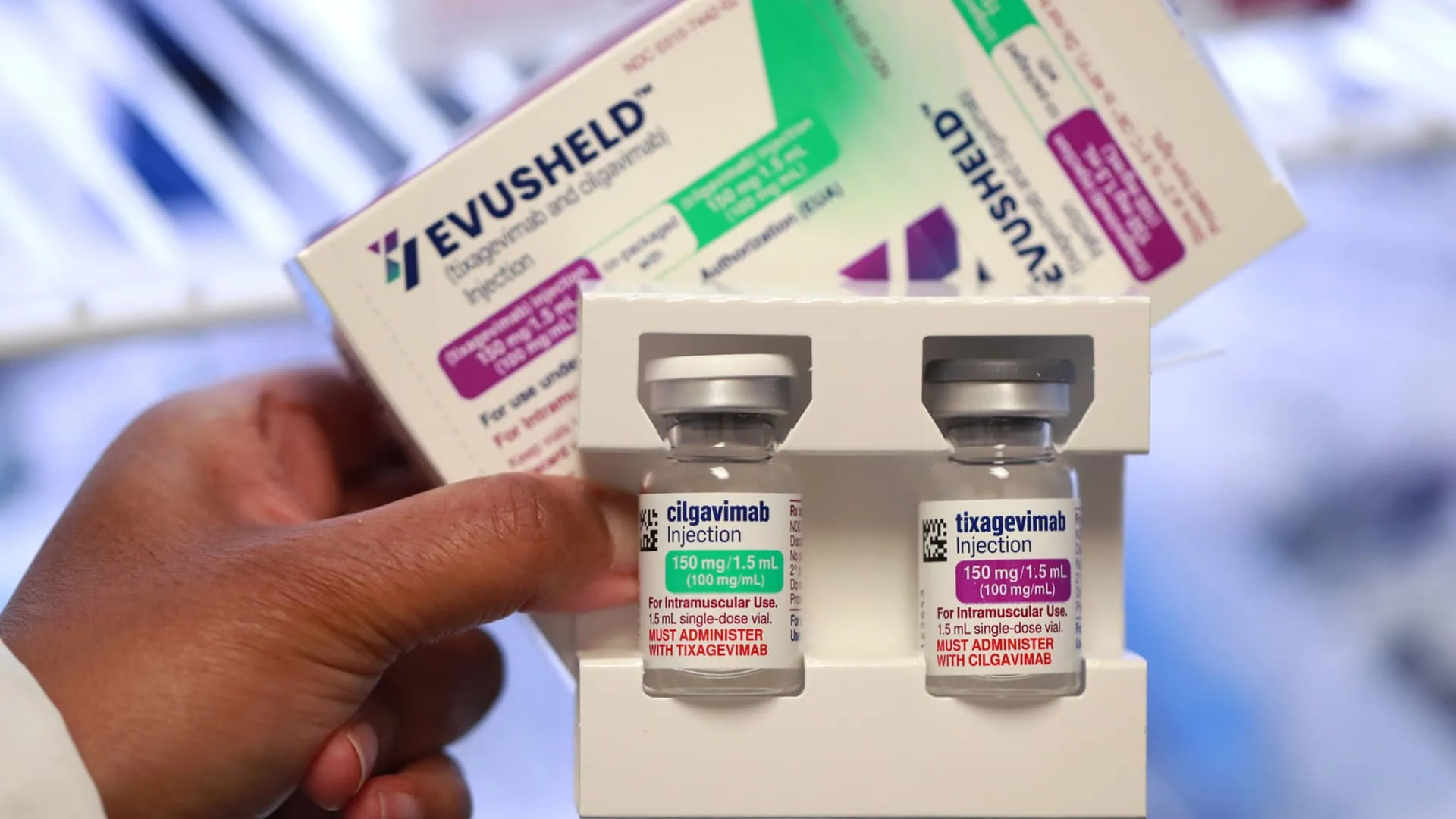
Evusheld injection (tixagevimab and cilgavimab), a new COVID-19 treatment that people can take before they become symptomatic. (Chris Sweda/Chicago Tribune/Tribune News Service via Getty Images)

Chris Sweda | Tribune News Service | Getty Images

The Food and Drug Administration withdrew its approval for Thursday AstraZeneca‘s Evusheld, an antibody injection that people with weak immune systems rely on for extra protection against Covid-19.

The FDA pulled Evusheld from the market because it is not effective against more than 90% of the Covid subvariants currently circulating in the US

The subvariant omicron XBB.1.5, which can evade infection-blocking antibodies, has been growing rapidly in the US and now accounts for 49% of new cases, according to data from the Centers for Disease Control and Prevention.

Evusheld is also not effective against the BQ.1, BQ.1.1, and XBB subvariants. Along with XBB.1.5, versions of Covid resistant to Evusheld now account for almost 93% of new cases in the US

“Today’s action to restrict the use of Evusheld prevents patients from being exposed to possible side effects of Evusheld, such as allergic reactions, which can be potentially serious, while less than 10% of the variants circulating in the US that cause infections are susceptible to the product are,” the FDA said in a statement Thursday.

People with weakened immune systems, such as cancer chemotherapy and organ transplant patients, are among the groups most vulnerable to serious illness from Covid. Many take Evusheld as an added layer of protection because the vaccines do not elicit a strong immune response.

The decision to stop Evusheld comes more than a month after the FDA withdrew an antibody treatment called bebtelovimab because it was not effective against subvariants BQ.1 and BQ.1.1.

Evusheld is taken as a preventive measure before exposure to Covid. It’s a combination of antibodies, cilgavimab, and tixagevimab given as two injections every six months.

According to data from the Department of Health and Human Services, just over a million doses of Evusheld have been distributed in the United States since the FDA approved the injections in December 2021. About 720,000 of these doses were actually administered to patients.

More than 7 million adults in the US have a compromised immune system. They made up about 12% of Covid hospital admissions, despite making up just 3% of the population, according to a study by the CDC examining data from 10 states.

There is currently no replacement for Evusheld. dr Ashish Jha, head of the White House Covid task force, has blamed Congress for the dwindling number of treatments. He said lawmakers’ failure to pass additional Covid funds meant there was no money to invest in new antibodies.

“We had hoped that as time went on as the pandemic progressed and as our fight against this virus progressed, we would expand our medicine cabinet,” Jha told reporters in October. “Due to a lack of congressional funding, this medicine cabinet has actually shrunk and that is putting vulnerable people at risk.”

President Joe Biden urged people with compromised immune systems to see a doctor.

“New variants may render some existing protections for immunocompromised people ineffective,” the president said in October. “Unfortunately, that means you may be at particular risk this winter. I urge you to consult with your doctors on the right steps to protect yourself and take extra precautions.”

California prosecutors wish to take away the bar from Trump’s ally John Eastman

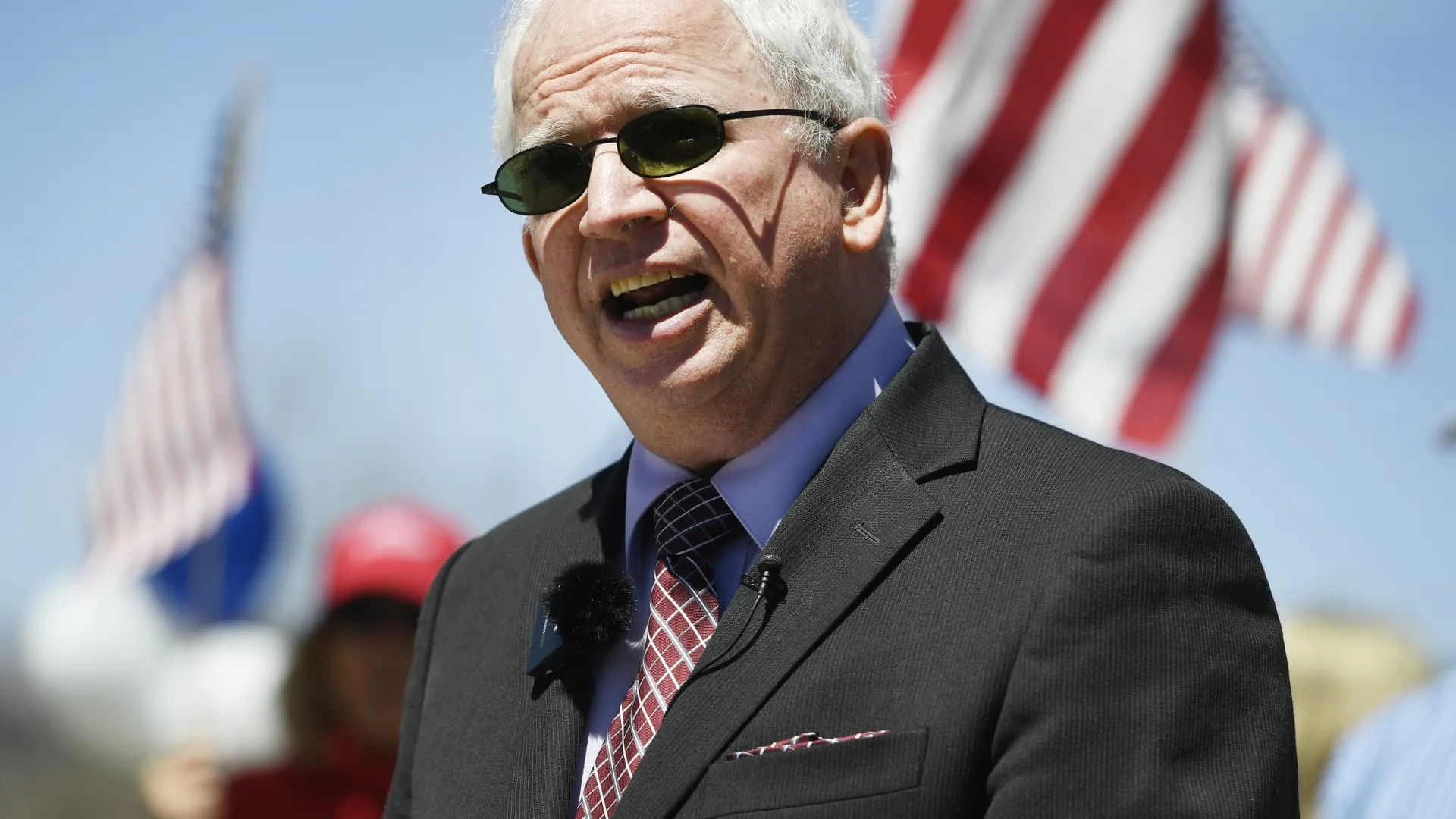
University of Colorado Boulders Conservative Thought and Policy Visiting Scholar John Eastman speaks at a news conference outside of CU Boulder Thursday, April 29, 2021, about his plans to sue the university.

Andy Cross | Denver Post | Getty Images

California prosecutors on Thursday indicted John Eastman, an attorney closely associated with former President Donald Trump, on 11 disciplinary counts related to his alleged plan to overturn President Joe Biden’s victory in the 2020 election.

According to a press release from the State Bar of California, Chief Trial Counsel George Cardona’s office intends to seek Eastman’s ban.

Eastman is accused of making false statements about alleged voter fraud, including during a “Stop the Steal” rally outside the White House on Jan. 6, 2021. The event began just before a violent mob of Trump supporters stormed the US Capitol .

Eastman was the legal architect of one of several efforts to reverse Trump’s loss to Biden. Eastman drafted documents espousing a dubious legal theory that then-Vice President Mike Pence had the power to unilaterally refuse to confirm Electoral College votes for Biden from key swing states.

Pence, who led congressional efforts to confirm Biden’s victory on Jan. 6, 2021, refused to go along with that plan despite pressure from Trump.

The indictment against Eastman states that his proposed strategies “were not supported by the law, were based on false and misleading statements of fact, and were aimed at keeping Trump in office.”

This is breaking news. Please check again for updates.

Emma Roberts laughs at rumors pal Lea Michele cannot learn

Emma Roberts is a woman of few words when it comes to answering Leah Michele conspiracy theory.

While appearing on Bravo’s Watch What Happens Live on Jan. 24, the American Horror Story alumna was asked who she thinks is the “biggest misconception” about her former Scream Queens co-star. Refers to a long-standing rumor about Michele, host Andy Cohen adding, “The biggest misconception is that she can’t read, right?”

“Well, I mean,” Roberts said, laughing, “we haven’t been to a book club together.”

fellow guest Julia Bowen adding: “Why is reading so damn important! Don’t let her read if she wants to!”

Michele has poked fun at the long-running rumor that she allegedly can’t read or write. In September 2022, the Glee alum made her TikTok debut with a video naming her BFF and former co-star Jonathan Grof that he “reads me the comments on my first TikTok.”

The FDA has decided no danger of stroke for seniors who obtained Pfizer’s Omicron boosters

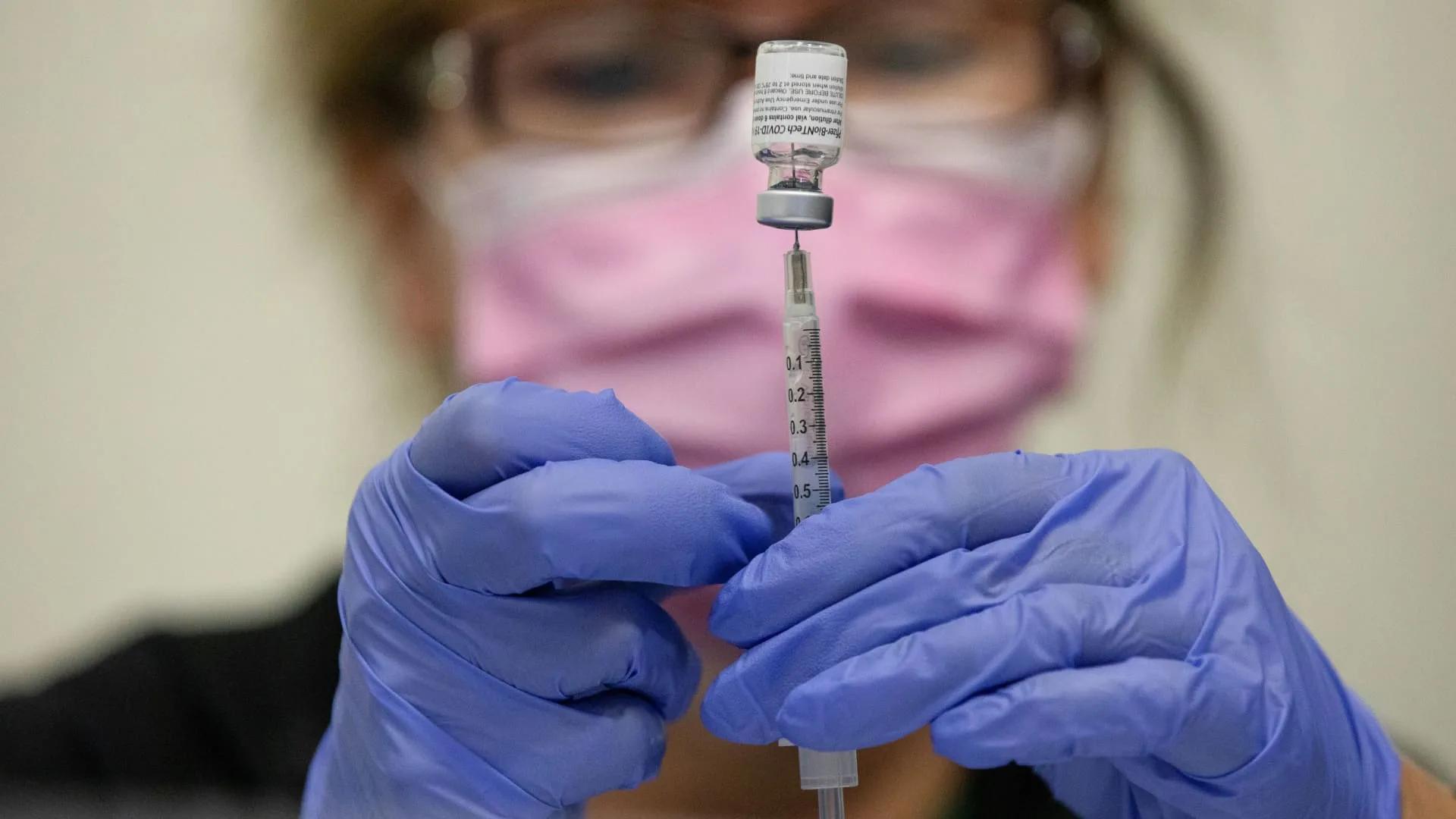
A nurse refills syringes for patients as they receive their booster shots against coronavirus disease (COVID-19) during a Pfizer-BioNTech immunization clinic in Southfield, Michigan September 29, 2021.

Emily Elconin | Reuters

The Food and Drug Administration has not found an increased risk of stroke for seniors who have received it Pfizers Omicron booster shot, a federal health official said Thursday.

The FDA launched a comprehensive review of federal data after investigators from the Centers for Disease Control and Prevention identified a possible risk of stroke for seniors who received Pfizer’s booster shot.

The CDC’s Vaccine Safety Datalink, which monitors severe reactions to vaccines, showed a possible risk of stroke in late November. The FDA independently reviewed data from the Centers for Medicare and Medicaid Services and their Vaccine Adverse Event Reporting System.

“So far, the data we’ve seen indicate that there is no safety risk for the bivalent boosters at ages 65 and older,” Richard Forshee, deputy director of the FDA’s Office of Biostatistics, told the agency’s independent vaccines committee .

CNBC Health & Science

Read CNBC’s latest global health coverage:

The FDA reviewed CMS data from 4.25 million seniors who received Pfizer’s Omicron booster and found no increased risk of stroke. The Agency’s review of the VAERS data also revealed no increased risk.

The Department of Veterans Affairs also conducted a preliminary review of its database and found no increased risk of stroke, Forshee said. The FDA also reached out to international partners and Pfizer to find out what they observed in their data.

“We have contacted a number of our international regulatory agencies and various countries in Europe as well as Israel have reported no increased risk of stroke in their surveillance systems,” Forshee told the FDA committee.

“We also contacted Pfizer and they consulted their global safety database and they saw no increase or signal of ischemic stroke in their systems,” Forshee added.

CDC investigators found that among approximately 550,000 recipients in the VSD database, 130 seniors suffered a stroke in the 21 days after receiving Pfizer’s booster shot. A man in his 70s died a month after the stroke that was his probable cause of death, according to data presented Thursday.

dr Nicola Klein, the principal investigator for the CDC’s Vaccine Safety Datalink, said a statistical signal indicating a potential risk of stroke was first identified in late November and persisted through January, although the signal’s strength has waned somewhat.

“I will say that it has moderated significantly in the data from a few days ago and has not signaled for the first time in the past week,” Klein told the FDA’s panel of vaccine advisors.

However, investigators performed small analyzes that suggested seniors who received both Pfizer’s Omicron booster shot and a high-dose or adjuvanted flu vaccine on the same day may have a higher risk of stroke, although the data are preliminary.

Although the FDA has not identified a risk of stroke, the agency is starting a study to examine potential safety concerns that could arise from co-administration of the Covid-Omicron vaccines with the high-dose or adjuvant flu vaccines, Forshee said. The study will help the agency prepare for the vaccination campaign in the 2023-2024 respiratory virus season, he said.

How AI can detect coronary heart assault threat and outwit America’s #1 killer

Heart disease is the nation’s #1 killer, affecting all communities regardless of income, race, gender and geography. It takes a disproportionate toll on minorities and women, but a challenge shared by many patients at risk of heart attack: an inability to recognize the risk before it’s too late. More than half of people who experience an acute myocardial infarction have no symptoms that could serve as early warning signs.

Cardiologist James Min, a former Weill Cornell Medical College professor and director of the Dalio Institute of Cardiovascular Imaging at New York-Presbyterian, founded Cleerly to find a better way to assess heart health by applying AI to the problem and saving time it takes to identify problems and ultimately achieve its goal of a “heart attack-free” world.

His startup’s quantitative comparison tool tracks the patient’s disease based on the amount and type of atherosclerosis (plaque) rather than indirect surrogates, including risk factors, symptoms, stenosis (narrowing of the aortic valve), and ischemia (poor circulation).

Register today for the sixth annual Healthy Returns Summit. We invite key leaders and experts to discuss medical innovations, breakthrough medicines, life science investments and more. Sign up today.

Cleerly emerged from stealth mode in June 2021 with a $43 million Series B funding round led by Vensana Capital. Cleerly then secured a $223 million Series C funding round in July 2022, bringing the total to $279 million. The Series C round was led by T. Rowe Price and Fidelity, with participation from several other investor groups including DRx (Novartis) and Peter Thiel.

To date, Cleerly has received two FDA clearances in 2019 (K190858) and 2020 (K202280) for its products and utilizes numerous proprietary algorithms that have been integrated into medical devices. It maintains many additional testing algorithms that will be incorporated into future devices for submission to the FDA.

Cleerly has formed a number of partnerships including the American College of Cardiology, Canon Medical, Heartbeat Health, and several others. Cleerly partners with a number of universities for its studies and clinical trials, including Mass General Brigham, University of Virginia, University of Wisconsin, Oregon Health Sciences University, George Washington University, Houston Methodist Hospital, UCLA and Scripps Clinic.

dr Min recently spoke to CNBC ahead of the upcoming CNBC Healthy Returns Summit on March 29th. This interview has been edited for length and clarity.

CNBC: How did Cleerly come about?

Min: While caring for critically ill patients in the intensive care unit, I came face to face with a 36-year-old young man who was suffering a massive heart attack. Although the patient survived, the realization came that we needed to be on the preventive side of care rather than the reactive side.

CNBC: What are indirect markers of heart disease?

Min: Many emergency room visits for heart attacks are preventable if risk factors for heart disease are identified in advance. Current diagnostic methods miss 70% of all patients who suffer a heart attack because they are incorrectly classified as “low risk” by traditional measures such as cholesterol or blood pressure. In addition, about half of patients who have a heart attack do not have any symptoms (such as chest pain or shortness of breath) prior to their catastrophic event.

CNBC: What is the Cleerly AI platform doing and what is the main thing it is looking for?

Min: Cleerly uses proprietary and FDA-cleared machine learning algorithms to non-invasively analyze atherosclerosis (plaque) and stenosis using standard coronary computed tomography angiography (CCTA) studies.

Its proprietary AI algorithms generate a 3D model of the patient’s coronary arteries, identify their lumen (the cavity or channel within a tube or tubular organ such as a blood vessel) and vessel walls, locate and quantify stenoses, and identify, quantify and categorize plaque.

Using millions of annotated CCTA images, Cleerly algorithms quantify and characterize atherosclerosis and its features. We are standardizing and personalizing the approach to heart disease with a pathway that enables disease identification and characterization, education, implementation, treatment and tracking over time to demonstrate therapeutic success in patients before they experience a catastrophic cardiac event suffer.

CNBC: What is the process when a patient is scanned and then gets their results? What is the timeline from the first recommendation to the dissemination of the results?

Min: The overall time frame – from the patient’s first referral for a Cleerly scan to receiving the results from their provider – is variable and depends on the program, location, patient motivation, etc.

Larger healthcare systems routinely scan patients in the morning and can then, for example, review Cleerly results in the afternoon. Scheduling an appointment at a walk-in imaging center may take a little longer depending on the days the imaging center is doing cardiac CT scans, etc.

Once a patient’s images are captured and shared to our cloud, Cleerly’s average turnaround time is approximately 1 hour and 45 minutes. The results are immediately available in Cleerly’s software for the referring physician to access. Typically, the referring physician will then schedule a follow-up appointment to review these results, the timing of which obviously depends on the physician/patient’s availability.

CNBC: How accurate is Cleerly?

Min: Cleerly has and continues to conduct multiple multi-center clinical trials to demonstrate its accuracy. In two landmark studies published last year, Cleerly demonstrated 99% accuracy against the consensus of three board-certified, Level III expert readers and 86% accuracy against invasive coronary angiograms (ICA). In the latter study, Cleerly showed better agreement with invasive fractional flow reserve (FFR)—the physiological gold standard for assessing coronary artery disease—than with ICA.

CNBC: Nearly 20,000 people have had Cleerly imaging so far? Where can patients get the Cleerly scan?

Min: Cleerly is available in 10 healthcare systems/major cardiology practices, 83 imaging centers and 14 states, with one more coming very soon. We are in Arizona, California, Colorado, Florida, Illinois, Kentucky, Maryland, Michigan, New Jersey, Nevada, New York, Texas and Virginia. It will be available in Georgia. Cleerly’s integration into large cardiology practices is defined by single specialty cardiovascular practices with 10+ cardiologists.

Republicans shamefully go away Elaine Chao alone to face as much as Trump’s racism

Former Transportation Secretary Elaine Chao has responded to Trump’s racist attacks on her while the rest of her party has silenced him.

For months, Trump has consistently attacked Chao and used open racism against her, and she replied to Politico: “When I was young, some people used to misspell or pronounce my name on purpose. Asian Americans have worked hard to change that experience for the next generation. He doesn’t seem to get that, which says a lot more about him than it ever will say about Asian Americans.”

Unlike Trump’s other attacks on those he considers enemies, his comments on Chao, who is married to Senate Minority Leader Mitch McConnell, have not attempted to hide his racist intent.

Subscribe to our newsletter:

The Republican leadership has remained silent on these attacks. Chao has asked reporters not to reinforce Trump’s comments, and possibly for the same reason, Senator McConnell has refused to take a gamble on Trump’s attacks, but nothing is stopping the rest of the Republican Party from denouncing Trump.

The reason Trump is likely to win the Republican nomination in 2024 is because Republicans remain afraid of him and his supporters. They refuse to stand up to Trump. The same dynamics were there in 2016, 2020, 2022, and there’s no sign of them changing in 2024.

Chao is right. Trump’s comments say more about Donald Trump than Asian Americans, and the tacit enabling of these attacks speaks volumes about the Republican Party.

Jason is the managing editor. He is also a White House press pool and congressional correspondent for PoliticusUSA. Jason has a bachelor’s degree in political science. His thesis focused on public policy with a specialization in social reform movements.

Awards and professional memberships

Member of the Society of Professional Journalists and the American Political Science Association

Precision Neuroscience, based by Neuralink alum, raises $41 million

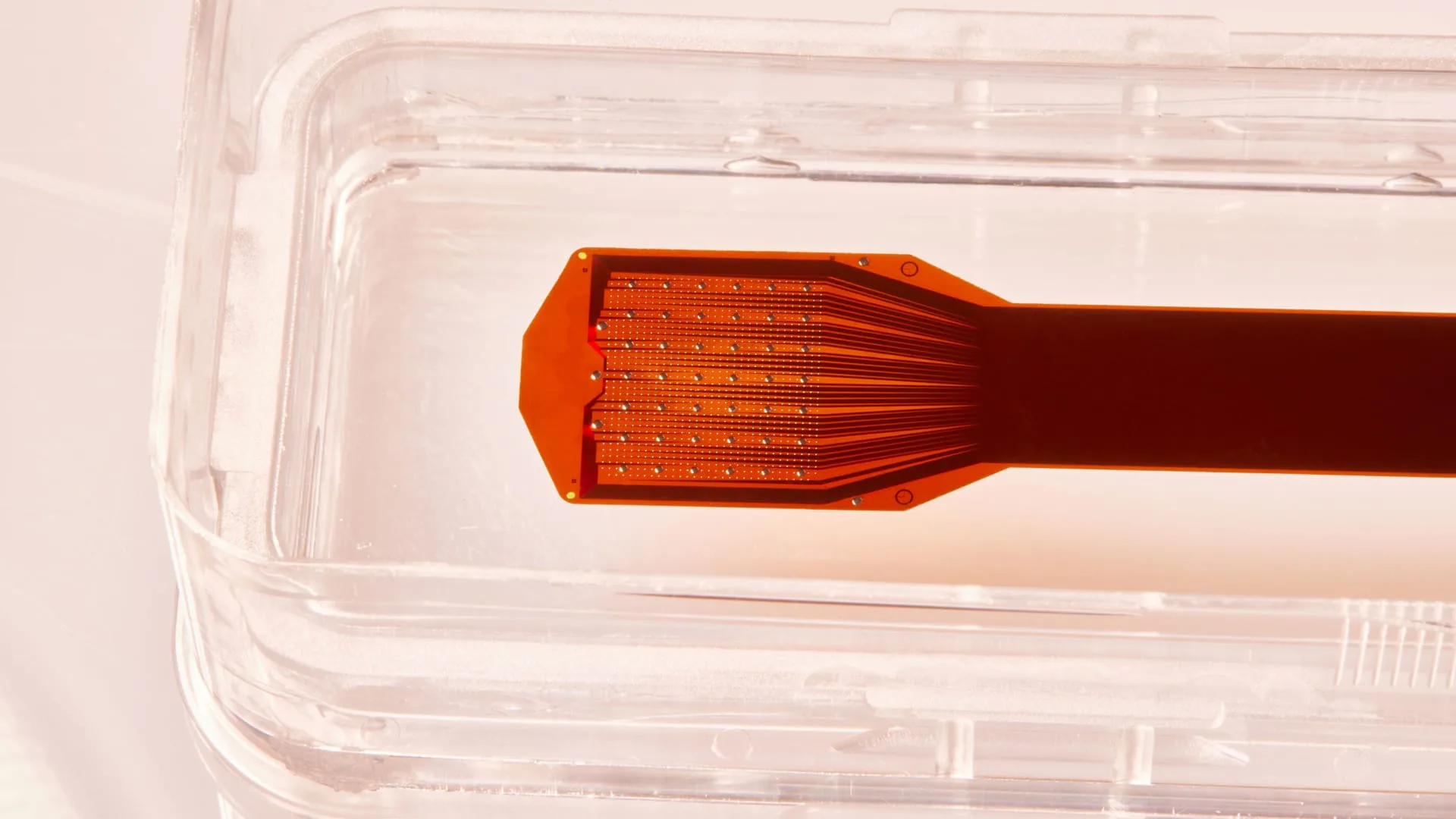
Array of Precision Neuroscience

Source: Precision Neuroscience

The human cerebral cortex is made up of six layers of cells, but at Precision Neuroscience, a team of scientists and engineers are working to build a device that resembles a seventh.

The device is called Layer 7 Cortical Interface and is a brain implant designed to help paralyzed patients operate digital devices using only neural signals. This means patients with severe degenerative diseases like ALS are regaining their ability to communicate with loved ones by moving cursors, typing and even accessing social media with their minds.

Layer 7 is an electrode array that resembles a piece of scotch tape and is thinner than a human hair, allowing it to conform to the brain surface without damaging tissue.

Founded in 2021, Precision is one of many companies in the burgeoning brain-computer interface or BCI industry. A BCI is a system that decodes brain signals and translates them into commands for external technologies, and several companies have successfully developed devices with this capability.

Precision was co-founded by Benjamin Rapoport, who also co-founded Elon Musk’s BCI company Neuralink and Michael Mager. But while Neuralink’s BCI is designed to be implanted directly into brain tissue, Precision uses a surgical technique that is less invasive.

Precision Neuroscience’s Stephanie Rider inspects the company’s microelectrode array

Source: Precision Neuroscience

To implant the Layer 7 array, a surgeon makes a very thin slit in the skull and slides the device into a mailbox like a letter. Mager, who is also CEO of Precision, said the slit is less than a millimeter thick — so small that patients don’t even have to have their hair shaved for the procedure.

“I think that’s a huge benefit compared to technologies that require, say, a craniotomy, which removes a significant portion of the skull, which takes a lot of time and has a high risk of infection,” he told CNBC. “I’ve never met anyone who wanted to drill a hole in their skull.”

The nature of the procedure allows Precision to slightly increase the number of electrodes on the array, which Mager says will eventually allow the device to be used for neurological applications beyond paralysis.

The procedure is also reversible if patients decide they no longer want the implant or want newer versions in the future.

“When you start thinking about expanding this to larger patient populations, the risk/reward balance of any procedure is a fundamental consideration for anyone considering medical technology,” Mager said. “If your system is either irreversible or potentially damaged upon explant, that just means the greater the commitment you make to get the implant.”

Jacob Robinson, associate professor of electrical engineering at Rice University and founder of BCI company Motif Neurotech, said Precision is making exciting advances in minimally invasive BCI. Not only patients have to weigh the risks and benefits of an intervention, but also doctors and insurance companies.

Robinson said doctors need to weigh procedures quantitatively and based on existing literature, while insurance companies need to weigh the cost to their patients, so the less invasive surgery makes it easier for all three parties.

“It’s a lower risk, but it also means there’s an opportunity to treat more people, there’s greater acceptance,” he said.

But because the device isn’t inserted directly into brain tissue, Robinson says the resolution of brain signals won’t be as strong as some other BCI devices.

“You get much better resolution than outside the skull, not quite as high resolution as inside the tissue,” he said. “But there’s a lot you can do with this kind of mid-scale.”

Precision has successfully used its Layer 7 device to decode neural signals in animals, and Mager said he hopes to receive FDA approval to test the technology in humans in the coming months.

The company announced a $41 million Series B funding round Wednesday, bringing the total to $53 million in less than two years. The funding will allow Precision to refine its product, hire more employees and expedite regulatory review by the FDA, a goal Mager says Precision is rapidly working toward.

“We don’t want the next 15 years to be like the last 15 years where this is helping a few dozen people. So I think we’re in a hurry,” he said. “What we hear all the time [from patients] is, ‘We want this, and we want it sooner rather than later.’”

Mager said he thinks this year is proving to be a “watershed year” in neurotechnology and that there has been a lot of positive momentum in the BCI space in terms of funding.

Although he said he understands the skepticism that exists around BCIs and technology as a whole, Mager said he believes there is real potential to make a difference for millions of people suffering from neurological disorders.

“I think in many ways the brain is the next frontier for modern medicine,” he said. “The fact that there are so many people who have neurological impairments of one kind or another and that we can offer them such crude tools is going to change. It changes.”

Airport worker will get sucked into engine and warned to remain again

On Alabama Airport work and mother of three was sucked into a plane engine resulting in a collision so violent that the entire plane shook, killing her after being repeatedly warned to stay away from the plane engines.

Courtney Edwards34, of Alabama, has since been identified as the groundhandling agent who was killed in an accident at Montgomery Regional Airport on New Year’s Eve, according to the New York Post.

Airline worker dies after being sucked into plane engine despite warnings not to stand too close

A preliminary report from the National Transportation Safety Board released Monday found that before her death, a colleague had noticed that Edwards had nearly been knocked over by a jet’s exhaust, prompting him to warn her to keep her distance until the engines were fully charged turned off were down.

Another ground worker on the other side of the jet backed away after a pilot leaned out the window and told him the engines were still running.

We mourn the loss of Courtney Edwards, a ground handler at Montgomery Airport, Alabama, who died in an accident at work. Our hearts go out to Courtney’s family and our working siblings at @CWAUnion. https://t.co/p8xe7Xg1MV

— Airport Workers United (@GoodAirports) January 6, 2023

Just moments earlier, Edwards walked in front of one of the plane’s engines while wearing an orange safety cone before being “pulled off her feet and into the running engine,” according to the report.

A co-pilot said the “plane shook violently followed by the immediate automatic shutdown” after Edwards was sucked into the plane’s engine.

The flight, which departed from Dallas with 59 passengers and four crew members aboard, was operated by Envoy Air, a subsidiary of American Airlines.

According to the report, the NTSB had a safety meeting with the ground crew just 10 minutes before the flight’s arrival

To make matters worse, according to the safety authorities, an auxiliary unit was not working.

The pilots eventually decided to run both engines for a two-minute cool-down while waiting for the aircraft to be connected to ground power.

Pictured: Courtney Edwards and family (courtesy of GoFundMe)

Meanwhile, the NTSB claims that just 10 minutes before the flight arrived, a safety meeting was held with members of the ground crew, followed by a second safety “huddle” just as the jet reached its gate, “to reiterate that the… engines would keep running”.

The Perspiration Authority added that no one should approach the plane until the engines have shut down and the pilots have turned off the beacon.

An inquest into Edwards’ death is ongoing.

In the meantime a GoFundMe as the Edwards family has already raised $104,000 from a goal of $25,000.

Southwest CEO plans restoration after vacation disaster

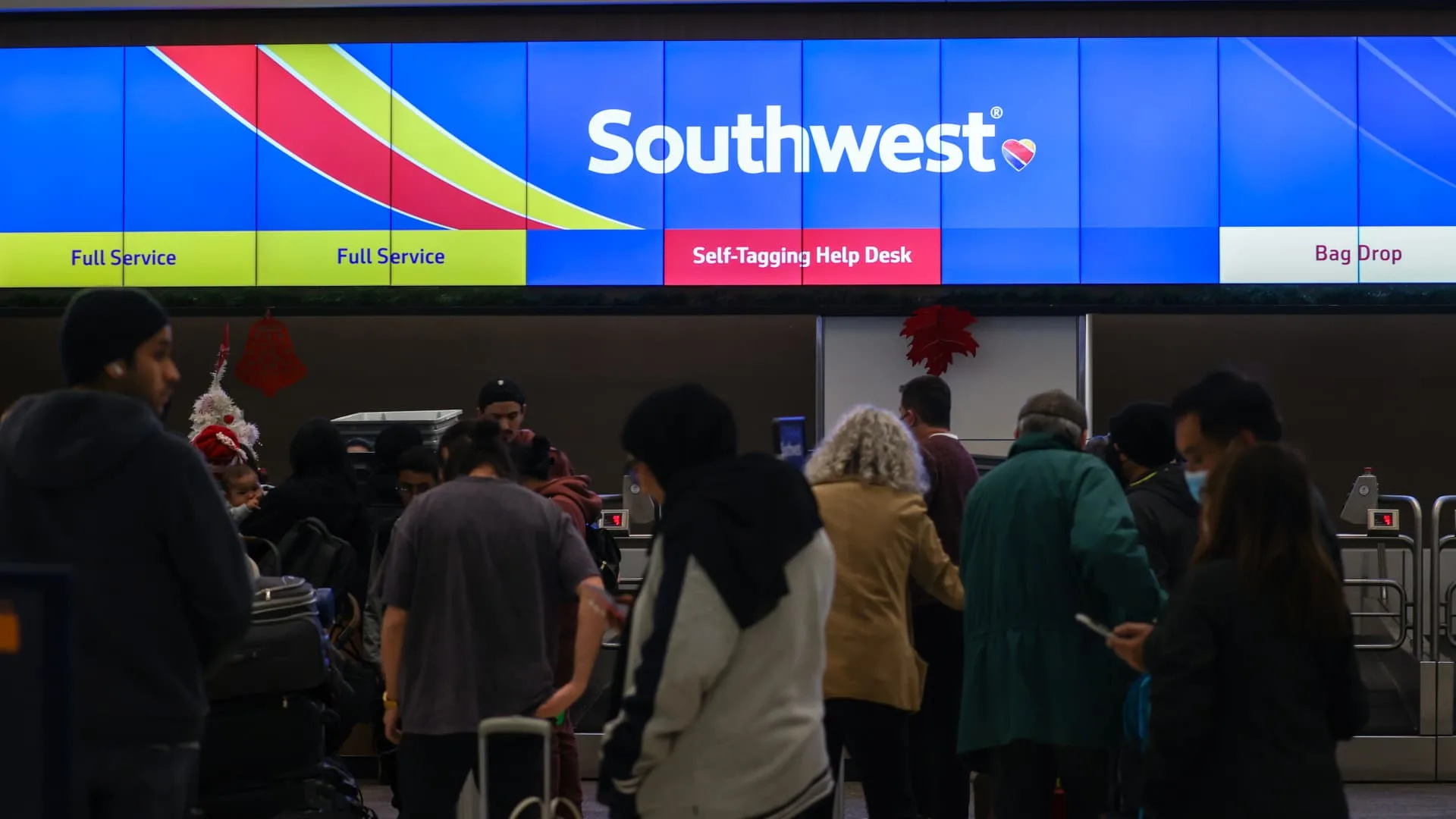
Passengers stand at the Southwest Airlines counter at San Francisco International Airport (SFO) in San Francisco, California, United States, on December 26, 2022, as Southwest canceled more than 2,800 U.S. flights on Monday amid fierce winter storms.

Tayfun Coskun | Anadolu Agency | Getty Images

southwest CEO Bob Jordan’s message after a vacation crisis wrecked the travel plans of millions is clear: “I can’t say it enough. We screwed it up.”

His focus now is to ensure a similar crisis never happens again. The airline has hired consultancy Oliver Wyman to review its processes, interview employees and union members, lay out what went wrong and how it can be avoided in the future. The low-cost airline cooperates General Electric to enhance the capabilities of software that assists Southwest in drafting crew reassignments. The airline’s board of directors has set up an audit committee to help managers deal with such events.

The event was disturbing for many travelers who were used to Southwest’s customer service, which includes policies like free checked baggage, a rarity for domestic travel to the United States. Lawmakers and Transport Secretary Pete Buttigieg said they wanted to investigate the disruptions further.

After less than a year at the helm of the airline, following travel chaos not seen in his more than three decades at Southwest, Jordan is now tasked with making things right with passengers and employees.

“We took goodwill out of the bank. We know that,” Jordan said in an interview earlier this month. “We have a lot of work to do to restore trust, but our customers are very loyal and we see that loyalty.”

Southwest said it offered bonus payments to flight attendants and $45 million in “gratitude payments” to pilots because of the meltdown. Both groups have been warning of inadequate technology and scheduling for years.

The airline has also given away 25,000 Rapid Rewards points each, which the company estimates to be worth about $300, to about 2 million people who booked flights during the chaotic holiday season, Jordan said.

He said a recent fare sale was successful and that many customers are redeeming frequent flyer points for Southwest flights.

Southwest said the mess will likely mean a $725 million to $825 million in damage to pretax earnings and a rare quarterly loss. Executives will face questions from analysts and reporters when the airline reports earnings, which are scheduled for Thursday morning.

Cascading cancellations

Southwest said it canceled about 16,700 flights between Dec. 21 and Dec. 31, a tally that swelled after it didn’t recover from severe winter weather that hampered travel across the country and stabilize days later. Airline executives had expected it to be the busiest travel time since the start of the Covid-19 pandemic.

The hydraulic fluid became so viscous in the brutal cold that jet bridges could no longer be moved. Snow and high winds suspended operations at airports across the country. Airplane engines iced up.

Most airlines had largely recovered from the bad weather by Christmas Day, but Southwest’s problems worsened when crews had to call to get new orders or hotel rooms, prompting a backup.

The airline’s planes and crews were left out of place and at the mercy of crew planning systems designed to handle current or future flight disruptions, rather than an accumulation of past flight changes.

“We needed a bigger response to reset the network,” Jordan said. “That basically dragged the schedule down.”

Southwest only flew about a third of its scheduled schedule for several days after Christmas to get crews and planes where they needed to go.

“The GE Digital tool integrated with Southwest’s systems performed as planned throughout the event and we are working with them to define new functionality as they improve their crew rescheduling ability,” said a GE spokesman on Tuesday.

Nevertheless, the planning chaos after bad weather is nothing new for the airline industry. JetBlueThe February 2007 meltdown cost JetBlue founder David Neeleman his job. (He has since started a new airline in the US called Breeze Airways.)

Southwest itself had a minor cascade of flight disruptions in October 2021 that cost it around $75 million. months before, Spirit Airlines suffered $50 million damage from mass disruption.

“Every airline has their case, and they rise from it with new perspectives,” said Samuel Engel, senior vice president at consulting firm ICF. “The airline reaches a certain point of complexity and has a disruption event of such magnitude that it needs to look deep inside.”

Both Spirit and Southwest operate so-called point-to-point networks that don’t rely on hubs like larger airlines, instead allowing planes to fly across the country. The model generally works and helps keep costs down, but it can exacerbate disruptions in extreme events.

Jordan defended the model, saying the network is usually easier to restore because travelers don’t rely on connections to get to their destination.

“The problem here wasn’t the network, the problem was how many places were hit by the weather and how many cancellations were basically continuous driving,” he said.

Compensate

Even those travelers who have been burned by an airline in an event like this have few alternatives when booking airline tickets and often focus on price and schedule, ICF’s Engel said.

Southwest, United, delta and American control more than three quarters of the US market.

“Customers consistently select their flights based on tariff and flight schedule,” he said. “When they go through a disrupted journey, they say ‘never again’ — and then they do it.”

Mark Ahasic, an aviation consultant who worked with JetBlue during the 2007 meltdown, said the airline’s reputation ” took a hit but didn’t destroy the brand.”

Southwest needs to resolve the issues that caused the holiday woes and make amends with customers, but many travelers — especially those at airports where Southwest has a strong presence — typically have few airlines to choose from, Ahasic said.

Southwest has almost finished processing customer refunds and is working on the more complex task of refunds, which Jordan says includes everything from meals to dog-sitting fees. Some travelers who have paid high prices for tight seats on other airlines are still waiting for their money.

Codi Smith, a 28-year-old artist who lives in Los Angeles, paid $578.60 for a Delta flight back to LA from his mother’s home in St. Louis after Southwest canceled part of his return trip after Christmas. Southwest offered Smith an alternate flight on New Year’s Eve, but Smith said he has multiple sclerosis and needs to return to Los Angeles early to get his medication.

“I just didn’t know what could happen,” Smith said.

Southwest reimbursed Smith for his airline portion of the trip, but as of last week it hadn’t reimbursed him for what he spent on the Delta flight. He said Southwest sent him four drink coupons on board.

“Why would I use drink tickets when you owe me $600?” he said. “I really just want that money back.”

Cameron Brainard, an announcer and country radio host, said he paid more than $1,000 to return to New York from Nashville, Tennessee, including a rental car from Louisville, Kentucky. Southwest offered him $540.02, noting in a Jan. 19 email that Brainard told CNBC that he had not yet requested the refund.

“Be sure to request this payment before it expires” in July, the email said. “This payment constitutes full and final settlement of your claim against Southwest Airlines.”

Brainard said he flies Southwest frequently and has no plans to leave the airline after his cancellation, although he would “guess twice” depending on how his refund turns out.

“I hope it makes them a better airline,” he said.