Russia’s Sputnik vaccine attracts Jap Europe and worries the EU

A medical worker holds a syringe with the Gam-COVID-Vac (Sputnik V) Covid-19 vaccine in his hand.

Alexander Reka | TASS | Getty Images

While the European Union struggles to push coronavirus vaccine rollout in the block of 27, Russia’s Covid shot is proving enticing to its friends in Eastern Europe, creating yet another potential rift in the region.

The Czech Republic, Austria, Hungary and Slovakia have all expressed an interest in the procurement and use of the Russian vaccine “Sputnik V”, which could undermine an EU-wide approach to the approval and administration of coronavirus vaccines.

Czech Prime Minister Andrej Babis said on Sunday that his country could use the Sputnik V vaccine without the approval of the EU Medicines Agency, the European Medicines Agency.

It comes after Russian President Vladimir Putin and Austrian Chancellor Sebastian Kurz received a call last Friday in which they discussed “possible deliveries of the Russian Sputnik-V vaccine to Austria and its possible joint production,” the Kremlin said and found that Austria had initiated the call. Austria has so far stated that it would not bypass the EMA when approving the vaccine.

Hungary, a country within the EU that has close ties to Brussels and whose leader Viktor Orban is considered a close ally of Putin, has shown no such hesitation. It was the first European country to bypass the EMA to approve and purchase the Sputnik V vaccine in January.

According to the Moscow Times, the country expects 2 million doses of the Sputnik V vaccine to be administered over the next three months. Hungary also approved China’s Sinopharm vaccine last month, which again goes against the grain when it comes to EU vaccine approval.

On Monday, Slovakia became the second European country to announce that it had purchased the Sputnik V vaccine, which secured 2 million doses of the shot. However, the Slovak Minister of Health said it will not be given immediately as it still needs the green light from the country’s national drug regulator.

A Slovak Army plane carrying doses of the Sputnik V vaccine against the coronavirus (Covid-19) stands on the tarmac when it arrives from Moscow at Kosice International Airport, Slovakia, on March 1, 2021.

PETER LAZAR | AFP | Getty Images

What’s happening?

The linchpin for the Russian vaccine is widespread frustration with the slow adoption of EU vaccines. The bloc’s decision to jointly buy vaccines has hampered it, and its orders came later than in other countries, including the UK and US

Manufacturing problems and bureaucracy – and hesitation in some countries about vaccines – were also stumbling blocks to adoption.

Nonetheless, the move by some Eastern European countries to unilaterally support Russia’s vaccine will exacerbate problems in Brussels as it undermines the EU’s desire for a unified approach and a sense of equity in the distribution of vaccines.

There were also concerns specifically about Sputnik V, although subsequent data have confirmed the vaccine’s effectiveness and credibility.

The vaccine was approved by the Russian health authority in August last year, ahead of the completion of clinical trials, causing skepticism among experts that it may not meet strict safety and efficacy standards. Some experts argued that the Kremlin is keen to win the race to develop a Covid vaccine.

However, an interim analysis of the Phase 3 clinical trials with 20 participants published in The Lancet in early February found the vaccine to be 91.6% effective against symptomatic Covid-19 infections.

In a companion article in the Lancet, Ian Jones, Professor of Virology at the University of Reading, England noted that “the development of the Sputnik V vaccine has been criticized for undue urgency. However, the result reported here is clear and scientific. The principle of vaccination is demonstrated which means another vaccine can now join the fight to reduce the incidence of Covid-19. “

However, the Gamaleya National Center for Epidemiology and Microbiology in Moscow, which developed the vaccine, has not yet submitted an application to the EMA for marketing authorization for the vaccine, the EU Medicines Agency said in early February.

A woman receives the second component of the Gam-COVID-Vac (Sputnik V) COVID-19 vaccine.

Valentin Sprinchak | TASS | Getty Images

RDIF, Russia’s sovereign wealth fund that backed the development of Sputnik V, announced to CNBC on Monday that it had requested the EU Drugs Agency for an ongoing vaccine review in mid-February. However, the EMA has not confirmed this and CNBC has asked the EMA for a comment.

Political theater

The European Commission already warned Hungary, albeit indirectly, against the use of the Russian vaccine before the EMA approved it. As early as November, a spokesman for the Commission told Reuters: “The question is whether a Member State would like to give its citizens a vaccine that has not been tested by the EMA.” Public confidence in vaccination could be damaged.

“This is where the approval process and confidence in vaccines meet. When our citizens start questioning the safety of a vaccine, it will be much more difficult to get a sufficient proportion of vaccines if it has not undergone rigorous scientific evaluation. to demonstrate its safety and effectiveness to the population, “said the spokesman, reported Reuters.

However, the decision of Hungary to proceed alone with the vaccine against Sputnik V does not surprise the EU observers. The country’s right-wing leader, Viktor Orban – a “strong man” like Russia’s Putin – has had several disputes with the EU executive in recent years, particularly over signs of the government’s increasing authoritarianism. The erosion of the independence of the judiciary and freedom of the press in Hungary is of particular concern to the EU. However, the Hungarian government rejects such criticism.

Gustav Gressel, Senior Policy Fellow at the European Council on Foreign Relations, told CNBC on Monday that Hungary’s actions were “part of Orban’s campaign to promote a” decadent, declining EU “and the future of Hungary in the east with Russia and China.” said it had been going on for some time.

Daragh McDowell, head of Europe and chief analyst for Russia at Verisk Maplecroft, described the geopolitics surrounding Sputnik V and the EU as “political theater more than anything”.

“For Hungary and Austria there is an element of foreign policy signaling here, as both Kurz and Orban generally had a closer relationship with Putin than their European counterparts. In the case of the Czech Republic, the impetus seems to have been more towards the government “Take action” in the face of a rapid surge in the number of cases in February, “he said.

There are also doubts as to whether Russia will be able to mass-produce and ship its Sputnik V vaccine to Europe.

“While the Sputnik vaccine appears to be an effective vaccine in principle, Russia is having great difficulty getting mass production right … enough Sputnik vaccine is still not being made,” Gressel said. McDowell noted that “the question is whether Sputnik V can make a noticeable difference, given regulatory issues and existing logistical issues, and whether the vaccine can be made in sufficient numbers either by Russian manufacturers or under license.”

Rachel Maddow says Trump had blood on his arms for masking up his COVID vaccination

Rachel Maddow attacked ex-President Donald Trump on Monday for keeping his vaccination a secret from the American people, suggesting his cover-up cost Americans’ lives.

“Now we find out that he also took the vaccine but kept it a secret,” said the MSNBC host. “At a time when it could have saved thousands of Americans or more just talking to people about it.”

Maddow said Trump’s ongoing COVID cover-ups – from downplaying his own experience with the virus to hiding his vaccination – caused thousands of unnecessary deaths.

“It killed thousands of people,” she said. “What for?”

Video:

“It’s just amazing”: Rachel Maddow says Trump’s decision to cover up his own COVID vaccination could have cost thousands of lives. #maddow pic.twitter.com/qfYqmS8qj6

– PoliticusUSA (@politicususa) March 2, 2021

Maddow said:

When he went to see Walter Reed, some officials expected him to be put on a ventilator upon arrival. He was so sick. None of this information was made available to the public at this time. We didn’t find out until months later after he was out of office. Had the White House been, the President would have just been honest about his personal experience with Covid, how many Republicans and people who love this President for whatever reason would have ended up believing that Covid was serious business that kills even tall, strong people can you like But they kept that out of the American public until he was out of office. And now we find out that he took the vaccine too, but kept it a secret. At a time when simply talking to people about it could have saved thousands of Americans or more. I mean, it’s just amazing. Who did that help? That killed thousands of people. What for? Your pride … It’s incredible.

Trump’s legacy of mass death

After the deadly events of January 6, it’s easy to forget that Donald Trump presided over the deadliest year in American history.

The staggering death toll, of course, was the result of a virus that Trump either ignored, downplayed, or spread in 2020. His lies and incompetence literally cost lives.

Donald Trump attempted to make a comeback in a lie-filled speech at CPAC last weekend, but his legacy will forever be tarnished by mass death.

Follow Sean Colarossi on Facebook and Twitter

Sean Colarossi currently resides in Cleveland, Ohio. He earned his Bachelor of Arts in Journalism from the University of Massachusetts Amherst and was an organizing fellow for both of President Obama’s presidential campaigns. He also worked with Planned Parenthood as the Outreach Organizer of the Affordable Care Act in 2014, helping Northeast Ohio residents get health insurance.

CDC director “actually involved” about states withdrawing Covid measures as instances seem to plateau

Dr. Rochelle Walensky, director of the Centers for Disease Control and Prevention.

Chip Somodevilla | Getty Images

The head of the Centers for Disease Control and Prevention said Monday that she is “really concerned” that some states are pulling back public health measures to contain the coronavirus pandemic, as the US cases appear to be “very serious.” high “flatten.

The decline in Covid-19 cases since the beginning of January now appears to be stalling at around 70,000 new cases per day, said CDC director Dr. Rochelle Walensky during a press conference at the White House. “With these statistics, I’m really concerned that more states are rolling back the exact public health measures we have recommended to protect people from Covid-19.”

“Seventy thousand cases a day seem good compared to what we were a few months ago,” she said. “Please listen to me clearly: at this level of cases with expanding variation, we are completely losing the hard-earned ground we have gained.”

The U.S. has at least 67,300 new Covid-19 cases every day based on a 7-day average calculated by CNBC using data from Johns Hopkins University. The US hit a high of nearly 250,000 cases per day in early January after the winter break.

Senior U.S. health officials including Walensky and Dr. Anthony Fauci, Chief Medical Advisory of the White House, have warned over the past few weeks that the rise in more contagious variants could reverse the current downward trend in infections in the US and delay the nation’s recovery from the pandemic.

As of Sunday, the CDC had identified 2,400 cases of variant B.1.1.7, which were first identified in the UK. The agency identified 53 cases of the B.1.351 strain from South Africa and 10 cases of P.1, a variant for the first time in Brazil.

Fauci said Monday that U.S. health officials are also closely monitoring another variant in New York that contains mutations that help evade the body’s natural immune response.

Officials say viruses cannot mutate unless they infect hosts and cannot replicate. They are also urging Americans to get vaccinated as soon as possible before potentially new and even more dangerous variants continue to take hold.

Walensky said Monday that vaccinations will help the US get out of the pandemic, noting that the Food and Drug Administration has approved Johnson & Johnson’s Covid-19 vaccine for emergency use. This makes it the third shot approved for distribution in the United States and the only vaccine that requires only one dose. Walensky canceled the vaccine on Sunday.

The J&J vaccine is a “much needed addition to our toolbox,” she said. By adding the permit, more people can be vaccinated.

The scarcity of chips will have an effect on the manufacturing of electrical vehicles

An ES6 electric SUV from Nio Inc. at a battery swap station in a parking lot in Shanghai on March 1, 2021.

Qilai Shen | Bloomberg | Getty Images

BEIJING – Chinese electric car startup Nio said Tuesday a global chip shortage will force it to manufacture fewer cars in the second quarter.

The high demand for electronics amid the coronavirus pandemic and the pressure of US-China trade tensions on the highly specialized semiconductor supply chain have contributed to a backlog in chip manufacturing.

As a result, large automakers had to reduce production, with Nio from China announcing such reductions at the latest.

The company had increased production capacity to 10,000 vehicles per month in February, an increase from 7,500 previously, founder William Li said in a quarterly earnings call on Tuesday. However, a shortage of chips and batteries means Nio will have to fall back to the 7,500 level in the second quarter, he said.

Nio predicts strong deliveries

Despite competition from Tesla, Nio stayed ahead of its start-up competitors in vehicle sales.

The company delivered 7,225 vehicles in January and 5,578 vehicles in February during the weeklong New Year holiday. With a forecast of 20,000 to 25,000 deliveries in the first quarter, Nio assumes that deliveries in March will increase to at least 7,197 vehicles.

In contrast, Xpeng announced Tuesday that 2,223 electric cars were shipped last month, while Li Auto expects fewer than 4,000 cars per month to be shipped in the first quarter.

Nio founder Li said pre-orders for the et7 sedan released in January exceeded those of the company’s other models but refused to disclose certain numbers. The et7 is Nio’s first non-SUV consumer car and is scheduled to begin deliveries next year.

Li added the company stayed on track to enter Europe later that year.

Nio’s shares, listed on the New York Stock Exchange, fell 4% in trading for extended periods after a fourth quarter earnings loss of 0.93 yuan (14 cents) per share was reported. That is more than the analysts’ forecast loss of 0.39 yuan per share, according to FactSet.

The company attributed a quarterly increase in net losses of nearly 33% to 1.39 billion yuan ($ 212.8 million) for the final three months of 2020, mainly due to the depreciation of the US dollar.

Nio shares rose more than 1,000% last year after the troubled start-up received around $ 1 billion in capital injection from government-backed investors and traders piled into the stock alongside a surge in Tesla shares.

For the future, Nio expects total sales of 7.38 billion yuan to 7.56 billion yuan in the first quarter after 6.64 billion yuan in the fourth quarter.

Saweetie is again with extra fascinating meals concoctions – this time it is all about spaghetti & ranch dressing!

Roommate While Saweetie is known for her music, fashion, and sense of humor, she is also known for her very interesting taste in food – as she regularly shares her out-of-the-box dining preferences with her fans. In a recent video, Saweetie gave her fans a glimpse of what she likes to put on her spaghetti … and it’s not just sauce.

Saweetie brought up social media after she recently shared a video on Instagram of putting a very generous amount of ranch dressing on her spaghetti – which sparked an instant debate about whether ranch and spaghetti are a regular food preference.

In response to the online turmoil, Saweetie commented on Twitter, writing:

“Wtf did you grow up ??? You must have had a boring childhood. “

As we reported last month, she shared her own preparation of a raw oyster with ramen noodle chicken spices sprinkled on top. At the time she said, “I don’t know why I just walk around my house and then boom! I have an idea and I think, “I have to put this on an oyster or I have to do this preparation.” So this is the invention I’m going to make today. “

She added, “I like to have dreams about recipes and when I make them they taste good. I’m just really a foodie. Don’t care about me “

As self-proclaimed foodies, we have to ask ourselves whether a food endorsement or culinary line is in Saweetie’s future.

Would you like tea right in your inbox? Visit us at 917-722-8057 or click here to join!

“We’ve to push additional down”

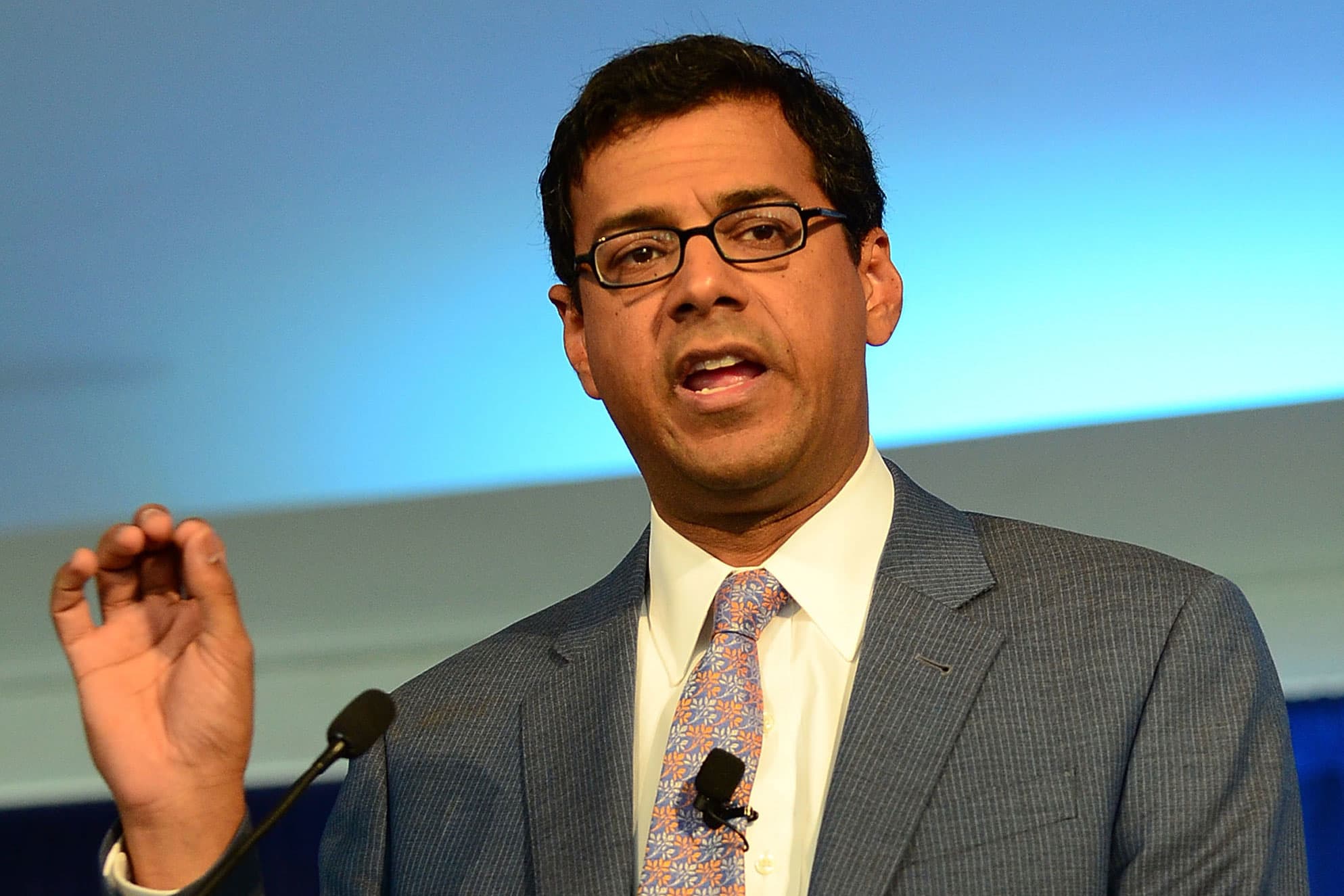
States are easing social distancing rules, but it’s “too early” to take Covid restrictions back, warned Dr. Atul Gawande on CNBC’s “The News with Shepard Smith”.

“We are currently in cases that are still above the highest value of our last spike, so we didn’t even fall below the spike last summer,” said the surgeon and professor at the TH Chan School of Public Health at Harvard . “We still have 2,000 deaths a day. So this is not where we are in good shape to just hit a plateau. We have to keep pushing down.”

According to a CNBC analysis of the Johns Hopkins data, the US is currently seeing a 7-day average of 67,365 new US cases per day, a 73% decrease from a high of about 249,000 in mid-January.

Gawande reiterated the reopening concern shared by Rochelle Walensky, director of the Centers for Disease Control and Prevention. She said she was still “deeply concerned” about the virus.

“Our recent declines seem to be stalling – at over 70,000 cases a day,” Walensky said during a press conference Monday at the White House. “With these new statistics, I am very concerned about reports that more and more states are rolling back the exact public health measures we have recommended to protect people from Covid-19.”

Gawande argued that the new variants of Covid that are circulating in the US, including the latest variant in New York, B.1.526, should be another reason for Americans to remain vigilant when it comes to coronavirus.

The CDC reports that nearly 25.5 million Americans are fully vaccinated, about 8% of the country’s population, and that the demand for shots is high due to the delay in production.

“I think the evidence is pretty solid that it would be a wise thing to just give people who reported they were previously infected a single shot and allow more vaccinations for others,” Gawande said of a temporary strategy to further expand the current offer.

Two new studies from the UK show that vaccination can provide “robust” protection for Covid survivors. However, the CDC is currently debating the issue. Gawande told host Shepard Smith that he would like to see the CDC publish its review as soon as possible.

The U.S. vaccination effort is now armed with the Johnson & Johnson shot, the third approved vaccine in its arsenal to fight Covid. The White House said Americans could get the single vaccine as early as Tuesday.

“In terms of the anticipated supply of Johnson & Johnson vaccines, we will be handing out 3.9 million doses this week,” said Jeffrey Zients, the White House coronavirus response coordinator. “That’s the entirety of Johnson & Johnson’s current inventory. We’re getting these cans out the door right now to make sure vaccines get in the arms as soon as possible.”

How Gigi Hadid saved Child Khai near her throughout Milan Trend Week

Gigi Hadid wears her heart on her sleeve – or rather on her neck.

When Milan Fashion Week ended on Monday March 1st, the supermodel was photographed and looked effortlessly chic while out and about around town. In fact, the 25-year-old star’s outfit made a stylish statement when she donned a necklace that paid tribute to her 5-month-old daughter. Khai.

Gigi rocked a diamond-studded necklace that spelled her little girl’s nickname. What is more? She added an extra layer of protection to her dazzling jewelry piece by adding a gold chain necklace that had an evil eye.

The Californian native’s accessories were the focus of attention as the rest of her ensemble was more reserved. She put on a black button-down cardigan, which she covered with a charcoal-gray striped blazer. She completed her casual look and rocked two-tone jeans, a multi-colored hat and a bright orange clutch.

Gigi’s fashionable homage to Khai comes a little over a month after she subtly shared her little one’s name with the world.

The Maldives, that are depending on tourism, are stepping up their efforts to diversify economically

NurPhoto | NurPhoto | Getty Images

The Maldives are littered with their island resorts and endowed with white sandy beaches and turquoise seas.

But the coronavirus pandemic stalled the global travel and tourism industries last year, forcing the island nation to step up efforts to diversify its economy by expanding other sectors.

Tourism accounts for over 28% of the gross domestic product on the small archipelago and brings in about 60% of foreign exchange earnings, according to Michigan State University.

“As an economy heavily dependent on international tourism, global travel restrictions and other protective measures against the Covid-19 pandemic have had a significant impact on the Maldives,” President Ibrahim Mohamed Solih said in a recent interview with CNBC.

The Maldives closed its borders between March and July last year, temporarily closing the tourism sector and laying off thousands of workers. Some of them have lost their jobs permanently. This has resulted in a drastic lack of foreign currency revenue that the Maldives relies on to pay for imports.

“The border closure meant tourist arrivals were practically zero during this period, a first since modern tourism began in the late 1970s,” Solih said via email.

A little over half a million tourists were welcomed to the Maldives last year. This corresponds to a 67.4% decrease in tourist arrivals from 2019, when 1.7 million visitors came.

Diversification

The Maldives reopened its borders in mid-July, but tourist arrivals have not yet reached pre-pandemic levels.

Solih said he was optimistic, pointing out that by mid-December, 100,000 people had already visited the island nation since the borders were reopened.

Tourists are given a 30-day visa on arrival. Quarantine is not mandatory if she fills out an online health declaration form and shows negative results for pre-departure polymerase chain reaction (PCR) tests, which are often used to detect Covid.

With around 1,200 islands across the country, it is possible to distance yourself socially among tourists as each island functions like its own resort.

Still, more than 19,500 people in the country – or just under 4% of the population – tested positive for the coronavirus and 61 of them died, according to Johns Hopkins University.

As the tourism sector recovers, the Maldives are also working to stimulate other economic sectors, according to Solih.

“We are currently working on economic diversification by expanding the fishing and agricultural sectors and building a decentralized network to provide public services,” he said.

The President added that the country is also working on initiatives that take into account the Maldives’ conservation and climate action.

Combating climate change is high on the government’s agenda as rising sea levels pose physical vulnerabilities for the island nation.

Economic measures

Solih said his government responded to the economic crisis with a variety of measures, including income support, loans for weak businesses with interest-free grace periods, and delaying debt payments for individuals, households and businesses.

The Maldives received a temporary suspension of its debt service payments to creditors through the middle of this year through the G-20’s debt-service suspension initiative. A debt moratorium was also granted by other major development partners, which allowed the government to divert $ 24 million towards its Covid response efforts, the president said.

“We are in constant discussion with the creditors in order to apply for additional suspension of debt servicing if possible,” said Solih.

However, the budget deficit remains a matter of concern. The rating agency Fitch downgraded the Maldives from “B” to “CCC” in November and expects a sharp increase in the country’s debt burden due to the Covid shock and continued debt-financed infrastructure spending.

Inventory futures rise after the S&P 500 hits its greatest day since June

Futures contracts linked to major US stock indices rose in extended trading on Monday evening after the S&P 500 rose more than 2% during regular trading hours on its best day since June.

Dow futures gained 25 points, while contracts linked to the S&P 500 rose 0.1%. Nasdaq 100 futures outperformed, up nearly 0.3%.

US stocks started March on Monday with a sharp rise. The S&P 500 was up 2.38%, the Dow Jones Industrial Average was up 1.95%, and the tech-heavy Nasdaq Composite was up just over 3% after losing 4.9% last week.

All 11 S&P sectors were healthy and the S&P 500 had its best day since June 5th. Both the Dow and Nasdaq had their best trading day since November.

Sensitive cyclical sectors such as energy and finance continued to outperform the broader market amid optimism about vaccines and the economic recovery. Meanwhile, a hiatus in the US debt market allowed high-growth tech names to offset a significant portion of their recent losses.

Facebook grew 2.8%, Apple 5.39% and Tesla 6.36%.

The 10-year US Treasury note yield, which had kept investors busy for most of the past week, fell to a session low of 1.41% on Monday before re-approaching the flatline. The 10-year yield stabilized at these levels, below its 1.6% high last week, encouraging investors that borrowing costs have soared over the past week.

“Fear of returns appeared to be largely responsible for a 3% decline in the S&P 500 from a record high in mid-February,” said Mark Haefele, chief investment officer at UBS Global Wealth Management, in a statement released on Monday.

“We anticipate this interruption to the stock rally will be temporary and believe investors should put the withdrawal in context,” he added. “The rise in returns has not been led by optimism about growth
Inflation is a concern, so it’s not yet a threat to risk-weighted assets. “

Investors will ponder the comments made by Securities and Exchange Commission Chairman Gary Gensler and Federal Reserve Governor Lael Brainard on Tuesday.

Gensler will testify to the Senate Banking Committee at 10 am CET, while Brainard will deliver a speech entitled “US Economic Outlook and Monetary Policy” through a virtual session of the Council on Foreign Relations.

Subscribe to CNBC PRO for exclusive insights and analysis as well as live business day programs from around the world.

Novavax expects FDA approval in Might

The Food and Drug Administration could approve Novavax’s Covid-19 vaccine for emergencies as early as May, the company’s CEO Stanley Erck told CNBC on Monday.

Novavax’s Phase 3 trial in the US with 30,000 participants is ongoing, Erck said. The company hopes the FDA will allow it to use data from its UK clinical trial when it files its emergency use application later this year, he added.

The UK health authorities are likely to review the vaccine in April, followed by the FDA “probably a month after,” he said in an interview with CNBC’s “Closing Bell”.

That schedule could be postponed for a month or two while the FDA waits for the U.S. trial dates, he said.

Novavax is among several companies working to develop vaccines against the virus, which on Monday infected more than 114 million people worldwide and killed at least 2.53 million people, according to Johns Hopkins University. Three vaccines – from Pfizer, Moderna, and Johnson & Johnson – have so far been approved for use in the United States.

In late January, Novavax released results of its Phase 3 trial data in the UK, showing that the vaccine was 89.3% overall effective, despite being used against B.1.1.7, the strain first discovered in the UK, and B.1.351 was a little less effective. the tribe first discovered in South Africa.

The company said the vaccine was well tolerated, adding that “serious, serious and medically treated adverse events occurred in low levels and were balanced between vaccine and placebo groups”.

Novavax has signed a contract with the US government to supply 110 million cans. The company could complete those shipments in June or July, Erck said.

If the company’s vaccine is approved in the US, it doesn’t worry about demand, even though three vaccines are already widely available.

“The US has a huge need for vaccines and it’s a big world,” he said, adding the company has commitments for 200 million doses elsewhere.