Jennifer Williams Stuns Alongside Fiancé Christian Gold (Video)

Three months after announcing their engagement, Jennifer Williams and her fiancé Christian Gold are celebrating with a dazzling engagement party.

RELATED: Tracey Edmonds & Deion Sanders Call Off Engagement, Ending Their 11-Year Relationship

More Details Regarding Jennifer Williams & Christian Gold’s Engagement Party

The couple’s engagement party occurred at MCK Restaurant And Bar in Atlanta, Georgia, earlier this week. Photos and videos of the event were exclusively captured by Instagram user @jp_agency.

One photo shared by the production company showed Williams, 48, in a white gown with a sheer cutout along her chest and side. In addition, Williams rocked silver-encrusted heels and rocked her hair in a slick back ponytail.

Gold, 30, sported a black tuxedo donned with a white button-up and Nike sneakers.

“We are absolutely thrilled to be the exclusive photographers and videographers for @jenniferwilliams and @thelordinvestor’s enchanting engagement dinner! Capturing genuine love and cherished moments is what we live for, and we can’t wait to craft timeless memories for this beautiful couple…” the production agency’s Instagram post read.

Check out the photo of Williams and Gold and watch the couple’s grand entrance below.

Social Media Reacts

Social media users entered The Shade Room’s comment section to shower the couple with love and support.

Instagram user @queenzluxebeautique wrote.

“The dress is everything! But Jen’s fashion is always on point.!”

While Instagram user @crysietheblack added.

“If this is the engagement dinner dress, I can’t wait to see the wedding dress! 😍”

Instagram user @fashion_guru_ remarked.

“I REALLY PRAY THAT THIS IS A HAPPILY EVER AFTER ENDING…CAUSE SHE DESERVES LOVE!!!! BUT THIS BLACK BARBIE ALWAYS LOOKS AMAZING AND HAS A GREAT EYE CANDY ON HER ARM!!! 🔥”

While Instagram user @gg_golnesa wrote.

“She deserves a good love. I hope this is it!”

Instagram user @alloverallen added.

“Say what you want, but they are gorgeous 😍”

A Look At The Couple’s Romance Thus Far

According to PEOPLE, the couple went public with their romance in June. At the time, the 48-year-old reality star celebrated Gold’s 30th birthday by referring to him as “the one” in an Instagram post.

“Happy birthday to the one. This picture describes us, pure bliss. I pray God continues to bless you on this trip around the sun. Wishing you peace, love and many more blessings. I love you ❤️”

Gold debuted the relationship to his Instagram followers a month later with his own post.

In early August, the couple unveiled their YouTube channel, ‘Life With Jennifer & CG,’ and shared a video about how they met. The couple did not disclose where or when but noted they felt an “instant connection” upon their first hug.

“So I walk around the corner, and I turn, and I see this beautiful woman… We hugged each other, but it wasn’t a church hug,” Gold told viewers. “[Afterward]

I hit my boy up like, ‘Bro, I know that you saw what I saw. No, like, Did you see a connection?’”

Then, on August 27, Williams shared their engagement with the world by posting a photo and video of rocking her teardrop ice.

“Future Mrs… 💎❤️”

Since their engagement, Gold has taken to Instagram to proclaim that their marriage will be “something… the world has never seen before.” Additionally, Gold even surprised his fiancée with her dream car: a Rolls-Royce Cullinan whose estimated starting price is around $370,000.

According to PEOPLE, Williams’ marriage to Gold will be her second. She previously wed NBA player Eric Williams in 2007. However, the pair divorced in 2010.


RELATED: Evelyn Lozada Reveals She And LaVon Lewis Have Called Off Their Engagement: ‘It Just Started Becoming Difficult’

Manchester United set to substantiate 25% stake sale to petrochemicals billionaire Ratcliffe: Report

A statue of George Best, Denis Law and Bobby Charlton standing outside Old Trafford, home of Manchester United in Manchester, England.

Mike Hewitt | Getty Images Sport | Getty Images

LONDON — Manchester United will next week announce that British petrochemicals billionaire Jim Ratcliffe will take a 25% stake in the soccer club, Sky News reported Monday.

The Ineos Group founder and CEO has long been linked with a takeover of the storied club, and Sky News reports that the agreement will see Ratcliffe pay £1.25 billion ($1.58 billion) to acquire 25% of the club’s listed A-shares in a $33-a-share deal.

He will also acquire 25% of current majority owners the Glazer family’s B-shares which carry greater voting rights, according to the report. Manchester United shares rose 1.5% on Monday.

Ratcliffe is expected to commit around £245 million of his personal fortune to upgrade the club’s aging infrastructure as part of the deal.

Both Ineos and Manchester United declined to comment.

Having controlled the club since 2005, the Glazer family began formally exploring a sale in November 2022 after years of underperformance on the pitch relative to the club’s glittering history, and mass protests from fans.

Manchester United is currently seventh in the English Premier League and is on the verge of exiting the European Champions League in the group stages.

Though the most successful club in English soccer history, the Red Devils have been eclipsed over the last decade by bitter crosstown rivals Manchester City, winners of last season’s Premier League, Champions League and domestic cup competition.

Free ChatGPT might incorrectly reply drug questions, research says

Harun Ozalp | Anadolu | Getty Images

The free version of ChatGPT may provide inaccurate or incomplete responses — or no answer at all — to questions related to medications, which could potentially endanger patients who use OpenAI’s viral chatbot, a new study released Tuesday suggests.

Pharmacists at Long Island University who posed 39 questions to the free ChatGPT in May deemed that only 10 of the chatbot’s responses were “satisfactory” based on criteria they established. ChatGPT’s responses to the 29 other drug-related questions did not directly address the question asked, or were inaccurate, incomplete or both, the study said. 

The study indicates that patients and health-care professionals should be cautious about relying on ChatGPT for drug information and verify any of the responses from the chatbot with trusted sources, according to lead author Sara Grossman, an associate professor of pharmacy practice at LIU. For patients, that can be their doctor or a government-based medication information website such as the National Institutes of Health’s MedlinePlus, she said.

Grossman said the research did not require any funding.

ChatGPT was widely seen as the fastest-growing consumer internet app of all time following its launch roughly a year ago, which ushered in a breakout year for artificial intelligence. But along the way, the chatbot has also raised concerns about issues including fraud, intellectual property, discrimination and misinformation. 

Several studies have highlighted similar instances of erroneous responses from ChatGPT, and the Federal Trade Commission in July opened an investigation into the chatbot’s accuracy and consumer protections. 

In October, ChatGPT drew around 1.7 billion visits worldwide, according to one analysis. There is no data on how many users ask medical questions of the chatbot.

Notably, the free version of ChatGPT is limited to using data sets through September 2021 — meaning it could lack significant information in the rapidly changing medical landscape. It’s unclear how accurately the paid versions of ChatGPT, which began to use real-time internet browsing earlier this year, can now answer medication-related questions.  

Grossman acknowledged there’s a chance that a paid version of ChatGPT would have produced better study results. But she said that the research focused on the free version of the chatbot to replicate what more of the general population uses and can access. 

She added that the study provided only “one snapshot” of the chatbot’s performance from earlier this year. It’s possible that the free version of ChatGPT has improved and may produce better results if the researchers conducted a similar study now, she added.

ChatGPT study results

The study used real questions posed to Long Island University’s College of Pharmacy drug information service from January 2022 to April of this year. 

In May, pharmacists researched and answered 45 questions, which were then reviewed by a second researcher and used as the standard for accuracy against ChatGPT. Researchers excluded six questions because there was no literature available to provide a data-driven response. 

ChatGPT did not directly address 11 questions, according to the study. The chatbot also gave inaccurate responses to 10 questions, and wrong or incomplete answers to another 12. 

For each question, researchers asked ChatGPT to provide references in its response so that the information provided could be verified. However, the chatbot provided references in only eight responses, and each included sources that don’t exist.

One question asked ChatGPT about whether a drug interaction — or when one medication interferes with the effect of another when taken together — exists between Pfizer‘s Covid antiviral pill Paxlovid and the blood-pressure-lowering medication verapamil.

ChatGPT indicated that no interactions had been reported for that combination of drugs. In reality, those medications have the potential to excessively lower blood pressure when taken together.  

“Without knowledge of this interaction, a patient may suffer from an unwanted and preventable side effect,” Grossman said. 

Grossman noted that U.S. regulators first authorized Paxlovid in December 2021. That’s a few months before the September 2021 data cutoff for the free version of ChatGPT, which means the chatbot has access to limited information on the drug. 

Still, Grossman called that a concern. Many Paxlovid users may not know the data is out of date, which leaves them vulnerable to receiving inaccurate information from ChatGPT. 

Another question asked ChatGPT how to convert doses between two different forms of the drug baclofen, which can treat muscle spasms. The first form was intrathecal, or when medication is injected directly into the spine, and the second form was oral. 

Grossman said her team found that there is no established conversion between the two forms of the drug and it differed in the various published cases they examined. She said it is “not a simple question.” 

But ChatGPT provided only one method for the dose conversion in response, which was not supported by evidence, along with an example of how to that conversion. Grossman said the example had a serious error: ChatGPT incorrectly displayed the intrathecal dose in milligrams instead of micrograms

Any health-care professional who follows that example to determine an appropriate dose conversion “would end up with a dose that’s 1,000 times less than it should be,” Grossman said. 

She added that patients who receive a far smaller dose of the medicine than they should be getting could experience a withdrawal effect, which can involve hallucinations and seizures

Trump Tells His Supporters To Go To Cities And Intimidate Non-White Voters

While speaking in Iowa, Donald Trump urged his supporters to go to cities like Detroit and Philadelphia and intimidate non-white voters.

Trump pushes his false stolen election claims but also adds something else:

So and everybody knows it and they know it. You know, the one thing they don’t want to talk about is the election. They don’t want to because they’re guilty as hell. They cheated like hell. They know it and you’ll never find out all the ways. But we don’t need all the ways because you know, it was I think 22,000 votes separated it and we have millions and millions of votes.

It’s a very sad thing. So the most important part of what’s coming up is to guard the vote. And you should go into Detroit, and you should go into Philadelphia, and you should go into some of these places, Atlanta. And you should go into some of these places, and we gotta watch those votes when they come in.

When they’re being, you know, shoved around in wheelbarrows and dumped on the floor and everyone’s saying, What’s going on? We’re like a third world nation. A third world nation, and we can’t let it happen.

Video:

Trump: The most important part of what is coming up is to guard the vote, and you should go into Detroit, Philadelphia, and some of these places, Atlanta, and you should go into some of these places, and we have to watch those votes.. pic.twitter.com/wDJ4QrlBBx

— Acyn (@Acyn) December 2, 2023

Trump is broadcasting to the entire nation what he is going to do to steal the 2024 election. Trump is going to try to stop Democratic voters from voting with intimidation and threats of violence. Attorney General Merrick Garland should be at the ready to provide election monitors to cities around the country, and potentially prosecute Trump supporters who attempt to make the election unsafe for voters in American cities.

Donald Trump isn’t hiding his authoritarian intentions. All the American people have to do is listen, and Trump will tell them exactly what he intends to do.

A Special Message From PoliticusUSA

If you are in a position to donate purely to help us keep the doors open on PoliticusUSA during what is a critical election year, please do so here.

We have been honored to be able to put your interests first for 14 years as we only answer to our readers and we will not compromise on that fundamental, core PoliticusUSA value.

Jason is the managing editor. He is also a White House Press Pool and a Congressional correspondent for PoliticusUSA. Jason has a Bachelor’s Degree in Political Science. His graduate work focused on public policy, with a specialization in social reform movements.

Awards and  Professional Memberships

Member of the Society of Professional Journalists and The American Political Science Association

Spending and ethics in focus

TikTok has officially launched its e-commerce service TikTok Shop in the US. 

Costfoto | Nurphoto | Getty Images

Consumers are increasingly turning to social media for their shopping this holiday season, and TikTok’s latest venture into e-commerce has emerged at the forefront. For some, it means weighing the convenience of mobile shopping and often low prices against ethical questions.

The platform introduced TikTok Shop in the U.S. in September as an in-app shopping experience, capitalizing on the #TikTokMadeMeBuyIt trend. The shop gives opportunities to both content creators who could sell their own products and avid TikTok users who could buy directly on the app, following in the footsteps of other social media apps such as Instagram.

Though TikTok Shop previously faced backlash and was forced to shut down in Indonesia, consumers are increasingly trending toward buying off social media.

A recent Shopify-Gallup survey says nearly half of respondents ages 18 to 29 said they plan on buying some holiday gifts on social media apps. And according to an ICSC report, 86% of Gen Z shoppers — which it defines as ages 16 to 26 — say social media influences their shopping habits.

One TikTok Shop enthusiast is 29-year-old Chuck Vaughn, who called the TikTok Shop phenomenon “a gold rush.”

“There’s some crazy coupons on there combined with sale prices, and then you end up getting things 50% off or 60% off,” the Tennessee resident told CNBC. “There’s no good reason to not be using it as far as I can tell.”

Though some argue that using the platform strips shoppers of their privacy, Vaughn said it’s clear that consumers today are already giving up data in most of their apps. Instead, he’s leaned into the trend, with his most recent purchase being Pokemon cards. Whereas the market price for cards would normally be around $70, Vaughn said, he bought his on TikTok Shop for just $33 with free shipping — and they arrived in under a week.

Vaughn said he plans on doing at least some of his holiday shopping on the app and is recommending his friends and family use TikTok Shop as well.

Social media and commerce

With in-app purchases, the ability to buy quickly is even more prevalent. It’s a trend that was especially bolstered by the earlier days of the pandemic, when people were largely staying home either due to mandates or worries about catching Covid. According to the U.S. Department of Commerce, Americans spent $791.7 billion on e-commerce during 2020.

According to TikTok, the Shop platform has more than 200,000 sellers, and the #TikTokMadeMeBuyIt hashtag has more than 77 billion views as of this month. For this holiday season, TikTok said, the Shop feature will include multiple promotions, coupons and deals on trending products.

Though in-person commerce has made a comeback post-pandemic, according to Gartner digital commerce analyst Ant Duffin, consumers’ propensity to buy online has undoubtedly surged in the past few years.

The social media commerce landscape has constructed a particularly interesting ecosystem made up of brands, creators, technology and consumers, each playing a role in bolstering the e-commerce space, Duffin told CNBC.

“What you’re now starting to see is TikTok bucking the trend where they’re providing a complete social commerce ecosystem of tactics, from paid advertising to short-form video through to immersive shops and being able to transact all within the app,” Duffin said.

This new realm could be a “fresh battleground” for small and medium-sized businesses, according to Duffin. Especially over the holiday season, smaller businesses can raise awareness and build their brands successfully on the social media app and fill in the gaps for brands looking to capitalize on new market opportunities.

However, Duffin said he does not believe TikTok Shop will be able to rival the likes of Amazon or have an impact beyond a stocking stuffer purchase just yet.

Questioning the ethics

But not everyone is a fan of being able to scroll and purchase simultaneously.

Grace Romine, a sophomore at Indiana University, said she first found the Shop feature to be annoying, especially with the increased advertisements. She also said she found it was drowning out some of the creative content produced by creators on the app.

Romine said she doesn’t agree with some of the ethics of the products being sold on the app, especially with lower prices prompting broader conversations about where those products are coming from.

“TikTok Shop does offer the opportunity for small businesses to succeed, and small businesses really need e-commerce platforms,” she said. “But a lot of the products I’ve seen that thousands of people are promoting are not small businesses.”

“They are, you know, the $4 purse,” she said, “and if they’re selling it for $4, what are the ethics behind that? Is it sustainably made? What kind of labor was used to make this product?”

Romine said the combination of fast fashion and overconsumption work together to sour her taste for the Shop feature, even as she sees classmates walking around campus in sweatshirts she’s seen ads for on the app. She’s also eager to see how the app adapts to its “first Christmas” in the holiday market.

For Fordham University senior and history major Ana Kevorkian, the ads have become increasingly tempting even though she’s “principally opposed” to buying anything on TikTok Shop. She said she’s specifically had her eye on a leather purse being sold for $3, but she’s still questioning the ethics behind it.

“I try to be intentional about my shopping, and I think TikTok Shop is the exact opposite of intentional shopping,” Kevorkian said, adding that it encourages people to overspend and overconsume.

“It takes 10 seconds to go onto [web browser] Safari and buy something, and that’s not a huge inconvenience,” she said. “If we need to shop so much that that is too much, then there is something wrong with the culture.”

Still, every time that leather purse pops up on her For You Page, Kevorkian said she hesitates. Since she’s never bought anything on the app, she has an automatic 70% discount for her first purchase.

Correction: This story has been updated to reflect that the recent Shopify-Gallup survey says nearly half of respondents ages 18 to 29 said they plan on buying some holiday gifts on social media apps, and that the ICSC report defines Gen Z shoppers as ages 16 to 26. A previous version mischaracterized the age groups represented in those surveys.

Novo Nordisk sues pharmacies over impure Wegovy, Ozempic dupes

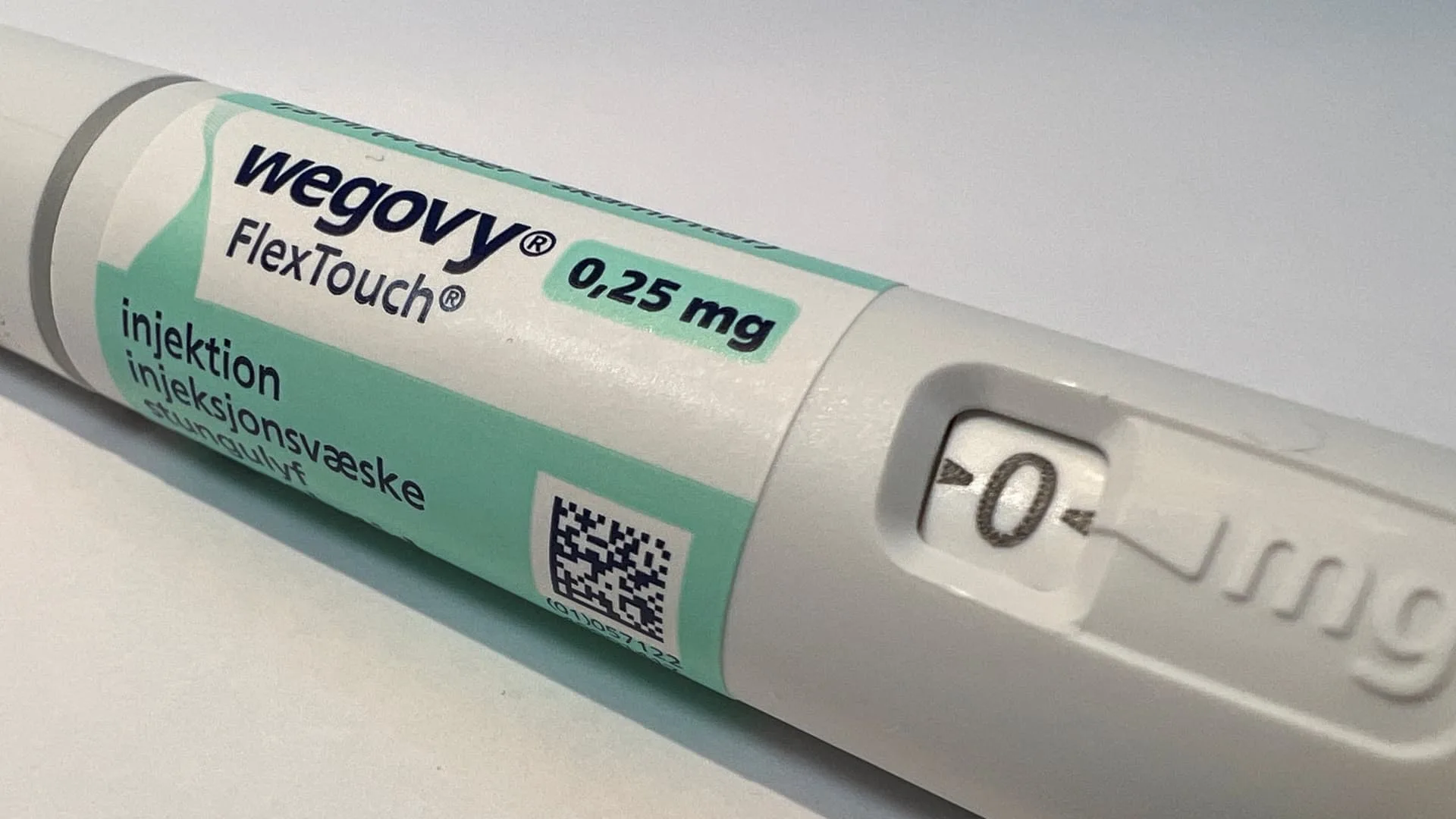
A 0.25 mg injection pen of Novo Nordisk’s weight loss drug Wegovy is shown in this photo in Oslo, Norway, on Aug. 31, 2023.

Victoria Klesty | Reuters

Novo Nordisk on Thursday said it sued two compounding pharmacies in Florida for allegedly selling impure and “potentially unsafe” drugs claiming to contain semaglutide, the active ingredient in the drugmaker’s blockbuster weight loss treatment Wegovy and diabetes medication Ozempic. 

The actions come as Novo Nordisk grapples with shortages of Wegovy and Ozempic in the U.S. as demand skyrockets for the drugs, which are known for their ability to cause significant weight loss. 

That has left patients scrambling to find alternative, but sometimes dangerous and unproven, methods for shedding unwanted pounds.

Novo Nordisk is the sole patent holder of semaglutide and does not sell that ingredient to outside entities, which raises questions about what compounding pharmacies, clinics and other companies sell to patients. Compounding pharmacies prepare custom-made versions of commercially available treatments to meet the specific needs of a patient. 

The Danish drugmaker found that all the products tested from Wells Pharmacy Network and Brooksville Pharmaceuticals were impure, meaning that they contained unknown and unauthorized substances other than semaglutide, according to the two lawsuits filed in federal court in Florida. One product’s level of unknown impurities was 33%.

The unknown impurities in the products “potentially pose safety risks” to consumers, including “possibly serious and life-threatening reactions,” Novo Nordisk said in the suits.

The Danish drugmaker is not seeking monetary damages but is asking the court to bar the pharmacies from selling their products.

Wells Pharmacy Network and Brooksville Pharmaceuticals did not immediately respond to CNBC’s requests for comment.

Novo Nordisk first sued Brooksville Pharmaceuticals over copycat versions of Wegovy and Ozempic in July. A federal judge in Florida dismissed the suit in October and later gave the drugmaker time to refile its complaint against the pharmacy.

Including the newest lawsuits, Novo Nordisk has filed 12 legal actions against compounding pharmacies, medical spas and weight loss clinics allegedly selling dupes of Wegovy and Ozempic. The company said it has received preliminary injunctions in six of those cases.

Rival Eli Lilly has taken similar action against businesses selling knockoffs of its popular diabetes drug Mounjaro, including its own lawsuit against Wells Pharmacy Network. 

Novo Nordisk’s new suit against Wells Pharmacy Network claims that its products contained a substance called BPC-157, which was banned by the U.S. Food and Drug Administration in September. The FDA said it did not have enough data to know whether the substance was harmful to humans but noted it could cause dangerous immune system reactions.

Novo Nordisk added in the lawsuit that products from Brooksville Pharmaceuticals had lower levels of semaglutide than advertised. That puts patients “at risk of taking drug products that are less effective than expected based on their labeling,” according to Novo Nordisk. 

“Compounded products do not have the same safety, quality and effectiveness assurances as FDA-approved drugs, and adulterated and misbranded injectable compounded drugs may expose patients to significant health risks,” Jason Brett, Novo Nordisk’s executive director of medical affairs, said in a statement. 

The FDA in May warned about the safety risks of unauthorized versions of Ozempic and Wegovy after reports emerged of adverse health reactions to compounded versions of the drugs. 

Several states have also threatened to take legal action against compounding pharmacies that make or distribute unapproved variations of Novo Nordisk’s weight loss treatments.

Don’t miss these stories from CNBC PRO:

Microsoft secures non-voting board seat at OpenAI

Sam Altman, chief executive officer (CEO) of OpenAI and inventor of the AI software ChatGPT, joins the Technical University of Munich (TUM) for a panel discussion. 

Sven Hoppe | Picture Alliance | Getty Images

Microsoft will have a non-voting board seat at OpenAI, the company announced on Wednesday.

The move quells some of the remaining questions about Microsoft’s interest in the startup after a turbulent month that saw the company’s controlling non-profit board fire and then re-hire CEO Sam Altman.

OpenAI’s outlook has been intertwined with Microsoft since the software giant invested $13 billion into OpenAI and integrated its AI models into Office and other Microsoft programs. Previously, Microsoft did not have official representation on the board of directors that controlled the startup, allowing it to be surprised when Altman was first fired.

“We clearly made the right choice to partner with Microsoft and I’m excited that our new board will include them as a non-voting observer,” Altman said in a note to staff posted on OpenAI’s website.

Altman commended the team and said that OpenAI did not lose any employees in the upheaval.

“Now that we’re through all of this, we didn’t lose a single employee. You stood firm for each other, this company, and our mission,” Altman wrote.

Altman said in his note that a board of directors — including former Salesforce CEO Bret Taylor, former Treasury Secretary Larry Summers and Quora CEO Adam D’Angelo — would build out a new board of directors for the startup.

Mira Murati, who had been OpenAI’s CTO and was briefly named interim CEO earlier this month, is the company’s CTO once again, and Greg Brockman has returned as OpenAI president.

Taylor, who will lead the new board, said in a message posted on OpenAI’s website that he was focused on “strengthening OpenAI’s corporate governance.” In a subsequent post on X, formerly Twitter, Taylor said that he would leave the board after it’s fully staffed and the company is stabilized.

“As I have communicated to board colleagues and management, when these transitional tasks have been completed, I intend to step away and leave the oversight of OpenAI in the good hands of board colleagues,” Taylor tweeted.

A Microsoft spokesperson declined to identify the person who will join OpenAI board meetings but will not have a vote.

Who’s on the board

Most board members, including cofounder and chief scientist Ilya Sutskever, who were serving at the time Altman was removed, have left the board, except for D’Angelo.

The reasons for Altman’s firing remain unclear. While the board cited a lack of transparency, issues over so-called “AI safety” and debates over whether the company should slow down its development of powerful AI it calls AGI could have been a factor.

Helen Toner, who had been an OpenAI board member since 2021, resigned from her role Wednesday. In a post on X, she wrote, “To be clear: our decision was about the board’s ability to effectively supervise the company, which was our role and responsibility. Though there has been speculation, we were not motivated by a desire to slow down OpenAI’s work.”

Toner has been a director of strategy for Georgetown’s Center for Security and Emerging Technology for nearly five years, and also has spent time at the University of Oxford’s Center for the Governance of AI. She has also given a talk to the effective altruism community and been involved in its discussion forum.

“Building AI systems that are safe, reliable, fair, and interpretable is an enormous open problem,” Toner told the Journal of Political Risk last year. “Organizations building and deploying AI will also have to recognize that beating their competitors to market — or to the battlefield — is to no avail if the systems they’re fielding are buggy, hackable, or unpredictable.”

In a post on X, Altman mentioned Toner’s resignation and seemed to confirm Tasha McCauley’s as well. McCauley, who had been an OpenAI board member since 2018, is an adjunct senior management scientist at Rand Corporation.

“The best interests of the company and the mission always come first,” Altman wrote in a post on X. “It is clear that there were real misunderstandings between me and members of the board. For my part, it is incredibly important to learn from this experience and apply those learnings as we move forward as a company. I welcome the board’s independent review of all recent events. I am thankful to Helen and Tasha for their contributions to the strength of OpenAI.”

Dakota Johnson Shares How Chris Martin Helps Her Battle Melancholy

Dakota Johnson doesn’t always see a sky full of stars.

The Fifty Shades of Grey actress gave a rare look into her vida with boyfriend Chris Martin, sharing how he has been there for her during her hardest moments. 

“A few weeks ago, I was having a low day,” she described at the 2023 Hope for Depression Research Foundation luncheon, per Hello. “And my partner said to me, ‘Are you really struggling?’ and I said ‘No?'”

“And he said, ‘Baby, you are wearing a Cats T-shirt.’ As in Cats the music,” Dakota continued. “So it turns out, I really was struggling. But that moment lifted me up and pulled me out of it.” 

Dakota—who has experienced depression since she was a teenager being raised by parents Don Johnson and Melanie Griffith—explained that she’s decided to be more outspoken about depression after realizing that she has the power to help others.

“If me saying one little hopeful thing or one maybe relatable thing can help one other person feel a little bit better or a little bit less alone with their experience,” she noted, “then I am a very willing advocate.” 

Fox Information founder Rupert Murdoch deposed in Smartmatic election lawsuit

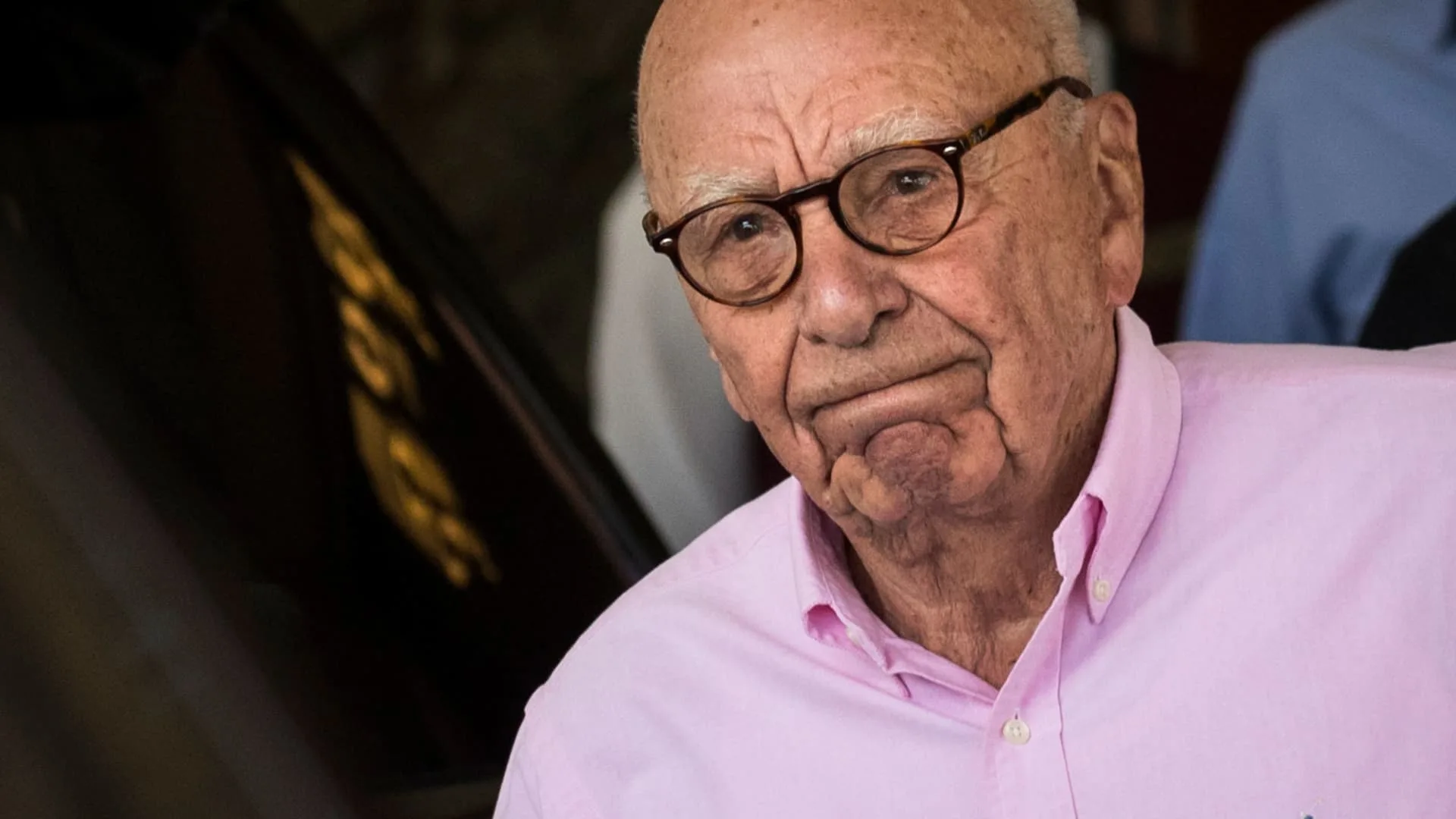
Rupert Murdoch arrives at the Sun Valley Resort of the annual Allen & Company Sun Valley Conference in Sun Valley, Idaho, on July 10, 2018.

Drew Angerer | Getty Images

Rupert Murdoch is being deposed Tuesday as part of the $2.7 billion defamation lawsuit filed against Fox Corp. by the voting technology company Smartmatic, a source familiar with the matter told CNBC.

Murdoch is expected to sit for questioning in Los Angeles on Tuesday and Wednesday, according to the source.

It is the second time this year that Murdoch, 92, has been deposed in a high-stakes defamation lawsuit accusing Fox News of airing damaging lies about the 2020 U.S. presidential election.

Under questioning in January as part of a similar defamation lawsuit filed by Dominion Voting Systems, Murdoch admitted that some Fox News hosts and personalities “endorsed” the false narrative that the election was stolen from then-President Donald Trump.

Fox paid $787.5 million to settle Dominion’s lawsuit, nearly half the $1.6 billion figure initially demanded by the voting company.

Smartmatic’s lawsuit accuses Fox and a handful of its hosts and guests of knowingly lying, or acting with reckless disregard for the truth, by entertaining or endorsing the false claim that the company rigged the election for President Joe Biden over Trump.

Smartmatic, which is suing in New York Supreme Court, is seeking “in excess of $2.7 billion” in damages it says were caused by the defendants’ “disinformation campaign.”

Murdoch is not named as a defendant in the lawsuit, which was filed against Fox personalities Maria Bartiromo and Jeanine Pirro and former opinion host Lou Dobbs. Trump’s former attorney Rudy Giuliani and pro-Trump lawyer Sidney Powell are also included as defendants.

A New York appeals court in February declined an attempt by Fox to dismiss the defamation suit.

Murdoch officially stepped down as chair of Fox and News Corp. earlier this month, putting his son Lachlan in charge of both. The elder Murdoch is now chairman emeritus of the companies.

Fox spokesman Brian Nick declined CNBC’s request for comment on Murdoch’s latest deposition.

Don’t miss these stories from CNBC PRO:

Small music venues battle to maintain costs reasonably priced amid inflation

Melis82 | Istock | Getty Images

It has never been easy for small or independent music venues to turn a profit. Now, with inflated operating costs, some owners are struggling to keep ticket prices affordable for audiences and take chances on lesser-known artists.

The past year has seen music fans roaring back to large stadiums to see sold-out shows for icons such as Beyoncé or Taylor Swift, even as consumers cut down on spending for leisure activities. But many smaller, independent venues have yet to see business return to pre-pandemic levels, according to Stephen Parker, executive director of the National Independent Venue Association.

“If you are a larger venue, you’re probably doing quite well post-pandemic,” he said. “But if you were a smaller venue, you are seeing business, and you’re keeping your head above water, but you’re also seeing that many of the things that larger organizations have at their disposal, which is economies of scale, is becoming harder.”

NIVA was founded in 2020 as a means to lobby for government relief while venues struggled to stay open through Covid lockdowns. It was a driving force behind $16 billion in federal aid to the industry and now focuses its efforts on other issues such as price gouging in the resell market.

The latest challenge facing NIVA’s network of independent venues, Parker said, is protecting margins in the face of higher costs.

First Avenue Productions, which operates several venues around Minnesota’s Twin Cities, has seen operating costs increase nearly 30% since before the Covid-19 pandemic, with everything from beer to ice to insurance becoming pricier, according to owner Dayna Frank.

“We don’t have corporate backstops, we have limited resources,” said Frank, a founding member of NIVA and former board president. “Most folks are, you know, owner, operator, floor sweeper, booker, marketer, light bulb changer, everything.”

No bourbon, no scotch, no beer

Paul Rizzo, owner of New York City’s historic club The Bitter End, said that while food and “every other cost” has increased, he has seen consumers spending less in general.

Part of that is a broad pullback as American tighten their wallets, he said. But it also fits a trend cited by some venue owners of younger generations of music fans drinking less than their older counterparts.

Some owners suggested the legalization of marijuana in many markets may be eating into bar sales — a significant portion of revenue for music venues.

For Alisha Edmonson and Joe Lapan, co-owners of Songbyrd Music House, a 250 people capacity venue in Washington, D.C., it’s an ongoing challenge to price concessions in an atmosphere where raw costs are rising and consumers are spending less.

Lapan said many fans expect higher-priced drinks at larger venues and stadiums but don’t have the same expectations at small venues.

“There’s this idea that you’re going to a small venue and it should be like your small local bar, but that’s not the economics of a venue,” Edmonson said. “We’re providing this extra service that we have to find a way to pay for.”

Fighting for the right to party

It all contributes to what NIVA Board President Andre Perry describes as a “very difficult balancing act” to run a successful small venue.

Owners must figure out how to market different acts every night, decide whether to take risks on newer performers, as well as continually adapt to their community as the economic landscape inevitably changes, said Perry, who has worked in live music for 20 years and now serves as the director of the Hancher Auditorium, a performing arts theater at the University of Iowa.

Unlike some small businesses, venue owners are not selling the same thing every day, Perry said.

“You’re taking a cultural practice and pushing it into the marketplace, and I think there’s some tension there. Doesn’t mean it’s bad or that it’s broken, it’s just, we got to really work hard to make it sustainable for all the people involved.”

Many owners of small venues are in the business for the love of music and community, not necessarily to make a lot of money, said Cat Henry, executive director of the Live Music Society.

Henry’s organization serves venues of under 300 capacity by providing grants to start new programs or take chances on newer artists that won’t necessarily draw crowds.

“I hope that at the state level, at the private foundation level, it will be recognized that this is not necessarily a commercial model, that there are supports that need to be put in place in order for something that is a huge part of American culture,” Henry said. 

Don’t miss these stories from CNBC PRO: